Portuguese
  Spanish


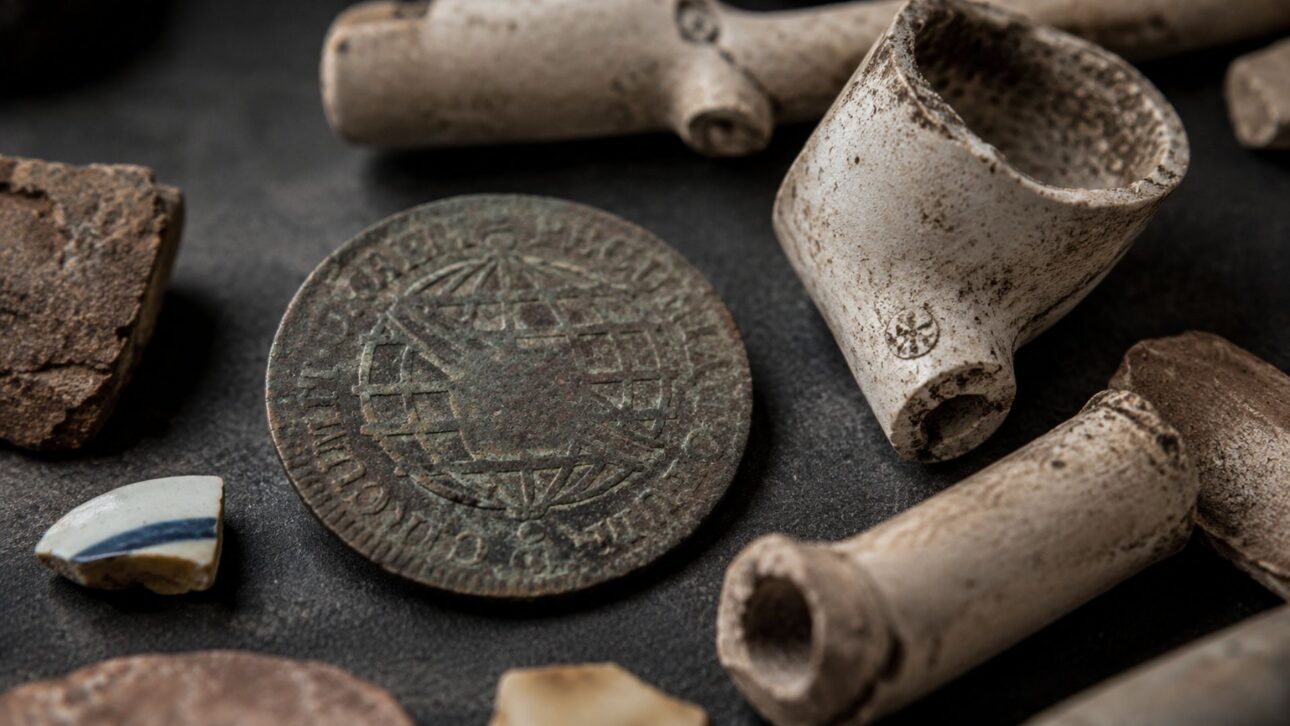
The construction of Parque Residência, in the Center of Macapá, turned into an archaeological site overnight: while excavating the land, teams found a coin from 1775, Dutch clay pipes, and indigenous ceramics, an 18th-century treasure that suggests occupation prior to the official records of Amapá.
Those who pass through the Center of Macapá only see the site of a future tourist spot by the Amazon River. Under the ground, however, lay a colonial time capsule. During the renovation of the former Official Residence of the Government of Amapá, which will become Parque Residência, archaeologists stumbled upon coins, pipes, and dishes that no one expected to find there.
According to Agência Amapá, among the pieces appeared a coin from 1775, as well as Dutch clay pipes and indigenous ceramics. The collection points to an occupation linked to the 17th and 18th centuries, earlier than some of the official records about the first settlements in Amapá soil.
What appeared under the construction of Parque Residência
The archaeological work follows the norms of Iphan, the institute that protects Brazilian historical heritage.
-
New York Resident Uncovers Complete Mastodon Jawbone in Backyard After Spotting Teeth Emerge from Ground

-
Young Treasure Hunter from Brazil’s Balneário Camboriú Finds $22,000 in Jewelry with Metal Detector, Aims for $1 Million, and Returns iPhone Found in Ocean
-
Three Boys Discover Rare 67-Million-Year-Old Juvenile T. Rex Fossil in North Dakota
-
Company Develops World’s Thinnest Chocolate at 0.03 Millimeters Using Exclusive Machine Designed in Japan


The star of the find is a coin from 1775, minted in the colonial period.
Alongside it appeared pocket coins, Dutch clay pipes, and iron artifacts.
The presence of clay pipes, common in Europe, indicates direct commercial contact with the other side of the Atlantic.
Each pipe and each coin from 1775 is a clue to how life was there in the 18th century.
The 1775 Coin and the Story the Books Don’t Tell
Macapá has an official birth date: the Village of São José de Macapá was founded in 1750.
However, the objects found in Parque Residência speak of a time that escapes this official timeline.
Archaeology at the site revealed evidence of occupation linked to the 17th and 18th centuries, some of it prior to the first recognized records of Amapá.
The indigenous ceramics found reinforce that the area was already inhabited and used before the formal arrival of colonizers.
This is not the first clue in this direction: an ancient site with an indigenous cemetery had already been excavated in the region in 1947.
The new 18th-century layer stitches these points together and pushes Macapá’s history further back.
Dutch Pipes and the Trade that Crossed the Atlantic
The clay pipes are small, white, and break easily, but they say a lot.
They were disposable items used by European sailors and traders, spread across ports worldwide.
Finding them in Macapá confirms that the mouth of the Amazon was on the international trade route of the 18th century.
Along with them came imported European crockery, indicating that fine products reached the region.
For archaeology, this type of object functions as a label of date and origin.
Yesterday’s trash became the most honest document about today’s colonial life.
Who Signs the Excavation and What Iphan Says
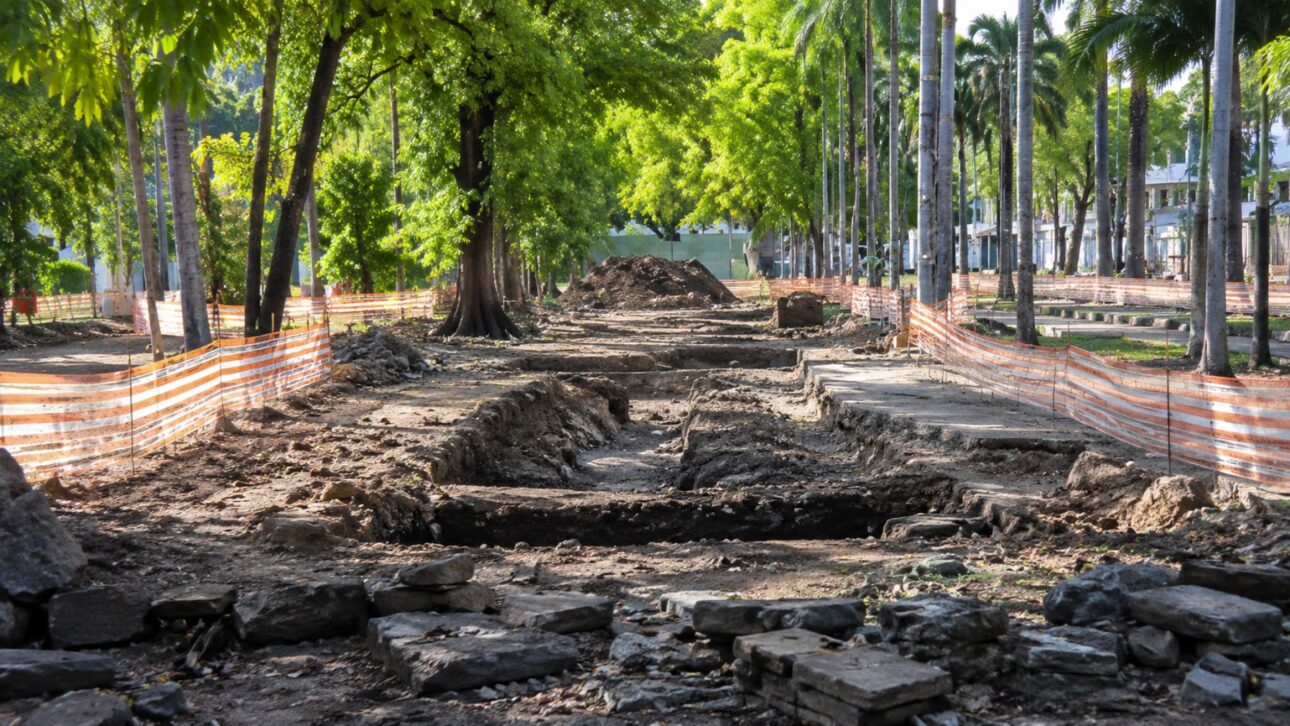
The research front is coordinated by archaeologist Kleber Souza, responsible for the studies at the site.
According to CNN Brasil, the pieces were classified as rare historical artifacts.
Each item is recorded, photographed, and removed with technique to preserve the context of the layer.
It is this care that transforms a construction find into real science.
The rush of construction had to make way for the slow pace of archaeology.
Where will the 18th-century treasure go
Nothing that came out of the ground stays with the construction company or collectors.
All the material goes to the technical reserve of Cepap, the Center for Archaeological Studies and Research of Amapá, at Unifap.
There, the pieces undergo cleaning, cataloging, and detailed study.
Only then come the reports and the scientific publication of the results.
The idea is for the 1775 coin and other pieces to become a public collection, not a private trophy.
In the end, Parque Residência may be born with a piece of a museum underneath it.
What the case of the 1775 coin shows
The find at Parque Residência shows that history is not only in books, it’s beneath the asphalt.
An ordinary construction turned into a window to the 18th-century Amapá.
But it’s worth keeping your feet on the ground.
The 1775 coin is from a period after the founding of the Village in 1750, so alone it does not push history back.
What pushes the timeline back is the set, especially the indigenous ceramics and evidence of older occupation.
And the slow laboratory work is still needed: dating, cataloging, and archaeological reports.
Even so, few cities gain a new chapter of history from their own construction site.
Macapá gained one, and for free, in the middle of a renovation.
And you, could there be an 18th-century treasure under your city waiting for a construction to appear? Comment here if you would be willing to visit Parque Residência just to see the 1775 coin and the century-old pipes up close.