






 Portuguese
  Spanish
  6 min of reading
  0 comments


Created by two Swiss designers, the bloc° system uses 3D-printed terracotta, water evaporation, and small solar equipment to create thermal relief areas in very hot urban locations
The heat in cities has gone from being just a summer nuisance to a public health, mobility, and urban planning challenge. Amidst asphalt that accumulates heat, facades that radiate temperature, and bus stops without shade, a solution created in Switzerland stands out for trying to tackle the problem on a local scale.
The project is called bloc° and was developed by Andrin Stocker and Luc Schweizer, affiliated with the Zurich University of the Arts. The proposal is simple in appearance but ingenious in function: using modular blocks of porous terracotta, water, air circulation, and solar energy to reduce the temperature in public areas.
According to the James Dyson Award, the system can cool overheated urban spaces by up to 9°C through evaporative cooling, using terracotta and solar energy. The promise is not to replace trees, squares, natural shades, or climate policies, but to create small thermal refuges in places where people feel the heat directly.
-
Without power for millions, Madagascar receives a proposal for a floating hydroelectric plant inspired by the baobab that promises clean energy, greenhouses, and tourism, but still needs to be realized.

-
China has a giant rice terrace carved over 1,300 years in the mountains, with up to 3,000 terraces, 82 villages, and 445 km of canals, but the ancestral work that overcame droughts now faces growing tourism, landslides, and rural abandonment.

-
The largest Gothic church in Northern Europe began in 1248 to house the relics of the Three Wise Men, remained unfinished for centuries, and was only completed 632 years later, with steel, steam, and a German national campaign that turned the delay into a historical symbol.
-
A city in India was inaugurated in 1968 in front of 5,000 people, welcomed young people from 124 nations, and today gathers more than 3,300 residents from 60 nationalities trying to prove that humanity can live without divisions of country, religion, and politics.


The detail is in the clay, the water, and the air that passes through the block
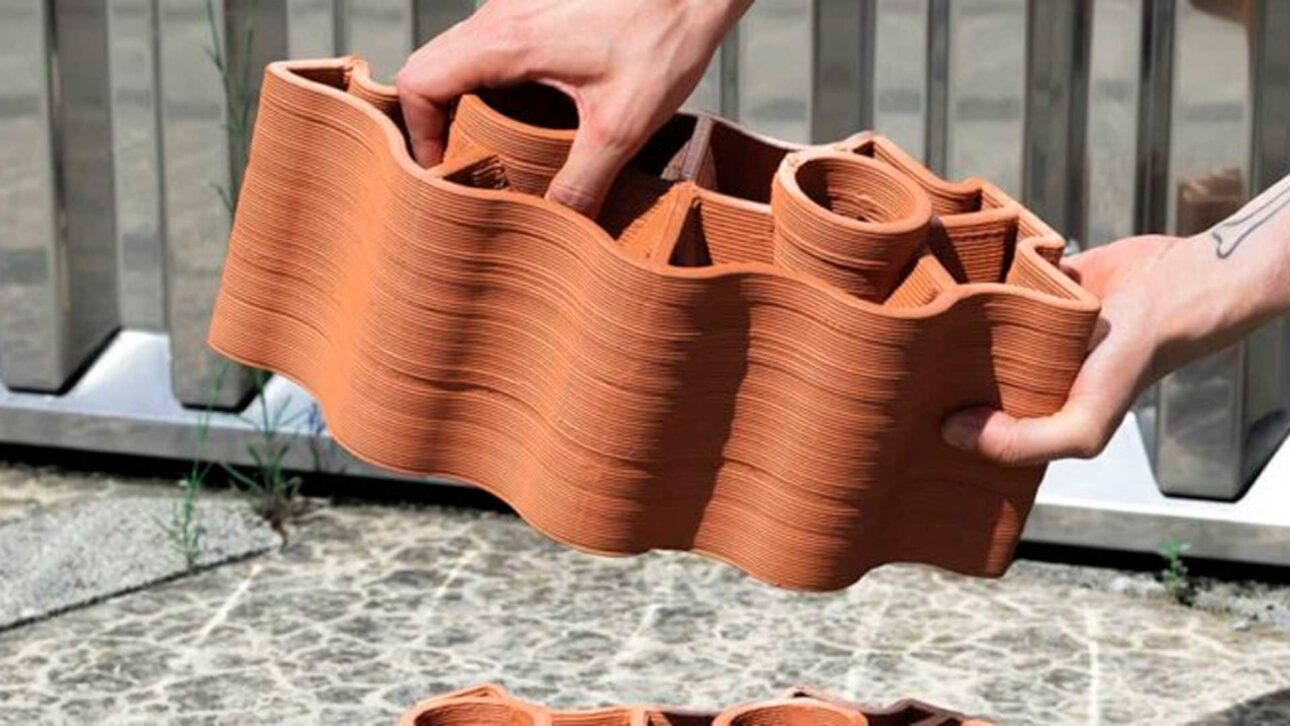
The logic of bloc° resembles an ancient technology, known to those who have seen an earthenware pot or clay jar keeping water cool. The terracotta absorbs moisture, and when hot air passes over this wet surface, part of the water evaporates, removing heat from the environment.
According to the United States Department of Energy, evaporative coolers work precisely by making air pass through water-saturated materials, which reduces the air temperature before it is directed into the environment. In bloc°, this principle is applied to urban furniture, with ceramic pieces designed to control water and airflow.
Each unit is made with 3D printed terracotta, which allows for the creation of internal channels and shapes designed to facilitate circulation. Small fans and pumps powered by solar panels help draw in hot air and keep the surface moist, increasing the cooling effect without directly relying on the power grid.
The idea was born for bus stops, squares, and school courtyards
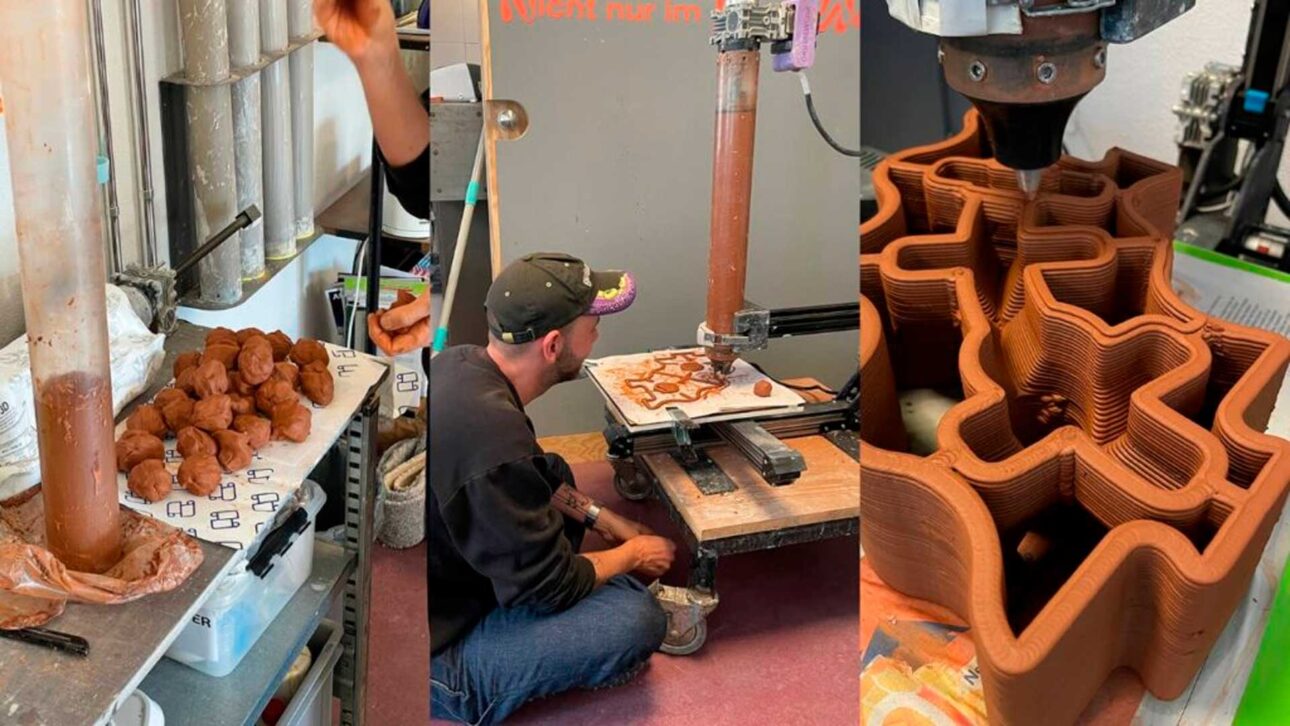
The project was not designed as a street air conditioner capable of changing the climate of an entire city. It operates in specific locations, such as public transport shelters, squares, waiting areas, school courtyards, and sidewalks heavily exposed to the sun.
As reported by ZHdK in September 2025, bloc° was among the projects recognized in the Swiss stage of the James Dyson Award 2025. This helped give international visibility to a solution that mixes industrial design, urban climate, and traditional materials.
In practice, the modules can form small walls, benches, dividers, or shading structures. A person would not need to “enter” a closed environment, just approach the structure to feel an area with cooler air.
This type of solution draws attention because urban heat does not affect everyone in the same way. Street workers, students, the elderly, cyclists, pedestrians, and people who rely on public transport tend to be more exposed to the hottest hours of the day.
Why cities heat up more than rural areas
The problem behind the interest in bloc° is known as urban heat island. According to the United States Environmental Protection Agency, buildings, streets, and other infrastructures absorb and reemit more heat from the sun than natural landscapes, such as forests and bodies of water.
This happens because concrete, asphalt, dark roofs, and hard facades accumulate energy throughout the day. At night, part of this heat continues to be released, keeping entire neighborhoods warmer even after sunset.
The effect worsens in areas with little greenery, excessive paving, and ventilation blocked by dense constructions. Therefore, solutions like trees, green roofs, reflective surfaces, shading, and permeable materials remain essential.
Bloc° enters this scenario as an additional piece within a larger set. It can be useful precisely where planting a mature tree is not immediately feasible or where public space needs a quicker response to protect pedestrians.
The project also exposes the limitation of air conditioning as the only solution
The search for alternatives to air conditioning is growing because conventional cooling consumes energy, puts pressure on power grids, and can increase emissions when electricity comes from polluting sources. Thermal comfort is necessary, but the way it is produced has become part of the climate debate.
The United Nations Environment Programme pointed out in the Global Cooling Watch 2025 that the demand for cooling could more than triple by 2050 in a scenario without significant changes. The report also warns of the risk of increased emissions linked to the sector if efficiency, clean refrigeration, and passive cooling do not advance together.
It is at this point that materials like terracotta are regaining space. They do not eliminate the need for mechanical systems in hospitals, homes, schools, and offices, but they help reduce pressure in outdoor environments and in passage areas.
The bloc° still uses energy, but on a small scale and with solar power. The proposal is different from installing refrigerated devices on the street: it tries to work with the natural behavior of water, air, and clay.
Real street performance still needs to be tested
Despite the potential, the project needs to go through a decisive stage: real-scale and prolonged period tests. It’s one thing to work in controlled prototypes, another to withstand dust, vandalism, irregular wind, high humidity, public maintenance, and intense use.
The project itself foresees tests of a full-size prototype to evaluate performance in urban environments. This phase will be important to measure how much the system cools in different climates, what the real water consumption is, and how it behaves in humid cities.
There is also a sensitive point: water usage. On days above 30°C, the project’s technical description cites an approximate consumption of 56 liters per day, with the possibility of supply by municipal infrastructure or rainwater harvesting. In areas with water scarcity, this factor would need to be carefully analyzed.
Even so, the proposal shows a change in mindset. Instead of seeing benches, walls, and bus stops only as passive structures, the bloc° suggests that urban furniture can also function as climate infrastructure.
A brick doesn’t save a city, but it can change where the heat hits hardest
The advancement of bloc° does not mean that cities will be able to solve extreme heat just by stacking terracotta bricks. Combating heat islands requires afforestation, urban drainage, neighborhood planning, reviewing construction materials, and protecting vulnerable populations.
The World Health Organization reports that studies estimate about 489,000 heat-related deaths per year between 2000 and 2019. This data helps explain why urban cooling solutions have ceased to be an aesthetic detail and have become part of climate adaptation.
The merit of the Swiss project lies in pointing out an intermediate solution, more localized and less dependent on large-scale works. If it works on a real scale, it can help transform bus stops, hard plazas, and exposed facades into less hostile areas during heat waves.
In the end, the strength of the idea lies in its simplicity: clay, water, air, and sun working together. It may seem small given the size of the problem, but on a sidewalk without shade, a few degrees less can make a difference for those waiting, working, or walking in the heat.


Be the first to react!