Portuguese
  Spanish


What started with two large teeth appearing among plants in the backyard of a house in Orange County led researchers to excavate the land and find a complete jaw of a prehistoric animal that lived in North America during the Ice Age.
A resident of Orange County, New York, found two large teeth emerging from the ground while working in the backyard of his home, near Scotchtown.
By digging a little more, he found other teeth a few centimeters below the surface and decided to call specialists.
The excavation revealed a complete and well-preserved jaw of an adult mastodon, as well as a fragment of a toe bone and part of a rib. The find was considered rare because it is the first of its kind recorded in the state of New York in over 11 years.
-
Young Treasure Hunter from Brazil’s Balneário Camboriú Finds $22,000 in Jewelry with Metal Detector, Aims for $1 Million, and Returns iPhone Found in Ocean

-
Three Boys Discover Rare 67-Million-Year-Old Juvenile T. Rex Fossil in North Dakota
-
Company Develops World’s Thinnest Chocolate at 0.03 Millimeters Using Exclusive Machine Designed in Japan

-
Brothers Build Sustainable Bamboo and Earth House in Brazil, Sharing Secrets of Eco-Friendly Living



What seemed like just a strange piece in the garden turned into a scientific investigation
The discovery began simply, without major work or research team on site. The resident saw two teeth partially hidden under the leaves of a plant on his own land. After removing more soil, he realized there was something bigger there.
As reported by ABC News, the owner examined the teeth in his hands and decided to seek help upon noticing they were not common stones, roots, or recent animal remains. The decision prevented damage to the fossil and allowed its removal to be done by researchers.
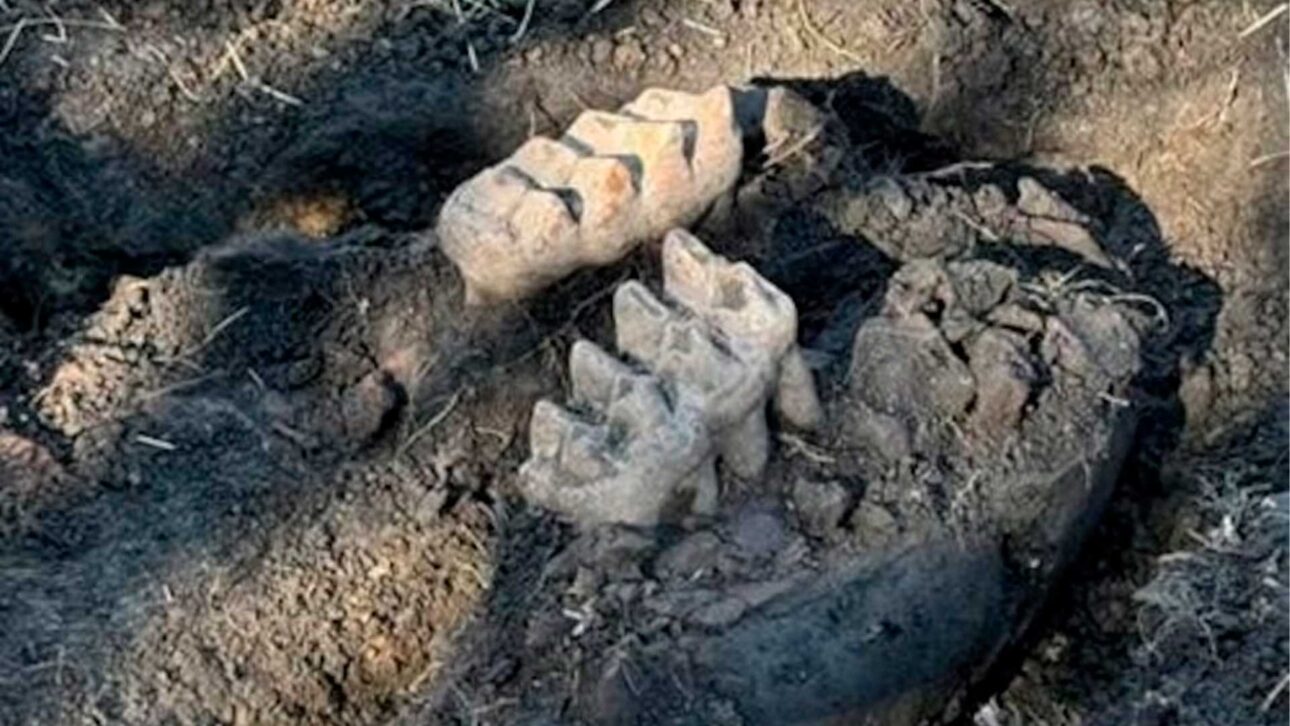
The material was excavated by a team linked to the New York State Museum and SUNY Orange, a public educational institution located in Middletown. The area is near Scotchtown, in Orange County, a region already known for mastodon findings.
The main fossil is a lower jaw of a mastodon, still with teeth. For researchers, this type of piece helps reconstruct information about diet, age, environment, and even the conditions in which the animal lived before dying.
Mastodon Jaw in New York May Reveal Age, Diet, and Environment of the Ice Age
According to the New York State Museum, the jaw and bone fragments will undergo carbon dating and scientific analyses to estimate the animal’s age, its diet, and the type of habitat it lived in. The material is also expected to be part of the museum’s public programming activities.
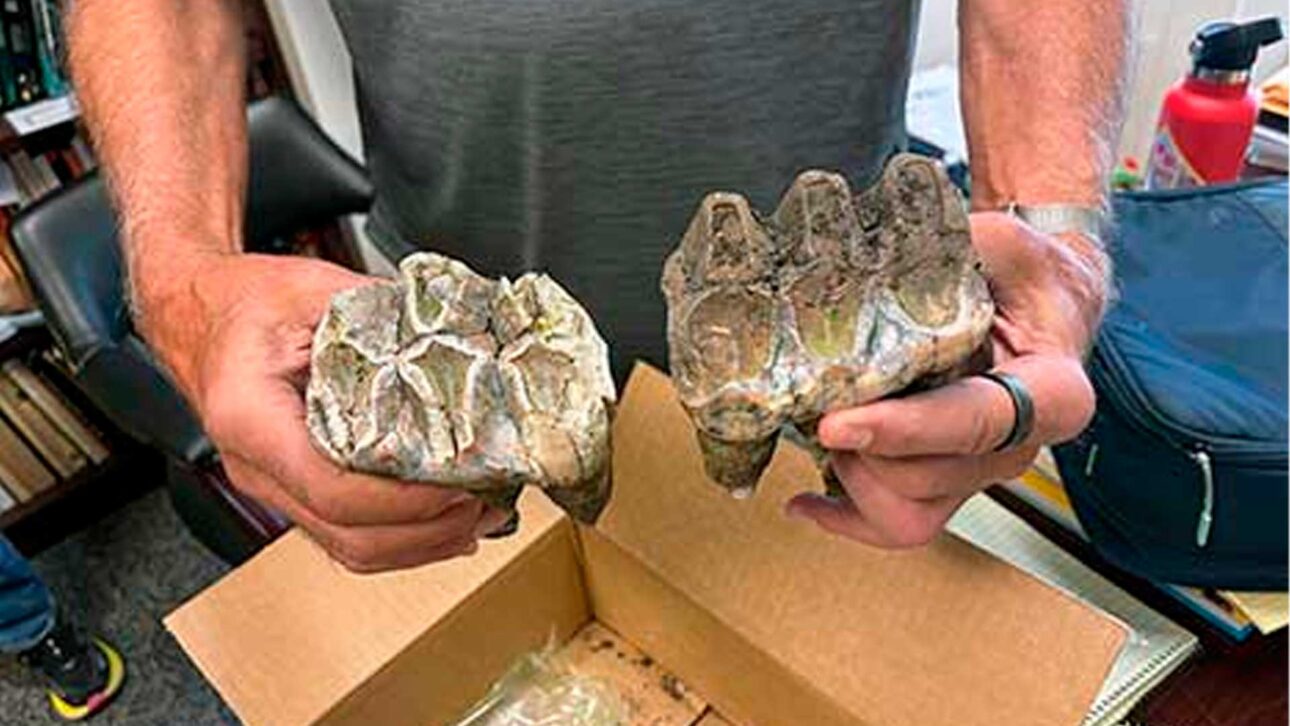
Dating is a crucial step because mastodons lived in North America during the Pleistocene, a period associated with the climatic changes of the Ice Age. In the case of New York, many fossils appear in ancient wet environments, swampy areas, and soils that have preserved bones for thousands of years.
The jaw can also help differentiate the mastodon from other prehistoric animals it is often confused with, such as mammoths. Both were distant relatives of today’s elephants but had different habits. Mastodons usually fed on leaves, branches, and parts of shrubs and trees, while mammoths had teeth more adapted to grazing in open environments.
This detail matters because teeth hold clues. Wear, shape, and possible residues can indicate the type of vegetation consumed. When combined with the location of the find, these data help to paint a more accurate picture of the ancient ecosystem of the Hudson Valley.
Orange County Concentrates a Significant Portion of Mastodon Fossils Found in the State
Orange County did not enter this story by chance. According to information from SUNY Orange, the region gathers approximately one-third of the more than 150 mastodon fossils already found in the state of New York. The same institution also reported that the discovery began when the family brought strange items for evaluation by professors.
This concentration draws attention because the local soil favored the preservation of Ice Age megafauna remains. In many cases, large bones were buried in wet areas, ancient swamps, or sediments that reduced decomposition.
The region has other significant records. The American Museum of Natural History notes that the Warren Mastodon, discovered in 1845 near Newburgh, also in New York, was the first complete skeleton of an American mastodon found in the United States. It is estimated to have lived about 11,000 years ago.
This history helps explain why researchers treated the new find with urgency. Instead of an isolated piece without context, the jaw appears in an area with a strong paleontological past, where new excavations may reveal more parts of the same animal or other individuals.
New excavations in 2025 found more bones linked to the same animal
The story did not end with the removal of the jawbone. In 2025, the team returned to work at the site with students and professors, in a supervised field experience. The excavations opened small test units in the terrain to search for other preserved remains.
The institution later reported that the group found vertebrae, new jawbone fragments, and ribs, materials that researchers believe belong to the same mastodon from the initial discovery. Among the bones mentioned is the atlas, the vertebra that supports the skull at the base of the neck.
Part of the material was sent to the New York State Museum for examination and curation. Other smaller fragments were stored on the college campus, still awaiting more detailed identification.
This type of work is usually slow because each bone needs to be cleaned, stabilized, compared, and documented. Rushing can destroy fine marks, cracks, adhered sediments, and other useful clues for research.