Portuguese
  Spanish


Saga Vanecek was playing in Lake Vidöstern, in southern Sweden, when she touched a long object in the shallow water. What seemed like old wood had a handle, a tip, and rust. The piece was handed over to specialists and was identified as an Iron Age sword, dated to the 5th or 6th century, before the Viking Era.
An 8-year-old girl found a sword about 1,500 years old while searching for stones in a lake in Sweden. The discovery happened on July 15, 2018, in Lake Vidöstern, in Tånnö, in the Småland region.
The child was Saga Vanecek, a Swedish-American who had moved from the United States to Sweden with her family the previous year. She was in the water, near the family’s summer house, when she felt something hard between the sand and clay at the bottom of the lake.
According to the Guardian, Saga first thought she had found a branch. When she lifted the object, she saw it had a handle and a tip, called her father, and said she had found a sword.
-
Brazilian Woman Fired After Maternity Leave Starts Street Sweet Business with $5, Now Produces 5 Tons Monthly with 21 Employees in Southeast Brazil

-
Father Sells 10-Year-Old Daughter to Feed Family Amid Crisis; Mother Tries to Undo Marriage in Camp Where Hunger Pushes Families to the Brink

-
6-Year-Old Finds Ancient Neanderthal Axe on English Beach, Discovers Its Significance Three Years Later
-
Over 500,000 Wild Boars Culled in Eight Months, but Industry Estimates 1.25 Million, Raising Concerns About Crop Damage, Threatened Livestock, and Health Risks in Rural Brazil




The case was only disclosed months later. The family and archaeologists kept the discovery secret to prevent curious people from going to the site and disrupting further searches.
The play in the lake that turned into an archaeological find
That summer, Sweden was experiencing strong heat and drought. The water level in Lake Vidöstern was lower, which helped Saga reach an area that, under normal conditions, might have been covered by more water.
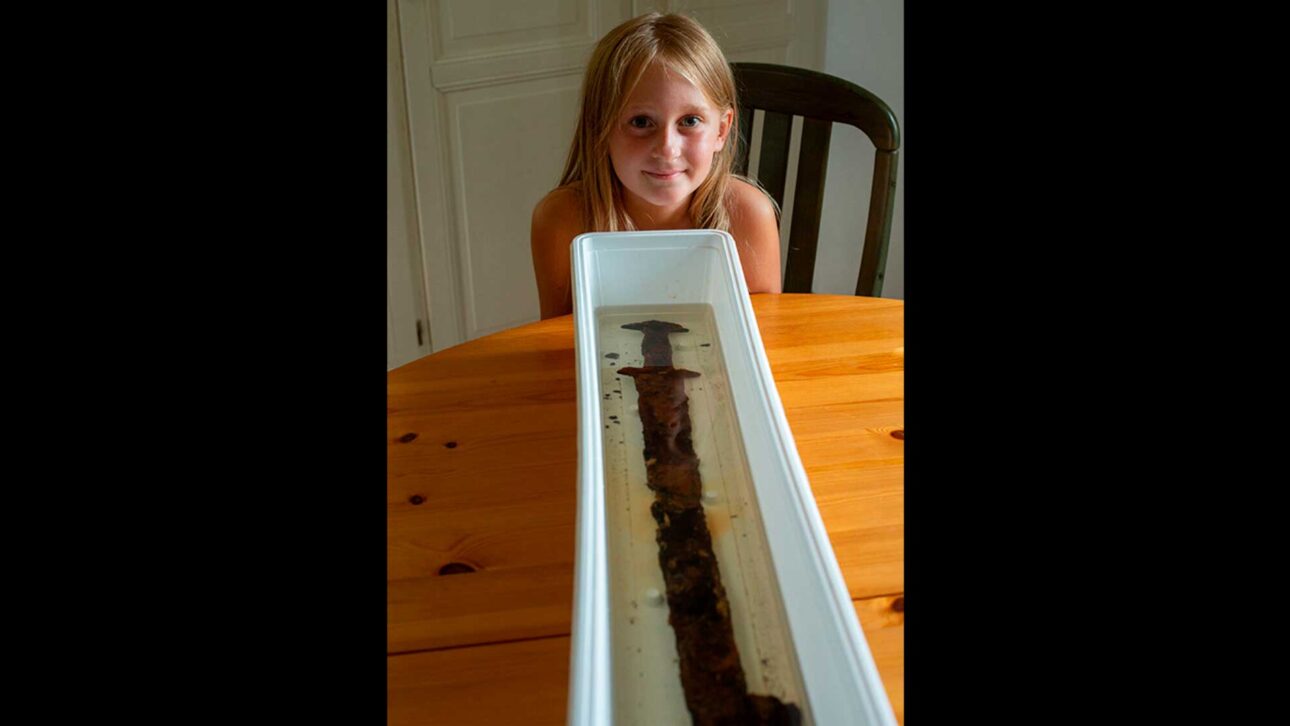
She was playing at looking for stones and objects at the bottom of the lake. Her father, Andy Vanecek, wanted to place a buoy to warn boats about a submerged structure, as the low level left some points dangerous.
While her father waited, Saga continued to stir the water. It was at this moment that the girl touched a long, rough, and heavy piece, covered by rust and sediments.
The scene seemed straight out of a medieval legend, but the next procedure was quite concrete. The family showed the object to local residents, heard that the piece seemed old and sought specialists the next day.
The sword had wood, leather, and rare signs of preservation
According to the Jönköping County Museum, the sword was just over 80 centimeters and still retained parts of a wooden sheath, with leather fragments attached to the material. This detail caught attention because wood and leather tend to decompose easily, especially in such ancient objects.
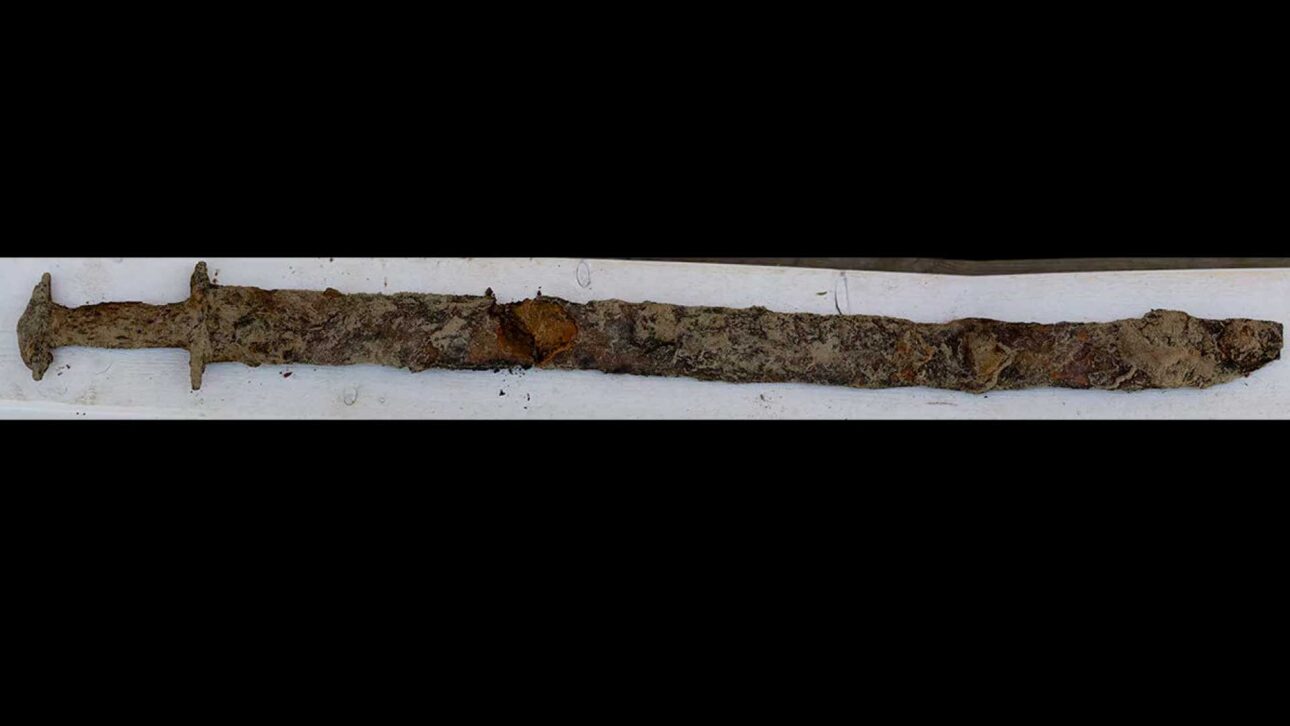
The piece was covered by lake sediments. Therefore, experts avoided hasty conclusions before conservation, as cleaning an ancient artifact incorrectly can destroy important marks.
The first hypothesis placed the sword between the Vendel and Viking periods, approximately between the years 600 and 1000. After analyzing images and details of the object, experts began to consider an older date, around the years 400 or 500, in the so-called Migration Period.
This means that the sword is prior to the Viking Age, which is usually situated between the late 8th century and the 11th century. In practice, Saga did not find a Viking sword, but an even older weapon within the Scandinavian chronology.
Why archaeologists hid the discovery for weeks
As reported by The Local, archaeologists feared that the news would trigger a rush of curious people to the lake. The concern was that people would enter the area, remove objects without record, or damage the context of the find.
This caution makes a difference in archaeology. An ancient object out of place can still be valuable, but it loses part of the information when it is not known exactly where it was, in what position it was found, and what other materials were nearby.
After the sword was handed over, museum teams, regional authorities, and metal detection specialists conducted further searches in the area. One of the discoveries was a fibula, a type of brooch used to fasten clothes, also associated with the same period or a slightly earlier time.
A coin from the 18th century, a small lead object, and iron pieces without clear identification also appeared. However, no item had the same historical weight as the sword found by the girl.
The Swedish lake may hold clues about ancient rituals
The experts did not determine how the sword ended up in Lake Vidöstern. Among the hypotheses raised are the erosion of ancient tombs near the shore, accidental dropping during boat travel, or a ritual deposition.
The sacrifice hypothesis drew attention because weapons deposited in lakes, rivers, and wetlands appear in different contexts of ancient Europe. In some cases, prestigious objects were left in the water as offerings related to victory in battles, prosperity, or religious rites.
The surroundings of Tånnö reinforce archaeological interest. The region has records of burial grounds, runestones, and ancient monuments, indicating significant human occupation long before modern Sweden.
Even so, archaeologists avoided turning hypothesis into certainty. Without more objects directly associated with the sword, the exact origin of the deposit remains open.
The girl became a joke of the queen of Sweden on social media
The discovery gained worldwide attention because it seemed like a real version of the legend of the sword taken from the water. On social media, many people began calling Saga the “queen of Sweden,” in reference to Excalibur and the stories of King Arthur.
The comparison helped spread the story, but the value of the find goes beyond the joke. A child accidentally found an iron weapon about 1,500 years old, preserved enough to allow the study of materials, shape, and possible origin.
In an interview cited by NPR, Saga said she found the experience “very cool” and “exciting.” The simple phrase sums up the dimension of the case: an ordinary summer day ended with a rare piece in the hands of a child.
Swedish legislation also helps explain why the sword was handed over to the authorities. Ancient finds without an owner must be reported to the competent authorities, and the location, date, and circumstances of the discovery need to be informed.
What a 1,500-year-old sword can still reveal
The sword was sent for conservation, a slow process because it involved iron, wood, leather, and sediments. Each material reacts differently when it comes out of the water and comes into contact with air.
Experts hoped that analyses of the organic material from the sheath would help confirm the dating. This type of study can show if the initial estimate of the 5th or 6th century is correct.
Even without revealing all its past, the weapon has already changed Saga’s routine and put the small village of Tånnö in the international news. The girl who left home to play in the lake ended up entering a story that spanned fifteen centuries.
The case also reminds us that archaeological discoveries do not always start with planned excavations. Sometimes, they appear when someone looks at the ground, stirs the mud, and realizes that a “rusty branch” has a handle, a point, and is old enough to precede the Vikings.
Do you think the sword fell into the lake by accident or was it left there as part of some ancient ritual? Leave your opinion in the comments and say which detail of this discovery caught your attention the most.