Portuguese
  Spanish


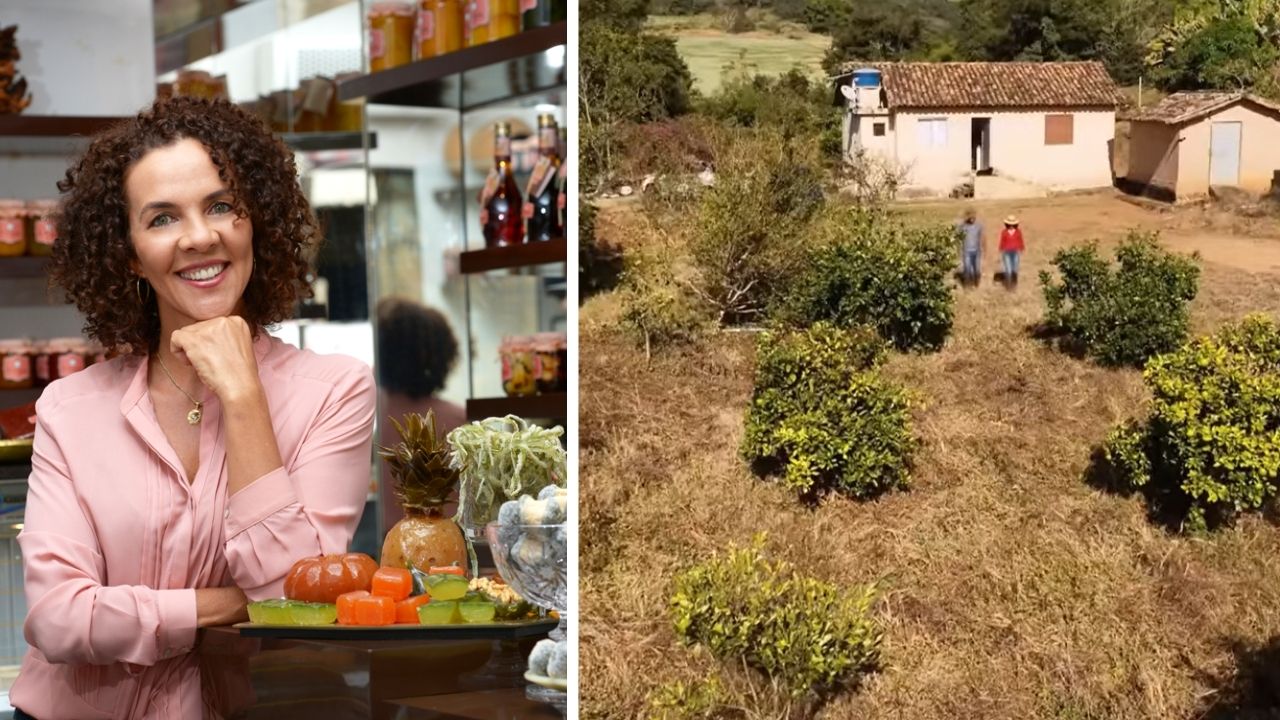

Selling sweets began as an artisanal test in Carmópolis, Minas Gerais, after Maria José de Lima Freitas lost her income. According to Universa, Mazé Doces sought guidance from Sebrae, registered the company, opened its own store, created about 70 variations, and produces up to 5 tons monthly in the Brazilian Southeast.
Selling sweets was the first step for Maria José de Lima Freitas to create Mazé Doces in Carmópolis, Minas Gerais. The journey published by Universa on February 8, 2019, starts with a small production, goes through courses, reinvestment, formalization, and reaches a factory with 21 employees.
The case has difficult moments, but the strength of the story lies in the entrepreneurial path built over the years. Between the first sale of about R$ 20 and the monthly production of three to five tons, the brand went through technical learning, credit, management, its own store, and regional distribution.
Loss of income changed professional direction
Maria José de Lima Freitas, known as Mazé, worked in the cleaning department of a credit cooperative in Carmópolis. She spent four years in this job and, according to the report, enjoyed the routine she had built there.
-
8-Year-Old Girl Finds 1,500-Year-Old Pre-Viking Sword in Swedish Lake

-
Father Sells 10-Year-Old Daughter to Feed Family Amid Crisis; Mother Tries to Undo Marriage in Camp Where Hunger Pushes Families to the Brink
-
6-Year-Old Finds Ancient Neanderthal Axe on English Beach, Discovers Its Significance Three Years Later
-
Over 500,000 Wild Boars Culled in Eight Months, but Industry Estimates 1.25 Million, Raising Concerns About Crop Damage, Threatened Livestock, and Health Risks in Rural Brazil



The change came when she returned from maternity leave and was laid off. The loss of a fixed income altered the family’s plans and opened a phase of uncertainty, but the text does not end at this point: the turning point for Mazé Doces came from the ability to transform a homemade production into a structured business.
First sale showed there was demand


After using the severance pay for a period and looking for reemployment, Maria José decided to test an artisanal recipe. The source reports that the first batch was made with milk bought on credit and a borrowed cauldron.
The first sale yielded about R$ 20. Part of the amount was used for food and part went back for new ingredients. From there, selling sweets stopped being just a one-time test and started indicating a local demand that could be worked on with more method.
Skill came from childhood in the countryside
Mazé’s relationship with sweets began before the company. In her childhood in the countryside, she had contact with homemade recipes and helped in preparations involving fruits and sugar.
In an interview with Universa, she said that she didn’t always like this task when she was a girl. Even so, that practical knowledge returned years later as an important foundation for the artisanal production that would give rise to Mazé Doces.
Snack bar helped open another market
After the first sales, Maria José offered the sweets to a snack bar in Carmópolis. The owner asked if she made crystallized sweets, a recipe she had not yet mastered.
She sought to learn from a local confectioner and tried to produce it. The first experience didn’t turn out as expected, but it was sold anyway. This episode showed that the business would require more than a recipe: it would be necessary to learn technique, listen to criticism, and adjust the product.
Criticism became a reason to seek a course
At a city party, the snack bar owner tried the sweets and criticized the result. The comment could have stopped the initiative, but it ended up serving as a warning about quality and standardization.
Maria José learned about a course in a nearby city and decided to delve deeper. After the classes, she realized she needed to improve the kitchen and processes. From that point on, selling sweets started to involve training, investment, and a small business vision.
Credit helped improve the structure

To invest in the kitchen, Maria José tried for a R$ 5,000 loan from the bank, but was not approved. The alternative was to seek money from acquaintances, with higher interest rates.
The debt took four and a half years to be settled, in 2004. The data shows that growth had cost and planning. Instead of treating the debt as a symbol of suffering, the trajectory reveals a capital challenge common to small businesses that need to grow without easy access to credit.
Sebrae entered the trajectory through guidance
In search of information, Mazé called Sebrae from a payphone. The institution sent the Starting Point booklet, with guidance on business development.
The entrepreneur reported that she needed to produce and, at the same time, understand terms, accounts, and the functioning of a small business. To accompany this stage, she returned to study and completed high school. Professionalization became a central part of Mazé Doces.
Order from the snack bar confirmed the change
The first criticisms from the merchant happened in July 1999. In September, Maria José remade the sweets and sent a new production to his house.
Shortly after, the wife of the snack bar owner appeared and informed that he wanted to buy everything available. At the time, there were 16 trays, which yielded R$ 64. The episode marked a turning point: the adjusted product found a recurring buyer.
Homemade production became a commercial routine
For about four years, Maria José continued making traditional sweets at home and crystallized ones for the snack bar. The income began to cover basic expenses, and what was left was reserved for new steps.
In 2003, she hired her first employee. In 2004, she took the Empretec course from Sebrae. These movements reinforce that selling sweets transformed into an organized activity even before the complete formalization of the company.
Company was registered and gained a factory
In 2005, Maria José formally registered the company. In the same year, she bought a plot of land and set up the Mazé Doces factory in Carmópolis.
At that moment, the operation already had more stability. According to the report, just for the snack bar, she sold between R$ 600 and R$ 800 weekly. The business that started with small production began to have its own space and manufacturing structure.
Own store expanded the catalog
In 2007, Maria José opened the Mazé Doces own store. The space started selling preserves, jams, sweets in bars, and crystallized sweets.
In total, the company reached about 70 product variations. This catalog helped to remove the brand from dependence on a few items and strengthened Mazé Doces’ presence in the regional market.
Expansion in Divinópolis did not work out
The journey also had an attempt that did not work. Excited by the growth, Mazé opened another store in Divinópolis, but the expected return did not come.
She quickly closed the unit, managed the debts that remained, and was able to reorganize. This point is important because it shows the company with more realism: growing involves testing, making mistakes, correcting course, and protecting the main operation.
Production reached up to 5 tons per month

According to Universa, Mazé Doces started producing three to five tons of sweets per month. The products can be found in several states in the Southeast region.
The company also reached 21 employees. The artisanal production that started small gained a factory, store, team, and distribution. The keyword of the journey is not just selling sweets, but structuring a business around them.
Routine remained close to the factory
In the interview, Maria José stated that she started living comfortably and fulfilled some dreams, such as investing in cars and traveling to destinations like Paris, Punta del Este, and Chile.
Even with the company consolidated, she continued going daily to the factory to supervise processes. The presence in the operation shows that Mazé Doces maintained a direct relationship between founder, product, and quality control.
When selling sweets becomes a regional company
The story of Maria José de Lima Freitas shows that selling sweets can start on a small scale, but it requires more than a good recipe to become a company. In the case of Mazé Doces, there was critique, course, credit, reinvestment, formalization, factory, store, and team.
The question that remains is: what weighs more in a turnaround like this, the initial idea, the courage to test the product, or the decision to study management to transform a recipe into a business? Leave your opinion in the comments.