Portuguese
  Spanish


Assaí’s balance sheet shows that high revenue does not mean surplus money. Among billion-dollar sales, narrow margins, and a heavy comparison on taxes, the case reignites the discussion about who really impacts the final price.
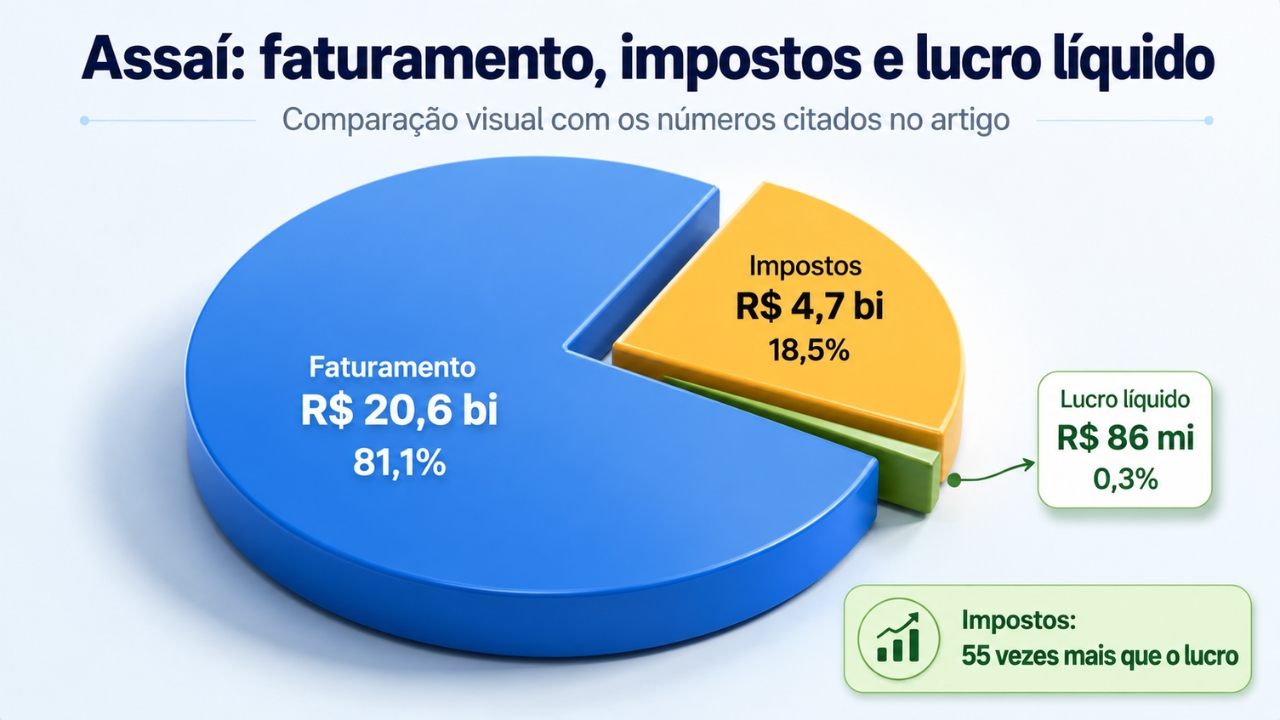
Assaí closed the first quarter of 2026 with R$ 20.6 billion in revenue, according to an official statement from the company itself. It’s a gigantic number, one that makes many people imagine that a company of this size is swimming in money.
But the same result shows another side of the story. According to MoneyTimes, Assaí’s net profit was R$ 86 million in the period, a drop of 46.7% compared to the previous year. The contrast fueled a discussion that many people avoid: in Brazil, selling billions does not mean keeping billions.
The confirmed numbers for the quarter already show a strong contrast. Assaí earned R$ 20.6 billion in Q1 26 and recorded a net profit of R$ 86 million, according to data released to the market. This means that, out of every R$ 100 moved by the operation, about R$ 0.42 remained as net profit for the company.
-
Former Marketing Agency Owner Thrives on Foraging for 250 Days, Sampling Over 170 Plants, and Says He No Longer Remembers Supermarkets

-
IKEA’s AI Handles Nearly Half of Customer Calls, Company Reassigns 8,500 Staff as Design Consultants, Boosting Revenue by €1.3 Billion
-
Owner of Havan Visits Paraguay to Discuss Lower Taxes, Local Suppliers, and International Expansion with President

-
Brazilian Construction Retail Chain Closes After 60 Years, Begins Liquidation Sale Across Five Cities




Billions enter the cash register, but millions remain at the end
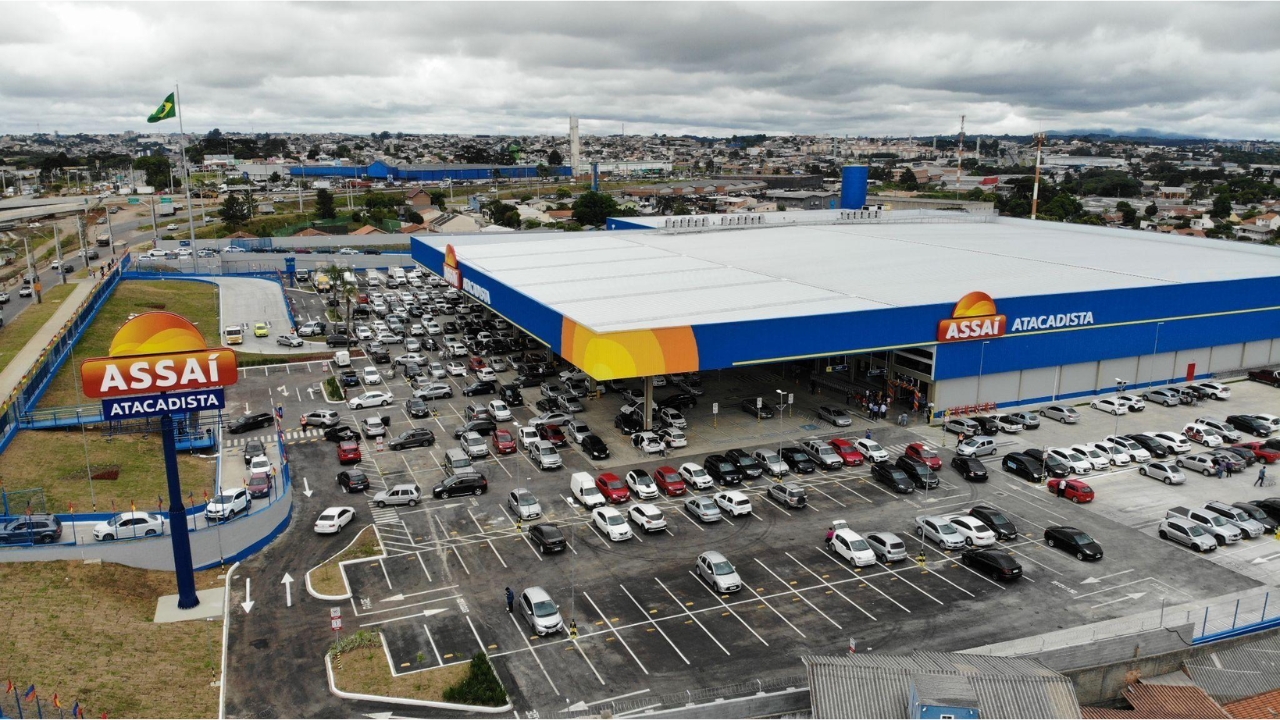
The revenue of R$ 20.6 billion impresses because it seems like a mountain of money. But revenue is not profit. Revenue is the money that passes through the company. Profit is what remains after the entire mechanism takes its share.
In Assaí’s case, the operation involves stores, employees, suppliers, energy, logistics, rent, interest, structure, technology, losses, expenses, and taxes. The company sells a lot, handles enormous volumes, supplies families and small merchants, but ends the quarter with R$ 86 million in reported net profit.
It’s a lot of money for an ordinary person. But, in the face of a billion-dollar operation, the margin shows something else: the food retail sector moves fortunes but works squeezed by a line of costs that starts long before the last line of the balance sheet.
The consumer sees the full store and thinks all that turns into profit. The balance sheet shows the opposite. Most of the money just passes through the company.
The Partner Who Doesn’t Open a Store but Receives
The image of the “invisible partner” caught on because it translates a feeling known to those who do business in Brazil. The government doesn’t choose a commercial location, doesn’t hire a team, doesn’t negotiate with suppliers, doesn’t take on operational losses, and doesn’t compete for customers at the checkout.
Yet, it appears.
It appears in the tax embedded in the product. It appears in the supply chain. It appears on the payroll. It appears in the profit. It appears on the invoice. It appears before, during, and after the sale. The entrepreneur takes the risk, the worker keeps the operation running, the consumer pays the price, and the public machine collects its share.
This is the discomfort revealed by the confirmed numbers. While Assaí earned R$ 20.6 billion in 1Q26, the reported net profit was R$ 86 million. In practice, for every R$ 100 moved by the operation, about R$ 0.42 remained as net profit for the company.
The contrast shows how a billion-dollar operation can end with a tight margin, while costs, interest, expenses, and taxes pass through the chain before the money really remains in the cash register.
It’s Not Just the Owner Who Pays the Bill
The more comfortable discourse is to pit employer against employee. It seems simple, causes fights, and diverts attention from the center of the table. But in supermarket prices, the worker and the owner are much closer than it seems.
The worker pays tax when buying food. The small merchant pays when restocking. The company pays when selling. The supplier pays before delivering. The burden spreads through the chain and reaches the consumer as if it were just “high prices.”
The National Treasury reported that the gross tax burden of the general government reached 32.40% of GDP in 2025. This means that practically one-third of the wealth produced in the country passes through the hands of the State in the form of taxes.
The problem becomes even heavier when taxation falls on consumption. In this model, the poor feel it more. Those who earn little use almost all their income to buy basic items, such as food, hygiene, transportation, and medicine. When the tax is embedded in these products, it takes a larger slice of the budget of those who already have less room to breathe.
Assaí also felt the consumer squeezed
Assaí itself stated that the quarter was marked by high interest rates, family indebtedness, and pressure on consumption. Belmiro Gomes, the company’s CEO, cited a challenging scenario and deflation in significant items of the basic basket.
According to MoneyTimes, products like rice, beans, sugar, soybean oil, wheat flour, and UHT milk had an average drop of 12%. It seems good for the consumer, but it pressures the sales value in a network that depends on volume and tight margins.
The company also reported an EBITDA margin of 5.5% and a recurring net profit before IFRS 16 of R$ 174 million. With new PIS and Cofins credits, the net profit for the quarter reached R$ 367 million, according to MoneyTimes. Even so, the number that stuck in the debate was the reported net profit of R$ 86 million.
Because it shows the discomfort more clearly. A company can earn more than R$ 20 billion in three months and still make it clear that the money goes through many places before there’s any left.
High prices have more people at the table
When Brazilians see the market expensive, it’s easy to blame only the company. When workers see profit, it’s easy to blame only the boss. When entrepreneurs see the margin disappear, it’s easy to look only at the competition.
But Assaí’s balance sheet sheds light on a presence that rarely appears on the shelf: the government. It’s not on the employee’s uniform, not on the store’s facade, doesn’t carry boxes in stock, and doesn’t appear pushing carts. Even so, it’s embedded in every step of the bill.
The case goes beyond Assaí. It shows a Brazil where billion-dollar revenue becomes a headline, tight profit becomes a detail, and embedded tax becomes an invisible part of daily life. In the end, the consumer pays, the company squeezes, the worker feels the price, and the government continues sitting at the table, receiving before many people understand where the money went.