






 Portuguese
  Spanish


What seemed to be just a Saturday walk turned into a rare archaeological find near Letca Veche, in southern Romania. Marius “Bebe” Ionel Mangeac went out alone with a metal detector on April 19, 2025, and returned with a collection of silver denarii from the Roman imperial period. The coins were handed over to local authorities and are to be analyzed before a possible museum exhibition.
Marius “Bebe” Ionel Mangeac did not leave home that Saturday expecting to find a rare piece of Roman history. A resident of Izvoarele, he used to walk through fields and wooded areas in the Giurgiu region, in southern Romania, using a metal detector as a form of exercise and distraction.
The discovery happened on April 19, 2025, near the village of Letca Veche, on the eve of Easter. According to Fox Weather, the strong signal emitted by the device led Mangeac to dig into the ground and find 1,469 Roman silver coins, known as denarii.
The volume surprised even the detectorist himself. He reported that he felt his heart race as he realized the pieces kept appearing, one after the other, in a rural area that until then seemed ordinary.
-
Young Brazilian Siblings Go Viral for Catching Giant Fish, Launch Sport Fishing Project

-
72-Year-Old Retired Professor from Rural Brazil Recites 247 Digits of Pi in One Minute, Setting National Memory Record
-
Scientists Discover Microbial Structures Beneath a 42,000-Year-Old Crater in Korea, Shedding Light on How Asteroid Impacts Could Create Life-Friendly Lakes
-
Raised in a Family of 16, Mechanic’s Daughter Overcomes Challenges to Become a Leading Female Figure in Brazil’s Automotive Industry


In the following two days, Mangeac photographed the coins and handed the set over to the local city hall. The police participated in the transfer registration and noted the location of the find so that archaeologists could evaluate the site safely.
The strong signal in the field revealed an entire collection of silver denarii
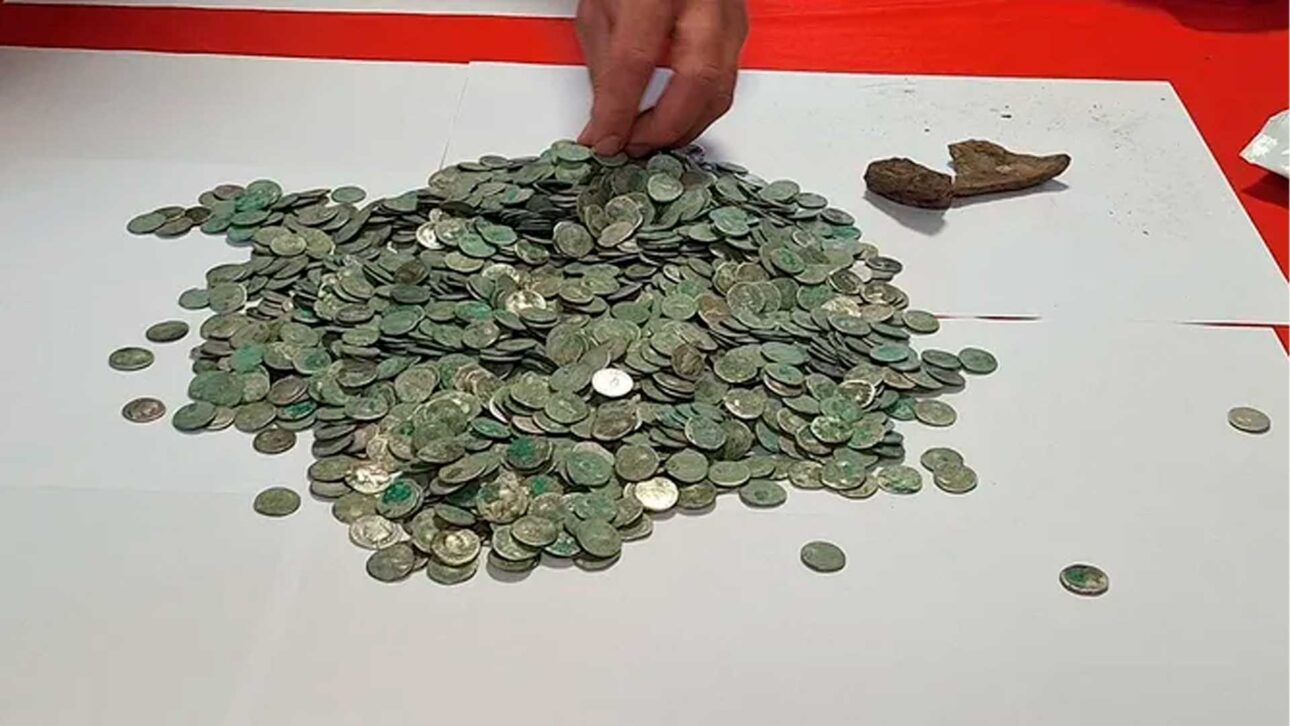
The find was not a single coin, as often happens in occasional searches with a metal detector. What appeared under the soil was a large set, with almost 1,500 silver pieces, an indication that there was a planned deposit there and not just coins lost by chance.
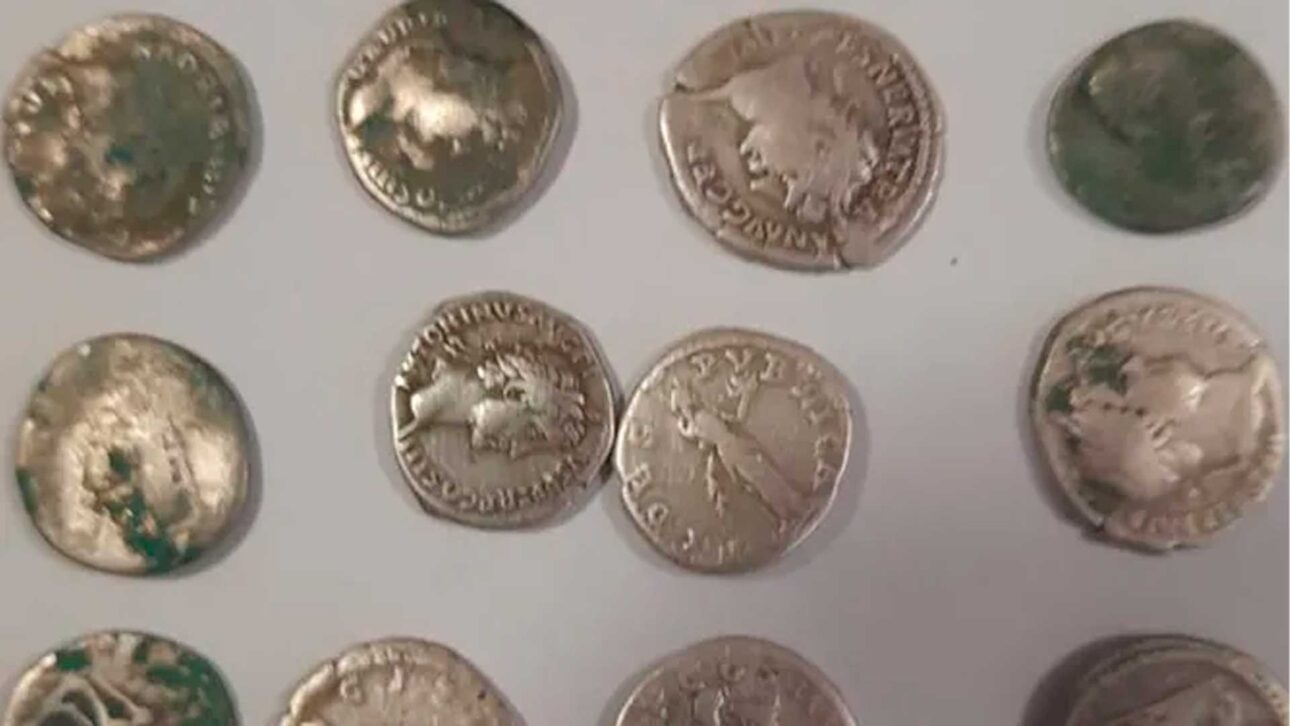
According to HeritageDaily, the coins belong to the Roman imperial period and span reigns from Nero, starting in 54 AD, to Marcus Aurelius, whose rule began in 161 AD. This time range suggests that the collection may have been accumulated over many years, perhaps as a personal reserve, family savings, or heritage kept during a time of instability.
Fragments of pottery were also found alongside the coins. This detail weighs on the experts’ interpretation because it indicates that the money may have been buried inside a container, possibly broken before or after the deposit.
There is still no definitive public assessment of the financial value of the collection. What is known is that, for archaeology, the main interest lies in the context of the find, the type of coin, the sequence of emperors represented, and the way the collection was buried.
Why Roman denarii attract so much attention from archaeologists
The denarius was one of the most well-known coins of ancient Rome. According to the Encyclopaedia Britannica, it began to be issued around 211 BC and became a central silver coin in Roman commerce, especially in the central and western Mediterranean.
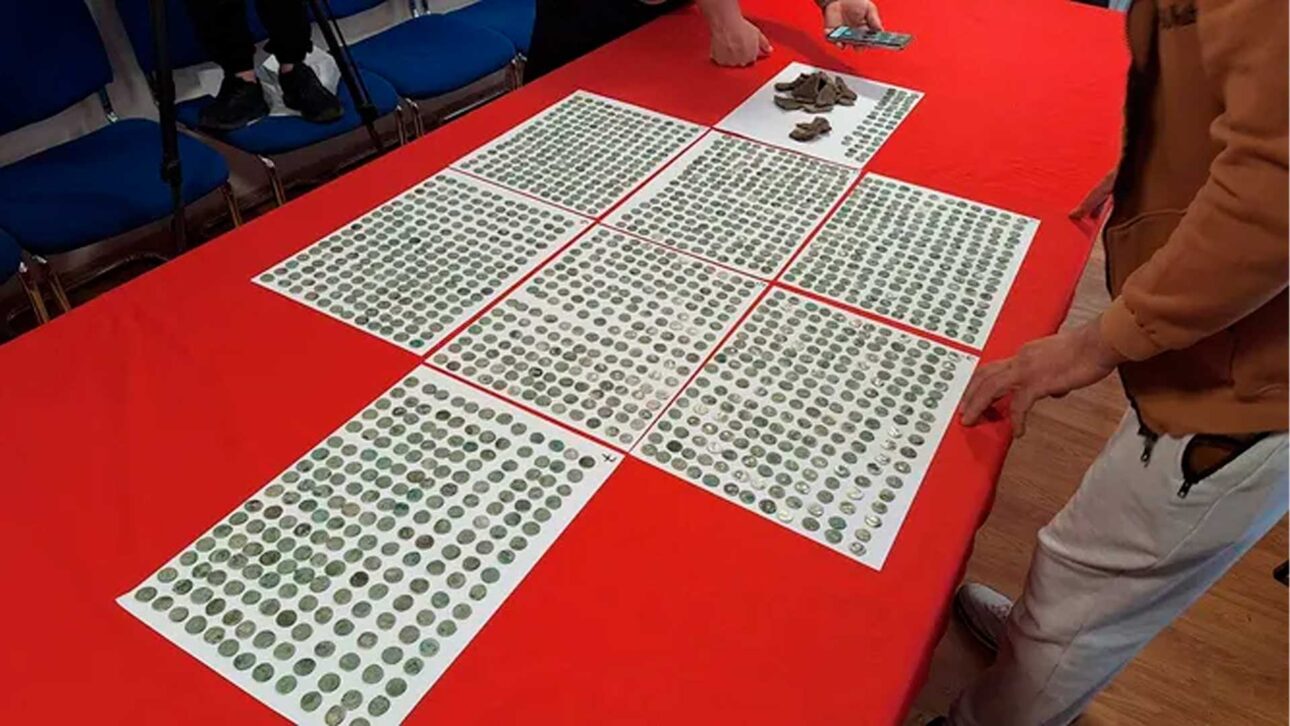
In the Romanian case, these coins help tell a specific part of the presence and Roman influence in the lower Danube region. Present-day Romania houses areas linked to ancient Dacia, a territory conquered by the Romans at the beginning of the 2nd century AD, during Trajan’s rule.
Therefore, a collection of denarii is not only of interest to collectors. For researchers, each piece can bring the name of an emperor, political symbol, religious image, mint mark, circulation wear, and clues about trade routes.
When several coins appear together, the collection allows for broader questions. Who gathered this money? Why was it buried? Did the person intend to return to retrieve it? Was the deposit linked to fear, war, escape, trade, or ritual protection?
The delivery to authorities prevented the find from becoming just a collection piece
Mangeac did not keep the coins. After photographing the pieces, he forwarded the collection to the city hall, a decisive step to preserve the historical value of the discovery. Without this record, the exact location could be lost, and the collection would be reduced to a batch of old objects without archaeological context.
Romanian legislation is strict on this point. Ordinance 43/2000, which deals with the protection of archaeological heritage in the country, requires that casual discoveries of archaeological remains be reported within 72 hours to the competent local authorities.
The Council of Europe informs that Romania organizes its heritage protection with three main bases, including Ordinance 43/2000 for archaeology, Law 182/2000 for movable cultural goods, and Law 422/2001 for historical monuments.
In practice, this means that a person can find an ancient object but cannot treat the find as common property. The priority becomes documentation, technical analysis, and protection of the site where the material was buried.
What can happen now with the coins found in Letca Veche
After delivery, the collection should follow the normal path of heritage analysis. The coins need to be inventoried, examined by experts, classified, and forwarded to an institution capable of preserving the material.
The expectation cited by specialized vehicles is that the collection will be prepared to be under public custody and, in the future, may be displayed at the Teohari Antonescu County Museum in Giurgiu. This process may take time because old silver pieces require technical cleaning, photographic documentation, and numismatic study.
Mangeac stated that he hopes to one day take his son to the museum to show the collection and explain how he was lucky enough to find a page of his people’s history. The phrase sums up the point that makes the case different from a simple treasure hunt.
The discovery of Letca Veche gained attention because it started as a common walk, passed through an unexpected signal on the metal detector, and ended in the hands of the authorities. Between the field, the coins, and the museum, the case shows how an object buried for centuries can still change the understanding of a region.


