





 Portuguese
  English
  Spanish
  4 min of reading
  0 comments


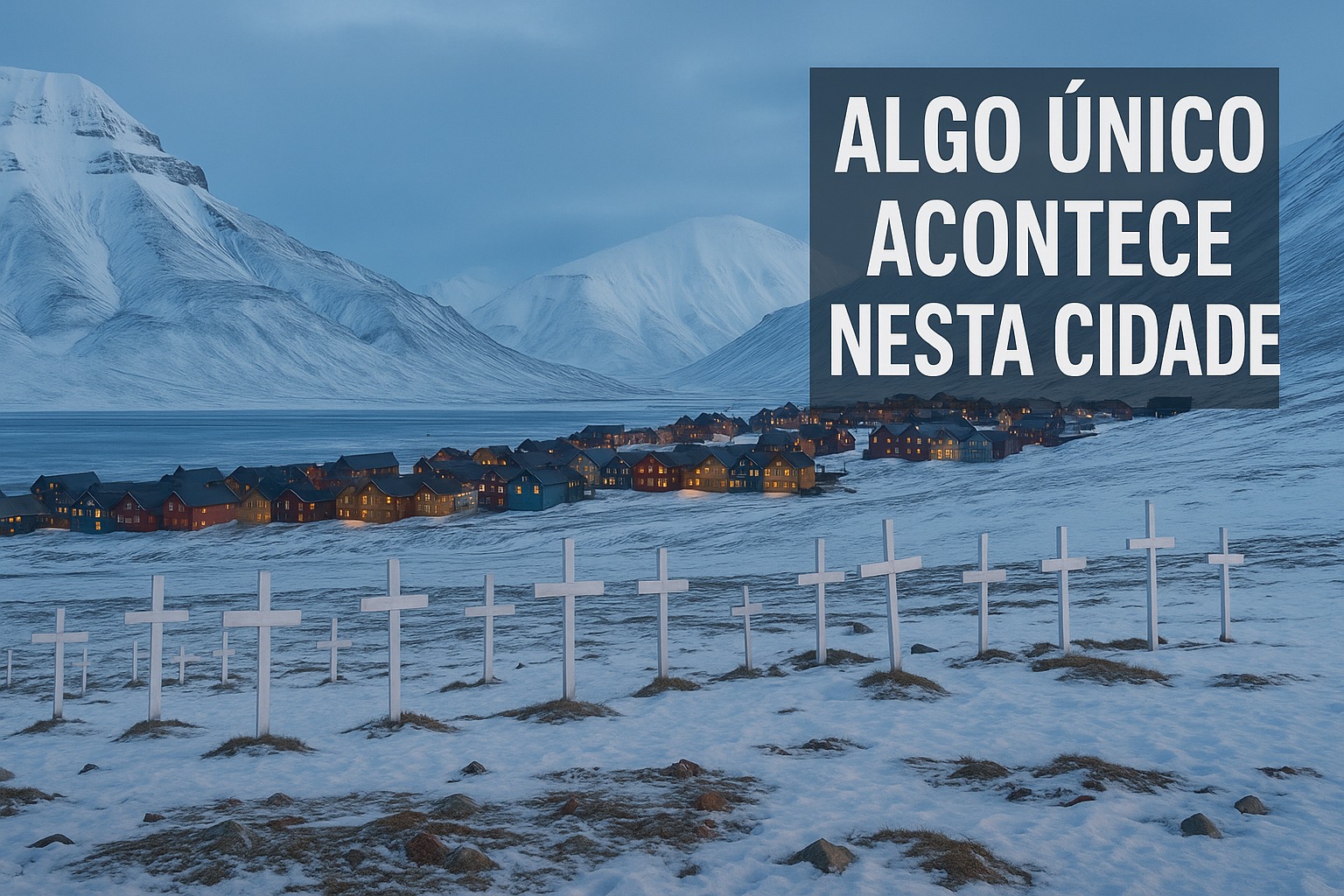
A City Where the Ground Never Thaws Coexists with Unique Rules That Prevent Burials, Shape Residents’ Routine, and Even Transform the Way They Deal with Farewells, Rituals, and Emotions in the Extreme Arctic
Located in the Svalbard archipelago, well above the Arctic Circle, Longyearbyen is known for its frozen landscapes and a law that intrigues visitors because it prevents residents from being buried there. The city, which ranks among the northernmost permanently inhabited places in the world, has lived for decades with the impossibility of using its own cemetery.
This happens because the ground remains frozen year-round, forming permafrost, which makes any natural decomposition unfeasible.
Over time, residents have learned to cope with this scenario. Daily life is marked by challenges of infrastructure, harsh climate, and limitations imposed by geography.
-
Criciúma bets on technology to become a national reference in smart city

-
Peacocks take over tourist city, scratch cars, and divide residents in unusual dispute

-
Child marriage is on the rise again in Gaza: at least 400 girls aged 14 to 16 received authorization to marry in four months, and the UN warns that the collapse of records may hide an even greater crisis.
-
End of the diesel era on the roads? Spanish manufacturer introduces a rival with over 1,000 km range and refueling in just 10 minutes, powered by hydrogen.



Still, permafrost directly interferes with delicate matters, such as the farewell process for family members who die far from the city. This emotional and logistical impact has become part of daily life.
The Influence of Frozen Ground on Funeral Practices
The law prohibiting burials arose because the frozen ground preserves everything that is buried. The impossibility of decomposition caught the attention of researchers, who studied ancient graves in the region and found viruses and bacteria preserved for decades.
This raised a health alert since microorganisms remained active, including agents similar to those of the Spanish flu.
From these findings, authorities concluded that the continuation of burials posed a risk to public health.
Therefore, they established strict policies to ensure that deaths do not occur in the city and that all burials take place outside the archipelago.
Immediate Removal of Patients in Critical Condition
When a resident faces a serious illness, the protocol requires swift action. The city has only one hospital with basic support and is not equipped to handle critical cases.
Thus, when health professionals identify an unfavorable prognosis, they organize removal to hospitals on the Norwegian mainland.
This dynamic works even during winter when darkness is constant and weather makes any travel difficult.
Aerial vehicles are urgently dispatched to ensure the patient receives appropriate treatment elsewhere.
This process allows fatalities to occur in areas with appropriate sanitary infrastructure.
There is even constant monitoring of residents with severe chronic illnesses. Authorities and medical teams maintain frequent communication because they need to act quickly if the situation worsens. Thus, emergency trips are part of local routine.
A Rule That Shapes Daily Life and Impacts Emotional Bonds in the City
The fact that Longyearbyen does not allow burials directly affects the emotional life of its inhabitants.
Many families are unable to hold traditional farewells since the bodies are sent to other cities.
This requires cultural and social adaptations, leading some residents to create symbolic ceremonies or collective memory spaces.
This limitation also influences how the community views the passage of time. Living with the certainty that funeral rituals cannot take place there makes the relationship with death different from that in conventional cities.
The search for alternative tributes strengthens bonds and encourages new ways to symbolize losses.
Curious Rules for Coping with the Extreme Environment
Daily life in the area has other peculiarities that stand out because they reflect the Arctic’s environmental conditions. One of them is the prohibition of cats.
Their presence could harm native species, and the protection of wildlife is a priority. The measure may seem excessive, but it is essential to prevent imbalances in the ecosystem.
Additionally, carrying weapons outside urban areas is mandatory. Polar bears are common in the region, and unexpected encounters pose a real risk.
This measure serves as protection for both residents and visitors and has become part of the safety regulations.
The lack of native vegetation is also notable. Since the climate does not allow the growth of flowers or plants suitable for burials, there is no way to create traditional memorials.
This reinforces the need to adapt customs and reconstruct rituals symbolically.
How the City Faces This Unique Reality
Living in a city where one cannot die requires resilience. Despite the harsh climate, isolation, and unusual rules, Longyearbyen maintains a strong sense of community. Support among neighbors is essential because everyone shares similar challenges.
The farewell of loved ones happens differently. Many resort to memorial records, small symbolic gatherings, or tributes in collective spaces.
The transfer of bodies for burial on the mainland has already become part of the routine, though it frequently has an emotional impact.
An Example of How Geography Shapes Life
The story of Longyearbyen shows how the extreme environment influences human behavior. The permafrost transforms everything from construction and travel to significant life moments.
The city remains a rare example of how geography transcends cultural boundaries and redefines fundamental concepts, such as the very act of saying goodbye.
With information from Terra.


-

-

2 people reacted to this.