






 Portuguese
  Spanish
  5 min of reading
  1 comment


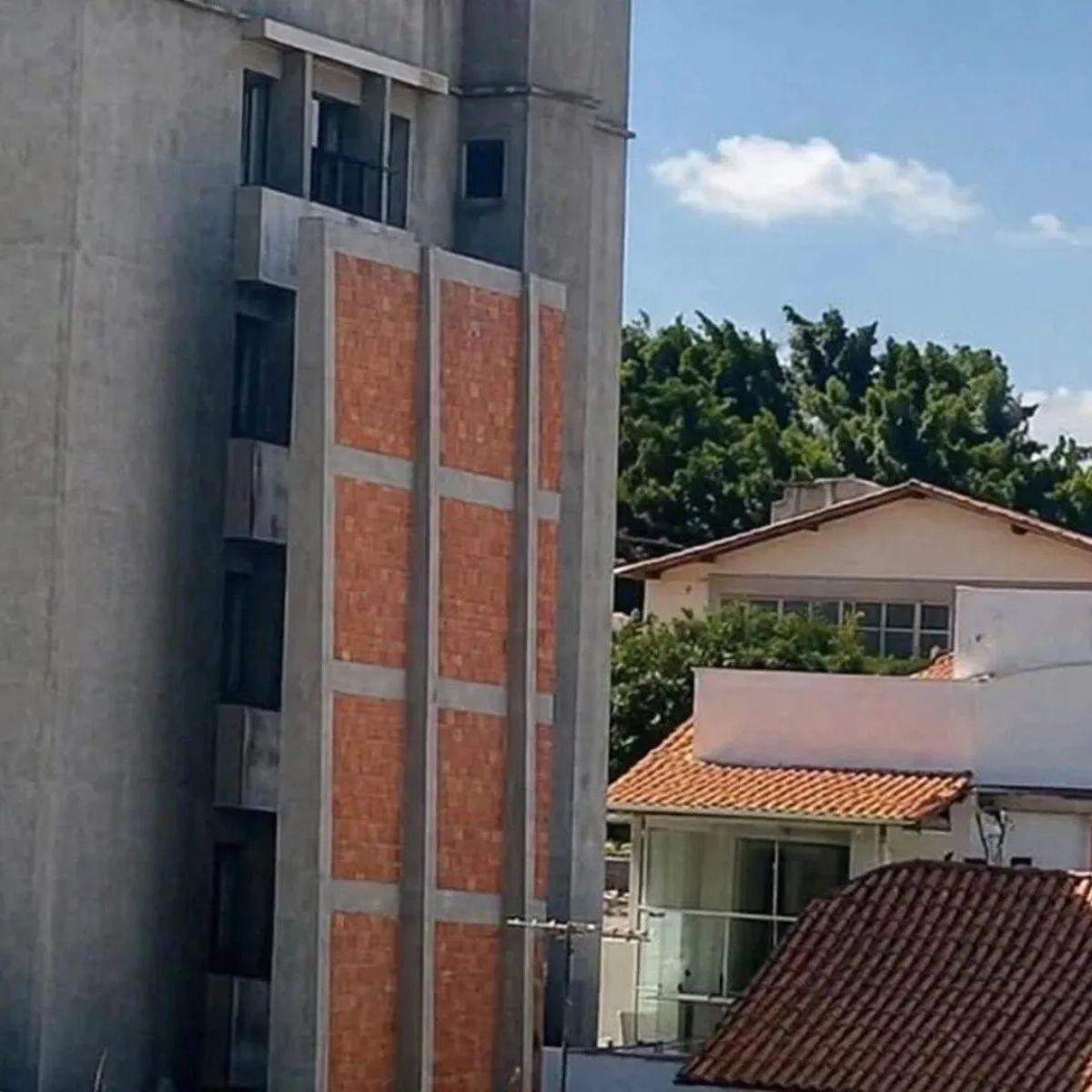

The architect Ivan Vasconcelos designed a 14-meter wall in 2001 in Passos (MG) to ensure the privacy of a house threatened by a neighboring building, after three negotiation attempts failed, and now uses viralization to criticize the urban legislation that allows such conflicts.
A 14-meter vertical wall built at the back of a house in Passos, in the interior of Minas Gerais, went viral on social media, surpassing 4 million views in a single post on X. The construction dates back to 2001, but it has drawn attention now due to the scale of the barrier, which covers windows and balconies of at least three floors of the neighboring building, dividing opinions between those who consider the work absurd and those who would do exactly the same thing. Architect and urban planner Ivan Vasconcelos, responsible for the wall’s design, came forward to explain that the decision was not impulsive: it was the last resort of an owner who exhausted all alternatives before resorting to concrete.
The story begins in a restaurant, where the family was celebrating the purchase of the house when the owner of the establishment informed them that he was part of a group about to build a building on the adjacent lot. The dream of owning a home turned into a nightmare: the future construction would eliminate all privacy of the house, and the owner began a series of attempts to prevent the 14-meter wall from becoming the only solution. None of the three proposals presented to the group were accepted, and Vasconcelos states that the only option left was to design the best barrier that urban legislation allowed.
The three attempts that failed before the wall was built

The homeowner’s first proposal was a land swap. He offered the construction group a lot he owned in downtown Passos, which was larger and better located than the lot where the building would be erected. The negotiation did not progress because the group demanded that, in addition to the swap, the owner also fund the architectural project of the new development, a condition that made the agreement unfeasible.
-
Goodbye, clothesline: new option for drying clothes utilizes walls, doors, and even room height with multiple drying levels, retractable model, and compact structure that promises to transform small laundries in 2026.

-
A discarded microwave may contain 22-carat gold in internal components; study recovered a 450 mg nugget from electronic boards.
-
Beach in the Northeast reaches a new level with a resort worth R$ 745 million, villas up to R$ 8.3 million, a complex of 2,347 hectares, and 6.5 km of beachfront in a destination still far from the hustle and bustle of Pipa.
-
Man buys abandoned luxury Mitsubishi for R$ 2,000 and performs an impossible transformation after finding the engine without oil, the car covered in mud, and even slugs; the project consumed R$ 17,000 and the final result impresses.


The second attempt involved a technical solution. The owner proposed to personally cover the cost of installing tilting metal panels on the balconies and windows of the building’s facade facing his house, a measure that would preserve privacy without requiring the construction of a wall. Once again, the group refused. In the third and most surprising proposal, the homeowner offered to buy all the apartments whose windows faced his land. The response was a price that Vasconcelos classifies as double the market value, making the acquisition impractical.
How the 14-Meter Wall Was Designed and Built

With negotiations concluded, the architect was tasked with designing the best possible wall within legal limits and with guaranteed structural safety. The barrier was executed in exposed concrete combined with re-fired ceramic blocks, laid alternately to allow air passage between the gaps. The choice of materials was not only functional: the exposed concrete and re-fired blocks give the wall an aesthetic that Vasconcelos argues is worthy of an architectural project, not a construction improvisation.
The wall extends along the entire length of the boundary between the house and the building’s land, with 14 meters in height that completely cover the lower floors and partially the upper ones. The structure required engineering calculations compatible with the height, as a wall of this dimension needs to withstand wind forces and thermal expansion without compromising the safety of both properties. The result is a barrier that fulfills its privacy objective but has become so visually striking that two decades later it still provokes public debate.
What Urban Legislation Has to Do with the Wall


Vasconcelos emphasizes that the wall exists only because the legislation allows it. The urban planning regulations in effect in Passos at the time of construction authorized the building within the parameters used, and the architect states that current legislation is even more permissive: today it is possible to erect buildings with completely closed facades on the boundary line, reaching up to 18 meters in height without a single window. In his assessment, this type of rule is devastating for the urban environment.
The central point that the wall case exposes is a failure in urban planning. When legislation allows a building to be constructed with balconies and windows facing directly into the backyard of a neighboring residence, without setbacks or visual protection, it creates the conflict that the affected resident then has to resolve on their own. Vasconcelos argues that the virality of the case should serve to provoke a serious discussion about urban occupation laws and about the type of city Brazil is building with excessively permissive regulations.
Why the wall divides opinions on social media
The public reaction to the wall in Passos is predictable in its division. Those who have experienced having their privacy invaded by a neighboring building understand the owner’s motivation and defend the right to protect their own home by any means allowed by law. On the other side, those who look at the façade of the three-story building blocked by a concrete wall see a visual assault that penalizes residents who had no part in the dispute.
The dilemma does not have a simple answer. The homeowner exercised a legal right after attempting three times to resolve the situation through negotiation. The construction group also exercised its right by erecting a building within the existing regulations. The wall is the product of an urban system that allows two legitimate rights to collide without offering a mechanism for reconciliation, a scenario that architect Vasconcelos considers a direct result of legislation that fails to protect neighborly coexistence. And as land use laws continue to prioritize maximum land utilization without considering the impact on neighbors, walls like this will keep appearing in cities across Brazil.
And you, would you build a 14-meter wall to protect your privacy or do you think there should be a law preventing this kind of situation? Leave your opinion in the comments.


Bom dia! É uma situação muito desconfortável ter nossa privacidade invadida. Lamentável que esse grupo de construção não optaram pelos painéis, nota 0 para eles. Eu apoio essa ou outra forma de reduzir o impacto sobre minha privacidade, mas, é urgente que a legislação cuide e proteja vizinhos e moradores que têm que conviver com uma solução impactante.