






 Portuguese
  Spanish


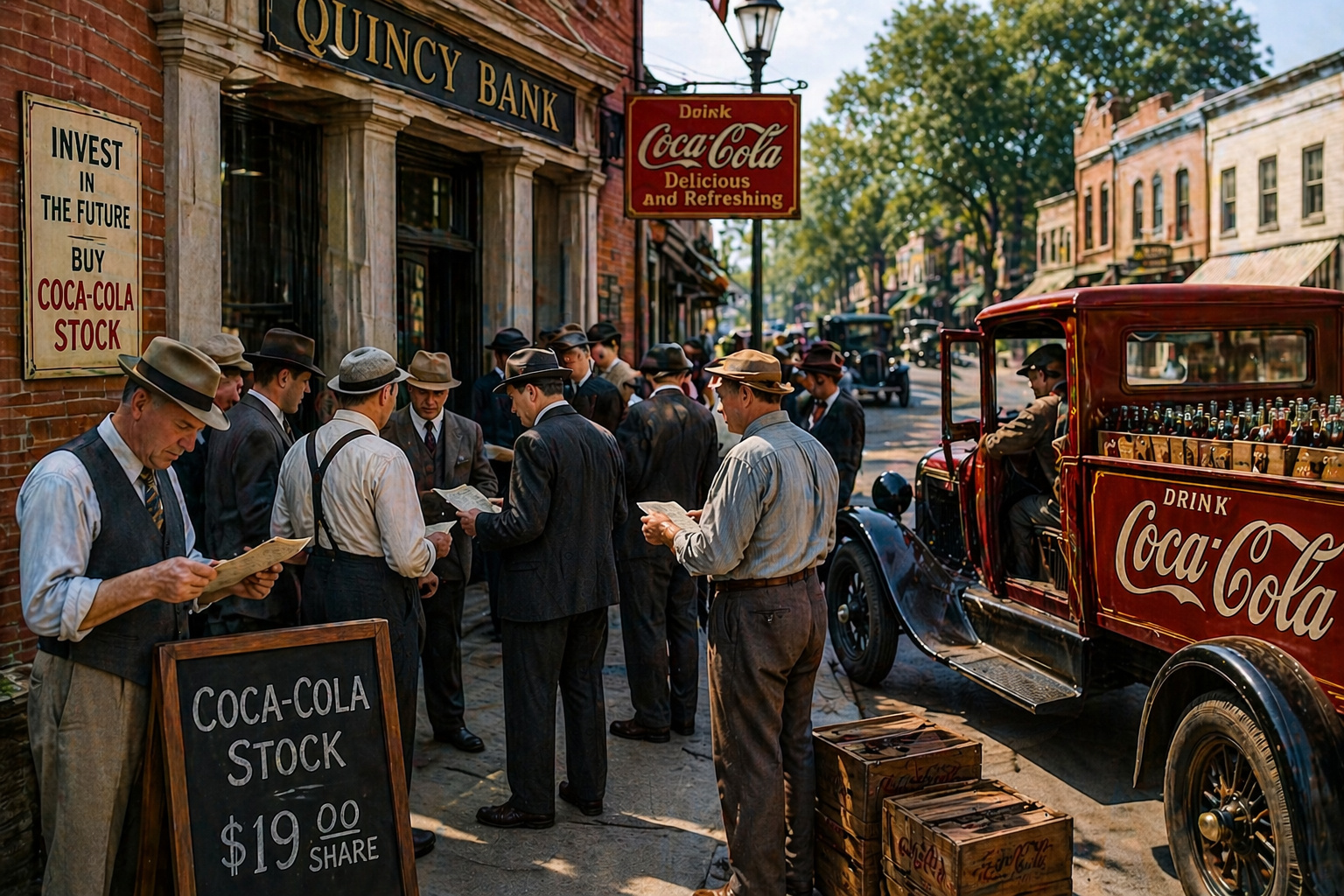

Collective strategy launched during the Great Depression transforms Quincy into a historical case of financial success
A small, poor, agricultural town in the United States managed to turn a deep crisis into a historical case of financial prosperity.
Thus, Quincy, Florida, became an economic reference after a strategy based on investments in Coca-Cola stocks, still in the early 20th century.
Moreover, the story continues to be analyzed in universities as an example of strategic vision, financial discipline, and long-term investment.
-
Crab Trapped in Plastic Bottle for 62 Days Near Okinawa Highlights Little-Known Impact of Marine Pollution on Small Animals

-
Esperanza’s Bamboo Barrier in Oaxaca Redirects River and Reduces Erosion by 85% in Five Years

-
Family Builds Homemade Wind Turbine to Power Off-Grid Home, Video Reaches 555,000 Views on Ngô Thị Huyền’s Channel
-
Indian Brand Creates Sneakers from Recycled PET Bottles and Discarded Tires, Repurposing Over 1 Million Bottles and Raising $4 Million for Expansion





Strategy emerged amid the Great Depression
Firstly, during the decades of 1920s and 1930s, the Great Depression hit the local population hard.
However, even with difficulties, the residents maintained a constant habit: to consume Coca-Cola regularly, even with limited resources.
In light of this, banker Pat Munroe identified an important pattern.
Thus, he realized that brand loyalty could indicate solid financial growth potential.

Stock decline opened decisive opportunity
Previously, in 1919, Coca-Cola went public with stocks valued at around 40 dollars, according to historical records of the financial market.
However, shortly after, conflicts with the sugar industry and bottlers caused a significant drop.
Consequently, the stock value fell to approximately 19 dollars, representing a reduction of about 50%.
Thus, Munroe saw a clear investment opportunity.

Bank boosts collective buying movement
So, the banker began to purchase shares in a continuous and strategic manner.
At the same time, he encouraged the entire community to do the same.
Moreover, according to historical accounts, loans were granted with direct incentives for share acquisition, involving farmers, merchants, and local professionals.
Thus, the strategy was based on two main pillars:
- Confidence in Coca-Cola’s growth
- Maintenance of long-term investments
Consequently, a large part of the population joined the movement.
Financial growth creates “secret millionaires”
As the years went by, the results began to appear consistently.
According to an evaluation study conducted in 2013, a single share, with reinvested dividends, could reach about 10 million dollars.
Additionally, each share generated approximately 270 thousand dollars annually in dividends, paid throughout the year.
Therefore, families that invested around 100 shares, with values between 1,900 and 4,000 dollars, now accumulate extremely high assets.
In light of this, Quincy was even considered, for a period, the richest per capita city in the United States.
Dividends ensured stability during crises
Over time, investments acted as a true financial shield against economic crises.
For example, when agriculture faced difficulties, dividends ensured a constant income.
Similarly, during periods of national recession, the resources maintained jobs and homes.
Thus, whenever stock prices fell, many residents chose to buy even more shares.
Legacy remains to this day in the city
Currently, Quincy retains simple characteristics, with fewer than 10,000 inhabitants and an agricultural economy.
However, despite its modest appearance, the financial legacy remains evident.
Additionally, many families have transferred their assets over generations, through inheritances and trust funds.
Inclusively, until recently, about 65% of local fiduciary assets were still linked to Coca-Cola shares.
Therefore, the city remains one of the most emblematic examples of successful collective investment in modern history.
In light of this scenario, Quincy’s trajectory raises an inevitable question: how many similar opportunities go unnoticed during times of economic crisis?


