





 Portuguese
  English
  Spanish
  5 min of reading
  1 comment





A Rare Cosmic Alignment Allowed Scientists and the Gaia Probe to Confirm the Existence of a Rogue Planet with 70 Earth Masses at 10,000 Light Years Away, Proving That Solitary Worlds Exist in the So-Called Einstein Desert in Our Galaxy
Astronomers confirmed the existence of a rogue planet with 22% of Jupiter’s mass, located 10,000 light-years from Earth. The discovery, published in Science, utilized gravitational microlensing and data from the Gaia probe to prove that starless objects are real.
The Scientific Validation of Isolated Worlds in the Galaxy
Starless planets are real, as astronomers have just discovered at a significant distance from Earth. The general definition of planets involves the star they orbit. The absence of a star makes it almost impossible to find an isolated planet in space.
The difficulty arises because nearly all methods used by astronomers to detect planets depend on the light or movement of a star. Without that stellar reference, an isolated planet emits almost no visible light. It leaves no obvious signal for telescopes to track.
-
The equipment uses water evaporation cooling, promises to reduce up to 5°C indoors, consumes only 20 VA, and transforms dual-flow ventilation into a natural alternative to air conditioning.

-
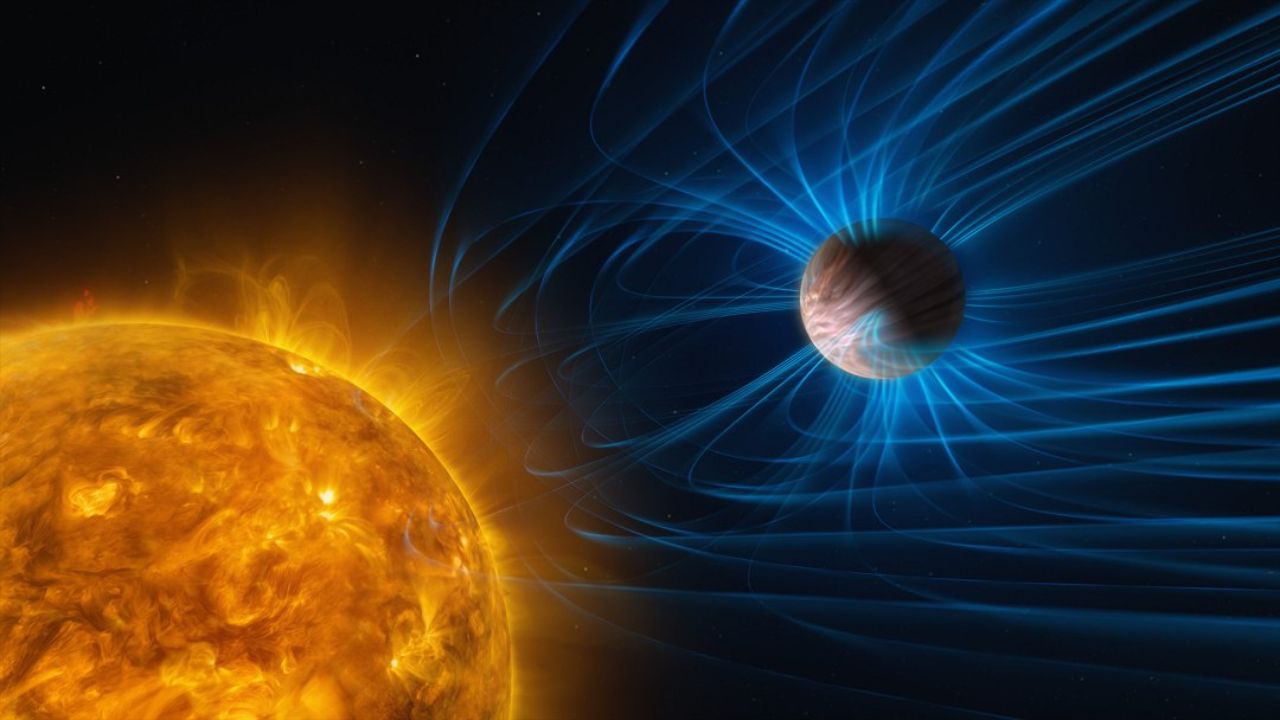
For the first time, astronomers detect magnetic activity in giant exoplanets and reveal winds of up to 25,000 km/h.

-
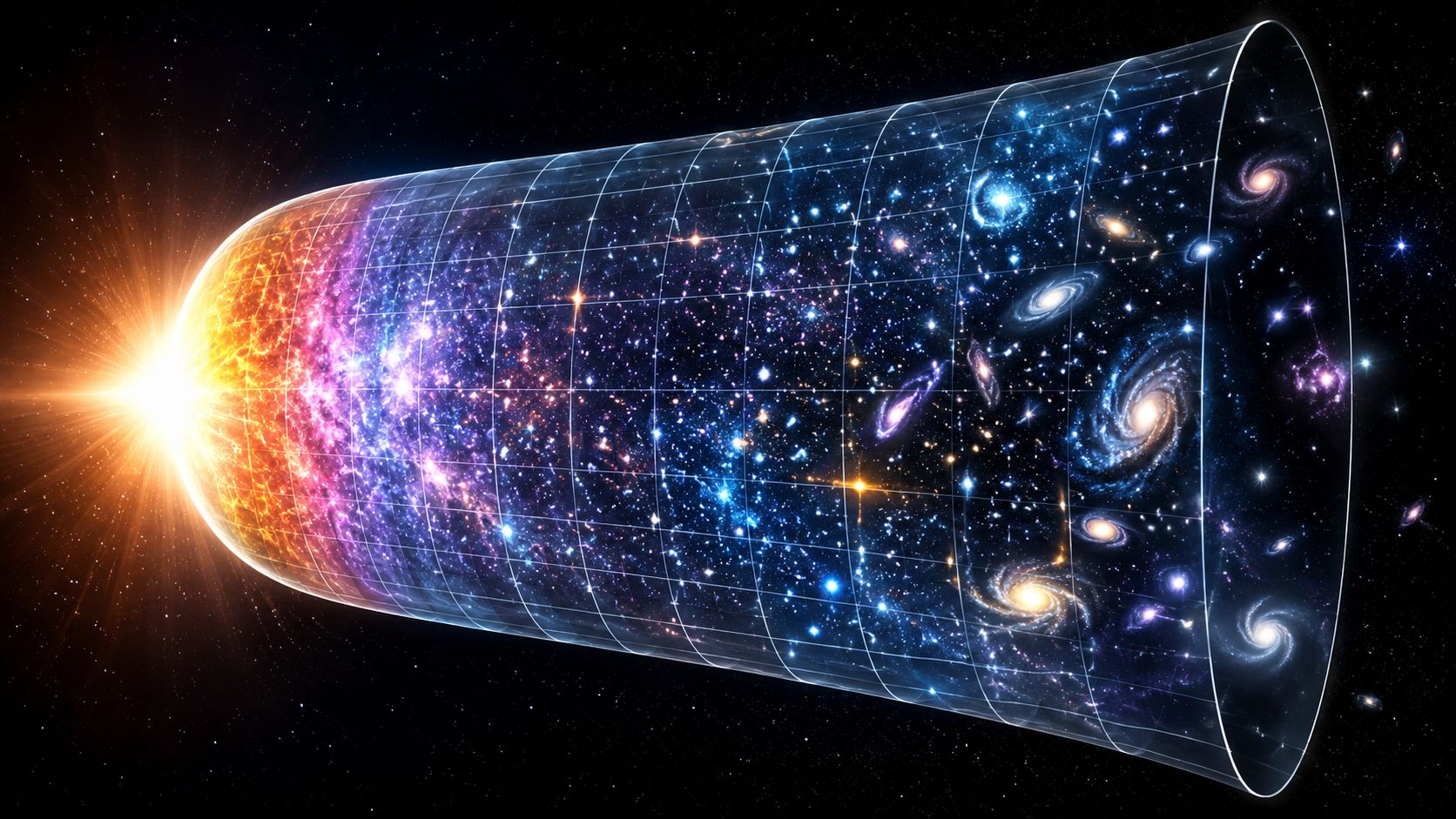
Scientists say that the Big Bang may have started in a different way than many people imagine, and a new theory attempts to explain the initial explosion of the universe without “patches” in current physics.
-
Colorful headphones and unique Bluetooth speakers: Justin Bieber’s brand may debut in the audio market with products that stand out for their design and distinctive colors.


Astronomers have long suspected that the Milky Way is filled with many homeless planets. These bodies may have been expelled from their original stellar systems. Another possibility is that they never had a star to orbit from the time of formation.
No one had been able to prove that these objects were truly planets until now. The new discovery transforms the idea of rogue planets from a theory into direct observation. The study offers evidence that the galaxy may be filled with these bodies.
Subo Dong, an astronomy professor at Peking University and one of the study’s authors, notes the importance of the finding. The physical confirmation validates the long-held suspicions of the scientific community about the population of loose objects in the galaxy.
The Technical Challenge of Detection Without Stellar Light
Most known exoplanets reveal their presence through their host stars. Some block stellar light as they transit in front of them. Others exert a slight gravitational pull on their stars, causing movements detectable by instruments.
Rogue planets do not provide any of these traditional clues. They produce almost no light of their own to be captured. Moreover, they do not have a star with which to interact gravitationally. This makes them effectively invisible to standard observation methods.
The only way for astronomers to detect such objects is through gravity. When a massive body passes between the Earth and a distant star, its gravity bends the light from the star. This makes the star appear to shine more brightly, but briefly.
This specific effect is known as gravitational microlensing. It indicates that something invisible has crossed the observer’s line of sight. However, microlensing has a serious limitation when used alone for the identification of celestial bodies.
The brightness pattern generated does not unequivocally reveal the properties of the object. It is not possible to know whether the object causing the lensing is small and close. It could also be larger and more distant.
This uncertainty is technically called mass-distance degeneracy. Previous detections could not rule out more massive objects, such as brown dwarfs. Astronomers could not assert with certainty if rogue planets actually existed due to this ambiguity.
Overcoming Degeneracy with Simultaneous Observations
A fortuitous alignment solved the degeneracy problem in this specific case. The newly confirmed rogue planet was detected during a gravitational microlensing event. The event was cataloged as KMT-2024-BLG-0792/OGLE-2024-BLG-0516 by the researchers involved in the study.
The phenomenon was observed by ground-based and space telescopes. The authors of the study note that this combination breaks the mass-distance degeneracy. The distinguishing feature of this event was the observation made by the Gaia probe from the European Space Agency.
The Gaia probe observed the event purely by chance. The equipment observes the galaxy from a position very far from Earth. This distance caused a difference in the gravitational microlensing signal when viewed from space compared to the ground observation.
The timing difference was crucial for the data analysis. The gravitational microlensing event occurred almost perpendicular to the direction of Gaia’s precession axis. This rare geometry was classified as a happy coincidence by the researchers.
The geometry allowed Gaia to observe the event six times over a period of 16 hours. Observations began close to the peak of brightness amplification of the background star.
This small difference allowed researchers to calculate the microlensing parallax. The parallax directly reveals how far away the lensing object must be. With the distance known, the team was finally able to determine the object’s mass.
Physical Characteristics and Relevance to Astronomy
The detailed analysis revealed that the planet is located about 3,000 parsecs from Earth. This measurement is just under 10,000 light-years away. The mass of the object was accurately calculated thanks to the combined data.
Its mass is about 22% of Jupiter’s mass. This is equivalent to approximately 70 Earth masses. The size places it just below Saturn in terms of planetary scale. The background star involved in the event was identified as a red giant.
The identification of the background star helped refine the final measurements. The found mass is particularly significant for astronomy. It lies in a range where rogue objects had rarely been observed before in space research.
This range is a gap between lighter planets and heavier brown dwarfs. The region is often referred to as the Einstein Desert. The discovery demonstrates that this gap is not empty, contrary to previous expectations about mass distribution.
Future Prospects for the Exploration of Rogue Bodies
The study provides strong support for theories suggesting that drifting planets are common. The confirmation of the existence of a rogue planet with precisely measured mass is a milestone. Many of these bodies likely form around stars.
They are subsequently expelled by strong gravitational forces in their systems. Others may form on their own in space, never having orbited a star. However, the technique used still relies on rare alignments in the cosmos.
The method cannot find rogue planets at will at this time. Each detection depends on the luck of a precise alignment. Future research should overcome this limitation and provide better ways to identify homeless planets.
Upcoming missions should make microlens detections much more frequent. NASA’s Nancy Grace Roman Space Telescope is one such initiative. China’s Earth 2.0 mission is also designed to continuously monitor large regions of the sky.
This article was produced based on information from the study published in the journal Science, which details the discovery and confirmation of a rogue planet through gravitational microlensing data and the Gaia probe.








Fantástico, cada vez mais que nos aprofundamos no universo , mais maravilhados ficamos com o que vemos.