Portuguese
  Spanish


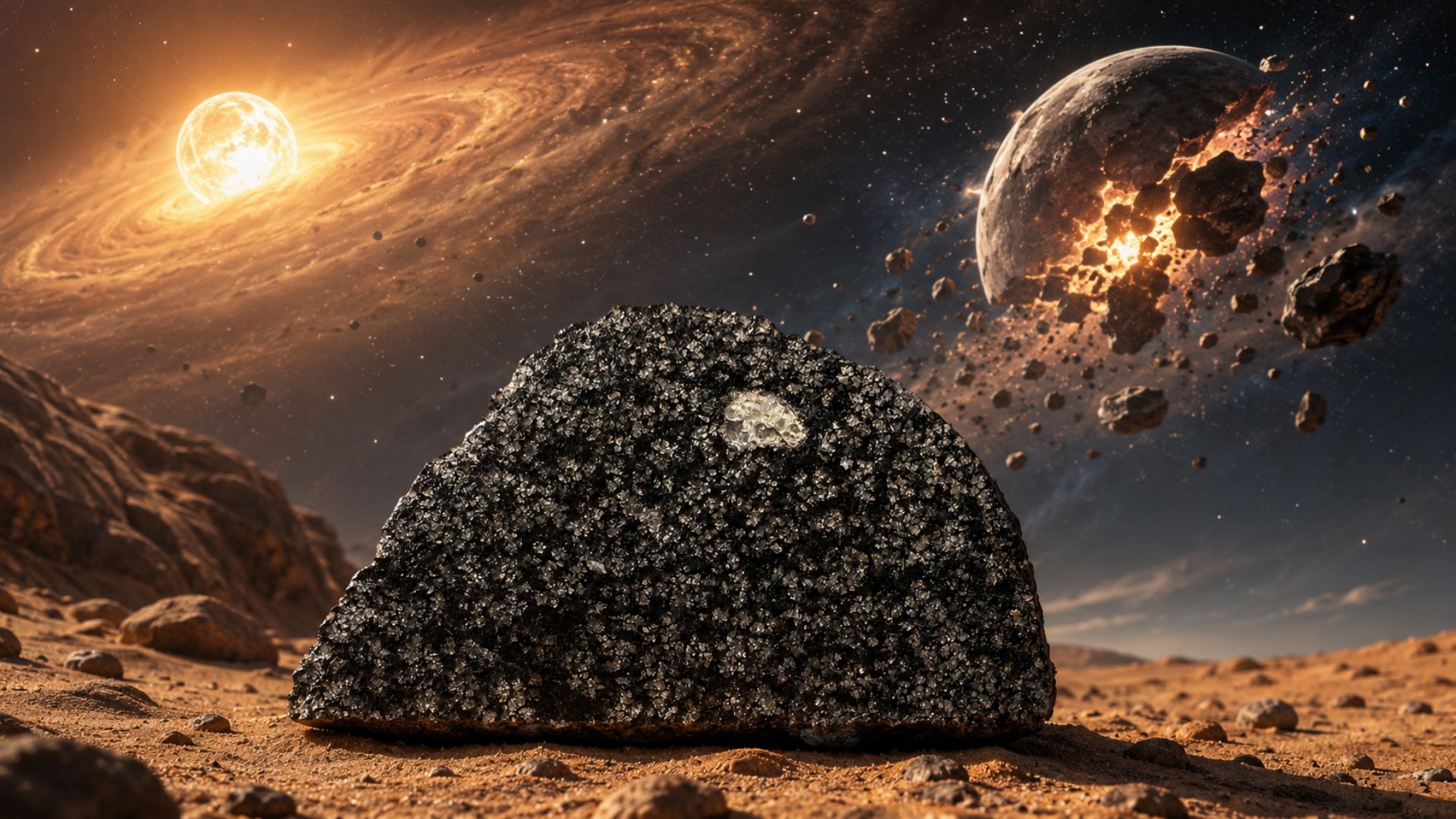

The NWA 12774 meteorite is a rare angrite, and its composition rich in CaTs points to immense pressure, a sign of a huge body of origin. The team from the University of Colorado in Boulder reached this conclusion through analysis and simulations, and size estimates range from the Moon to Mars.
Scientists from the University of Colorado concluded that a meteorite found in the Sahara in 2019 is a fragment of a protoplanet the size of the Moon that disintegrated about 4.5 billion years ago, at the beginning of the Solar System. According to Xataka Brazil, the piece is NWA 12774, and the analysis was conducted by a team from the University of Colorado in Boulder. The fragment helps to understand what rocky planets were like in the beginning.
According to the material, the analysis of the composition of NWA 12774, combined with computer simulations, indicated that it must be a piece of a protoplanet of a size similar to that of the Moon or Mars. This body would have disintegrated into debris 4.5 billion years ago, possibly after colliding with another object while orbiting the Sun. It is worth emphasizing that this origin is a reconstruction, made from mineral clues and calculations, and not a direct observation.
The NWA 12774 meteorite and what it reveals
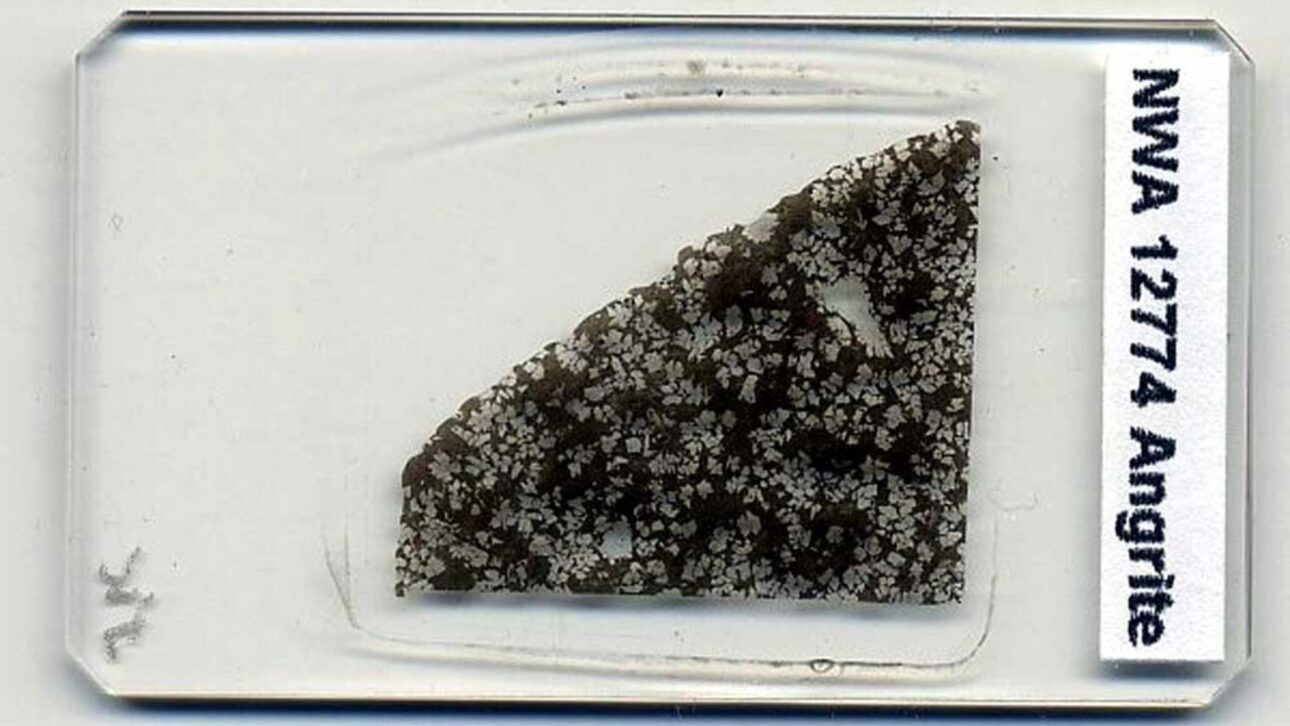
The fragment found in the desert holds a vast history. The NWA 12774 was found in 2019 in the Sahara, and thanks to it, a team from the University of Colorado in Boulder extracted data about the early Solar System. The analysis of the composition and computer simulations established that this meteorite must be a piece of a protoplanet of a size similar to that of the Moon or Mars, which broke into debris 4.5 billion years ago, possibly after a collision.
-
DNA Analysis Reveals How Five Cattle Survived Over 130 Years on a Deserted Brazilian Island

-
Private Spacecraft Intercepts Another for First Time in History During U.S. Space Force Mission Completed 11 Hours Early with Rocket Launched in Record 16 Hours

-
Scientists Predict Earth’s Habitable Lifespan: 1.8 Billion Years Before Oceans Evaporate and Sun Forces Planet Out of Life Zone
-
LG Unveils XBOOM Stage 501 Portable Speaker with 25-Hour Battery, AI Karaoke, and Sound by will.i.am in Brazil


The case shows why it’s worth looking at these rocks. According to the material, estimates indicate that about 17,000 meteorites fall to Earth every year, but only a few are recovered, and there are about 80,000 registered worldwide, a number that should be much higher, as many go unnoticed, seen only as common stones. A single meteorite can bring valuable information about our planet and its neighbors.
A rare angrite, with an uncommon mineral
The first surprise was the type of rock. The initial analysis indicated that the NWA 12774 is an angrite, a very uncommon type of meteorite. Of the approximately 80,000 registered meteorites, only about 68 would be angrites, rare because they contain very little silica, a material abundant on rocky planets like Earth.
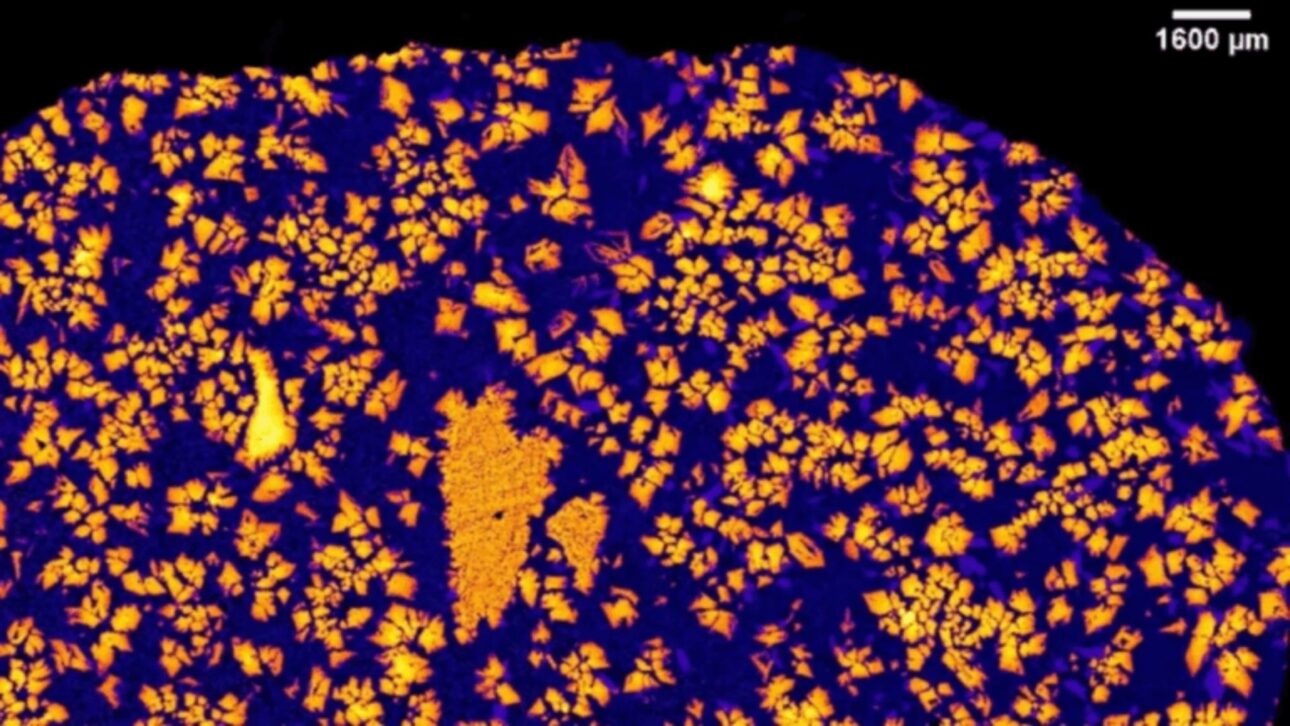
The rarity, however, is double. According to the material, this meteorite also contains clinopyroxene, a common crystal in the Earth’s crust and mantle, and this clinopyroxene is rich in the CaTs forms, a version of the mineral in which one magnesium atom and one silicon atom are replaced by two aluminum atoms. This is a process that only occurs under extremely high pressure, and it was precisely this clue that led to the following calculations.
The pressure that points to a giant body
The pressure number is what changes everything. According to computational reconstructions, to generate such an amount of CaTs, the object would need to be under a pressure of 17.5 kilobars, about 1.75 gigapascals, something immense. For comparison, at the deepest point of the Mariana Trench, the pressure barely reaches one kilobar. This pressure could not have arisen within an asteroid, and, according to scientists’ calculations, a body with at least 2,000 kilometers in diameter would be needed.
Other clues point to something even larger. According to the material, the meteorite has sharp edges and chemical patterns that would have been erased if it had formed in a very deep region of the parent body, which indicates an immense body, as a small depth relative to its size corresponds to very high pressure. Therefore, the 2,000 kilometers would be insufficient, and the estimate points to an object about 3,600 kilometers in diameter, close to the size of the Moon, although some calculations suggest something larger, like Mars.
What the meteorite tells about the early days of the Solar System
The parent body never became a planet. Protoplanets are planets in formation, which would still need to continue colliding and gathering material around them to become complete planets. The object that gave rise to this meteorite did not complete this process, but it must have been part of the early times of the Solar System.
The greatest lesson is in the composition. According to the material, thanks to this fragment, scientists know that, initially, the composition of rocky planets was very different from what Earth has today, indicating that something changed over time. Thus, a single meteorite opens a rare window to understand how the rocky bodies of the Solar System began, even if the exact size and fate of the original body remain as reconstructed estimates.
The meteorite NWA 12774, a rare angrite found in the Sahara in 2019, was revealed to be a fragment of a protoplanet the size of the Moon that disintegrated about 4.5 billion years ago, at the beginning of the Solar System, according to scientists from the University of Colorado in Boulder.
The clues are in the unusual minerals, with CaTs-rich clinopyroxene pointing to a pressure of 17.5 kilobars and an original body of about 3,600 kilometers, all reconstructed from the composition and simulations. The fragment shows that rocky planets began very differently from the current Earth, even though the final size, of the Moon or Mars, remains an estimate.
And you, are you impressed by what a single rock fallen from the sky can reveal about the beginning of the Solar System? Share your opinion and exchange ideas with other readers about what meteorites can still teach us, with respect to different views.