





 Portuguese
  English
  Spanish
  4 min of reading
  0 comments


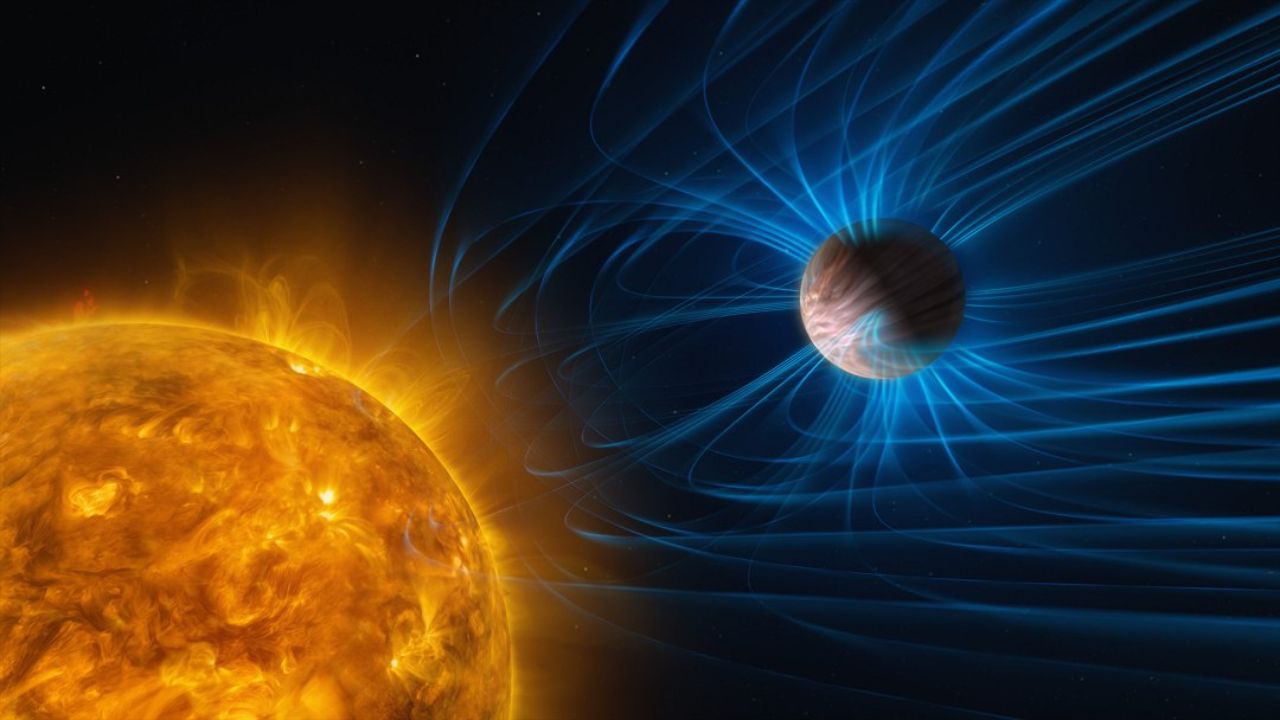
Magnetic activity in exoplanets gains the strongest evidence ever recorded and may aid in the search for potentially habitable worlds.
Astronomers announced the identification of the most robust evidence yet obtained of magnetic activity in planets located beyond the Solar System. The discovery emerged after the analysis of atmospheric winds in seven extremely hot giant exoplanets, observed through the VLT telescopes in Chile and Gemini North in Hawaii.
The results indicate that magnetic fields may be directly influencing the behavior of these atmospheres, opening a new avenue of investigation into the nature of these distant worlds.
The research did not initially aim to look for signs of magnetism. The focus was on understanding the atmospheric dynamics of the exoplanets. However, during data analysis, scientists found an unexpected pattern that ended up revealing a possible action of global magnetic fields.
-
Scientists say that the Big Bang may have started in a different way than many people imagine, and a new theory attempts to explain the initial explosion of the universe without “patches” in current physics.

-
Colorful headphones and unique Bluetooth speakers: Justin Bieber’s brand may debut in the audio market with products that stand out for their design and distinctive colors.

-
Scientists from Colorado concluded that a meteorite found in the Sahara is a fragment of a planet that disintegrated about 4.5 billion years ago, at the beginning of the Solar System.

-
Embraer, a company born in Brazil, is redefining global military transport with the KC-390 Millennium: it flies at 870 km/h, carries 26 tons, operates on unpaved runways, and has already won over 8 countries, including NATO members.


See the study published in Nature Astronomy
The behavior of the winds caught the researchers’ attention
The seven planets analyzed belong to the category of gas giants and have dimensions similar to Jupiter. The difference is that they orbit very close to their stars, receiving intense amounts of heat.
Moreover, these celestial bodies exhibit rotation synchronized with the orbit. In practice, the same face remains constantly facing the star, while the opposite side remains in darkness.
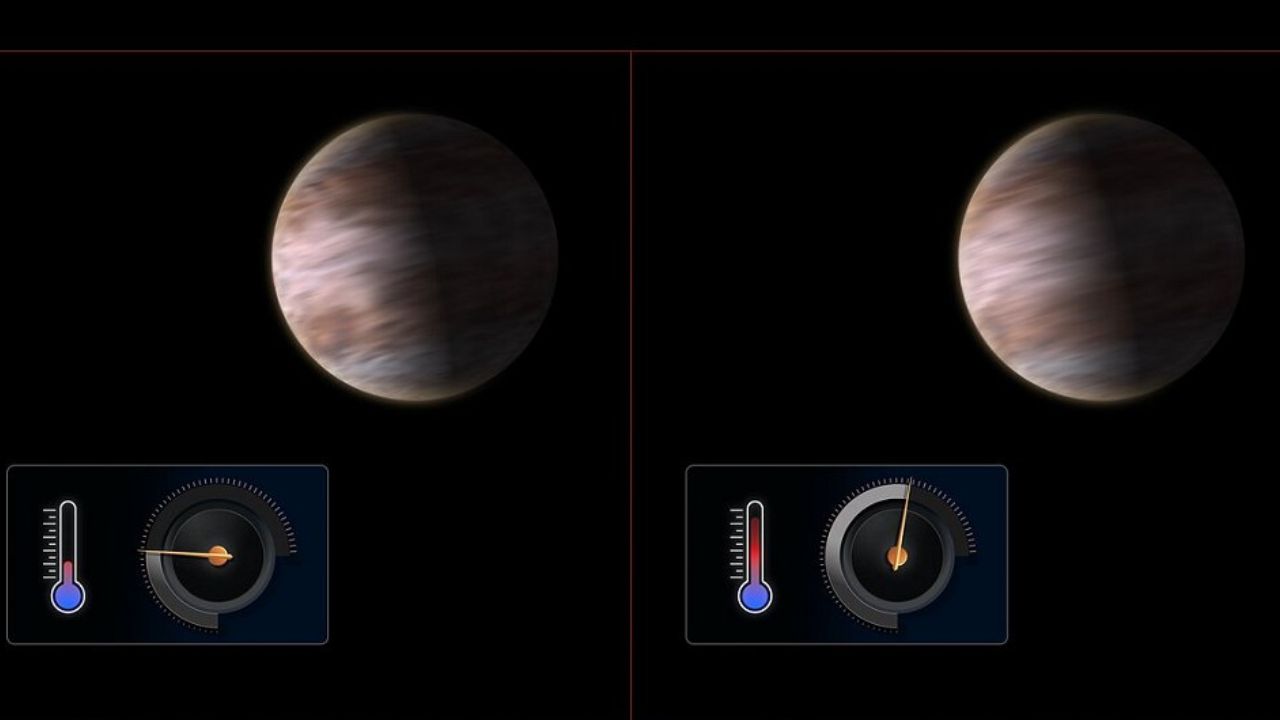
Image: ESO/M. Kornmesser/L. Calçada
This extreme temperature contrast produces winds of impressive speed.
Among the numbers recorded by the researchers are:
- Winds of approximately 7,200 km/h;
- Atmospheric currents exceeding 25,000 km/h;
- Speeds far above those observed on Jupiter, where the strongest winds reach about 1,500 km/h.
Magnetic activity emerges as the most likely explanation
The aspect that surprised the team was the relationship between temperature and wind speed. Instead of showing faster currents as they got hotter, the planets showed the opposite. The winds decreased as the temperature increased.
According to researcher Vivien Parmentier, this result was considered unexpected. According to him, hotter planets should naturally have more energy to accelerate their air masses. Faced with this contradiction, scientists began to investigate other factors capable of interfering with atmospheric movement.
After analyzing the data, the team concluded that the most plausible explanation involves the presence of magnetic activity. Magnetic fields would act as a sort of brake for electrically charged particles, reducing wind speeds.
The results allowed not only to identify the possible influence of magnetism but also to estimate the intensity of these fields. Measurements indicate values comparable to those found in planets of the Solar System.
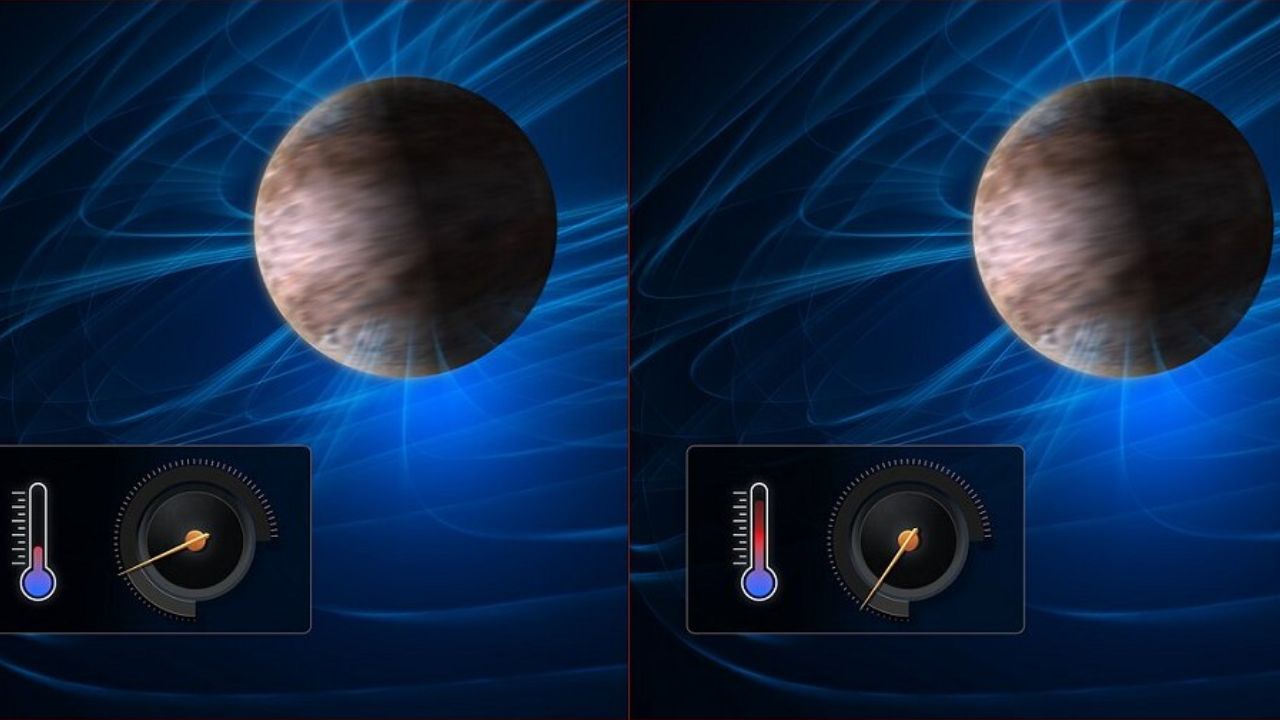
Image: ESO/M. Kornmesser/L. Calçada
Calculations indicate that the observed fields are:
- Approximately four times stronger than those of Saturn;
- About half the strength of Jupiter’s magnetic field.
For the researchers, this ability to compare represents a significant advancement. Julia Seidel, from the Côte d’Azur Observatory in France, stated that the discovery opens a new window for exoplanet studies.
According to the scientist, for the first time, it has become possible to compare the magnetic environments of other worlds, an important step in understanding which planets can retain water and maintain conditions favorable to habitability.
Possible auroras may be even more impressive
The influence of magnetism can go beyond atmospheric circulation.
On Earth, the encounter between charged particles from the Sun and the Earth’s magnetic field produces the auroras borealis and australis. This phenomenon creates colorful lights visible near the poles.
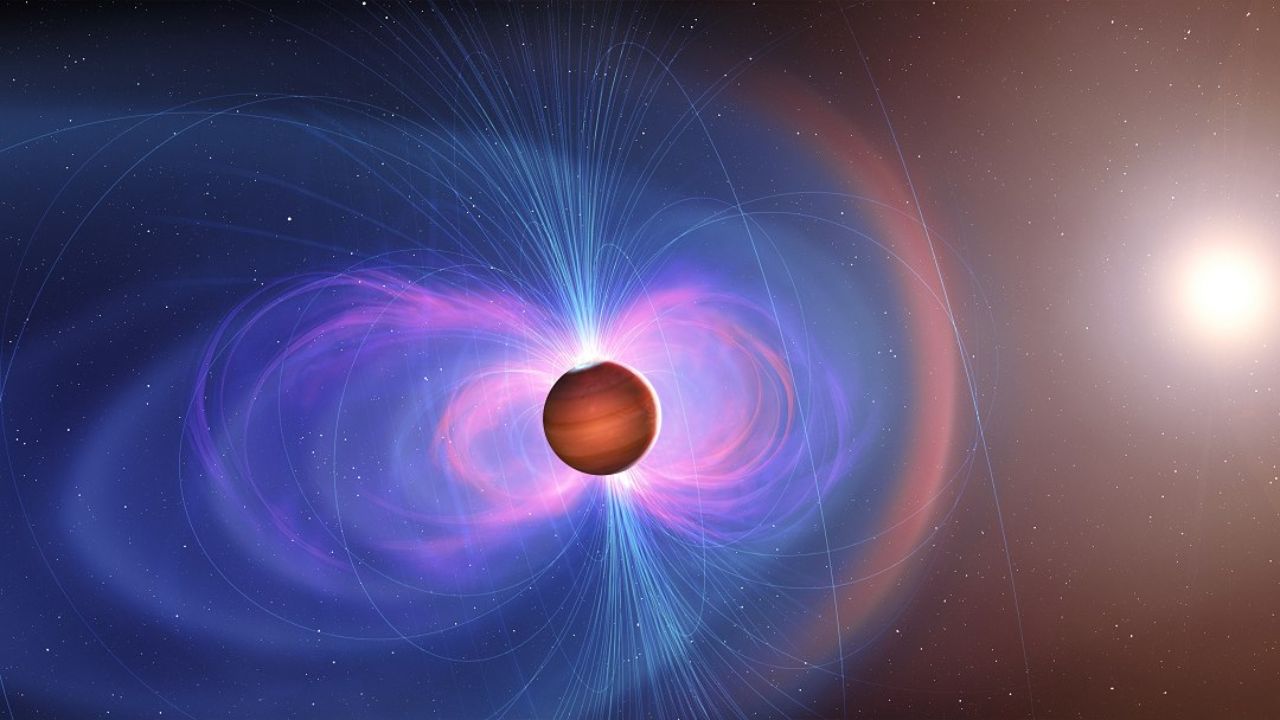
Image: Gemini/NOIRLab/NSF/AURA/M. Garlick
According to researcher Bibiana Prinoth, similar processes may occur on the studied exoplanets.
As the identified magnetic fields are intense, there is a possibility that these worlds may present even more expressive auroras than those observed on our planet.
Next generation of telescopes could expand discoveries
Scientists intend to deepen investigations when the ELT telescope becomes operational. The expectation is that the equipment will allow the analysis of not only large gas giants but also smaller exoplanets, including worlds of a size similar to Earth.
Furthermore, the observatory could help in identifying atmospheric gases associated with the formation of auroras, providing new evidence about magnetic activity in different planetary environments.
With the evidence obtained by the VLT and Gemini North telescopes, researchers believe they have taken an important step towards understanding how magnetic fields work beyond the Solar System.
The discovery also expands the possibilities of investigation into the conditions that may make certain planets more capable of preserving atmosphere, water, and potentially, characteristics associated with habitability.
With information from the site Inovação Tecnológica and Nature Astronomy








Be the first to react!