Portuguese
  Spanish


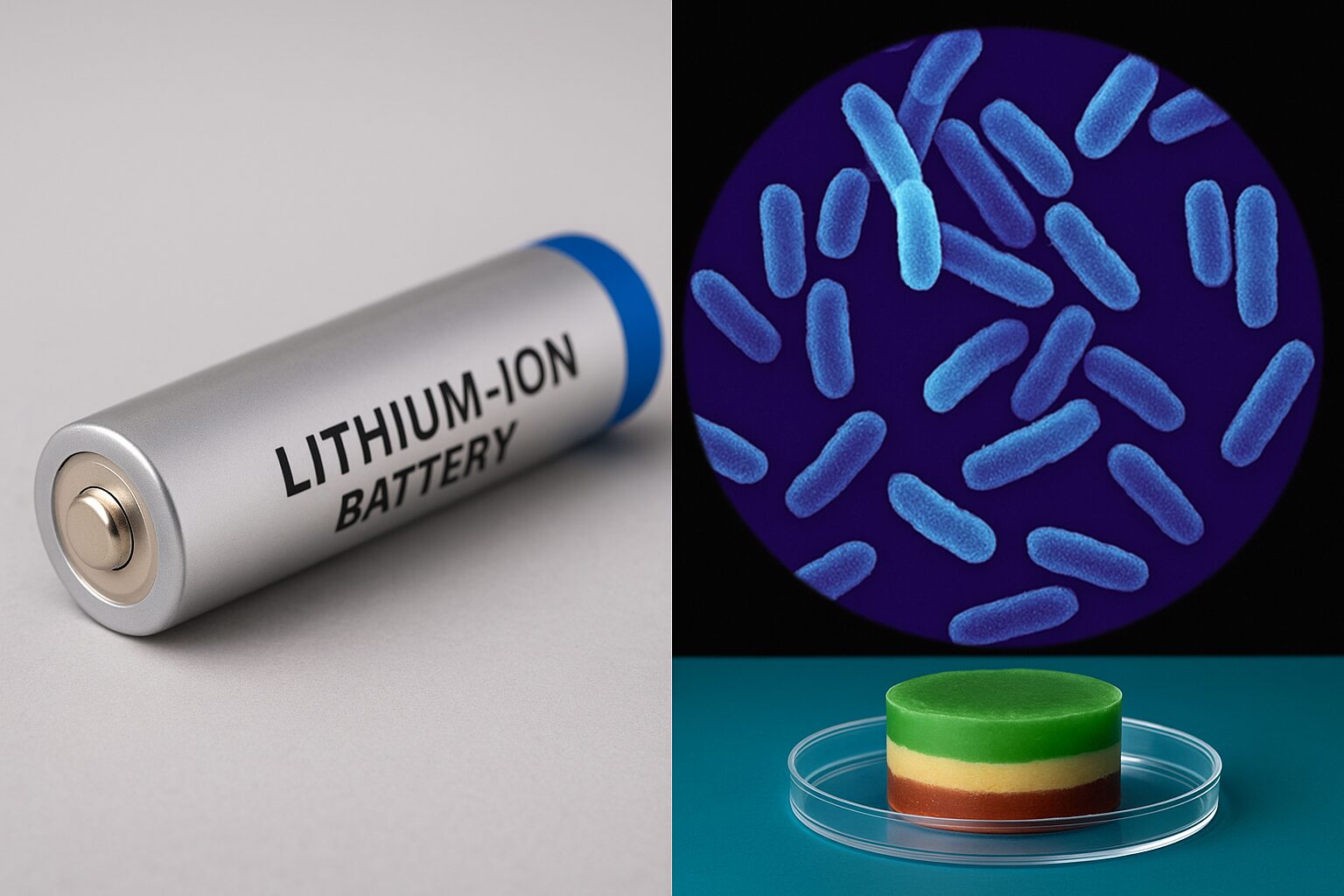

Chinese Researchers Create Biobattery Made With Living Bacteria, Capable of Generating Energy Without Lithium, Mining, or Pollution — With Potential to Revolutionize Medical Devices
The scarcity of materials such as lithium and cobalt worries battery manufacturers worldwide. But Chinese engineers may have found a surprising and eco-friendly solution: a battery that works with living bacteria and does not rely on mining or generate pollution.
New Technology Uses Electroactive Bacteria
Researchers at the Shenzhen Institute of Advanced Technology in China have developed a biobattery that generates electricity with electroactive bacteria. These microorganisms can produce energy by interacting with certain materials.
In the experiment, scientists used hydrogels to house the living bacteria. These soft materials ensure protection and maintain the activity of the microorganisms for a longer time. The created structure is small, light, and has potential for use in various areas, especially in medicine.
-
Six Helicopters to Drop 550 Tons of Poison on Island Near Antarctica to Eradicate Mice Threatening Albatrosses and 19 Seabird Species.

-
Russia Unveils Poseidon: A 20-Meter Nuclear Torpedo-Drone with 10,000 km Range, 185 km/h Speed, and 100-Ton Capacity Threatening Coastal Cities with Radioactive Waves
-
Brazilian Innovator Converts Old Car into Electric Vehicle Using Laptop Batteries and Forklift Motor, Achieves Nearly 90 km/h in Urban Settings

-
Samsung Unveils Smart Oven with Built-In Camera, AI Food Recognition, and Real-Time Monitoring via Smartphone.




Promising Applications in Health
The new biobattery can generate energy on its own and is the ideal size to integrate into portable devices. This makes it useful for medical technologies such as sensors and body control systems.
According to researchers, one of the most important uses lies in the control of physiological functions through bioelectric stimuli.
This includes blood pressure, nerves, and other mechanisms of the human body. Moreover, by eliminating the need for frequent recharges and lacking toxic elements, the solution is viable for real-time monitoring and physiotherapy devices.
Functioning Based on Gel With Bacteria
The system utilizes the bacteria Shewanella oneidensis MR-1, which lives in an alginate gel. This material is moldable with 3D printers, allowing for the creation of batteries with various shapes.
The structure of the biobattery has a diameter of 20 mm and a height of 3.2 mm. It consists of three parts: a gel with bacteria that acts as an anode, a second gel with chemical compounds that functions as a cathode, and a membrane that allows the exchange of ions between the two sides.
Comparison With Lithium Batteries
The capacity of the biobattery is still low: 0.4 mAh per gram and an energy density of 0.008 Wh per liter. This is inferior to the performance of lithium-ion batteries. However, the innovation stands out for other qualities.
In addition to not using critical materials, the system shows good stability. During use, 70% of the bacteria remain viable. At the end of the cycle, this rate rises to 97.6%, indicating the efficiency and durability of the system.
Although it is still far from competing in power with conventional batteries, the biobattery offers sustainable and medical advantages.
It can recharge itself, is biocompatible, and adapts to very specific applications such as nerve stimulation and functioning of body devices. These characteristics position the technology as a strong candidate for innovative and eco-friendly uses in the future.
With information from Xataka.