





 Portuguese
  English
  Spanish
  4 min of reading
  0 comments



Japan Leads Global Bluefin Tuna Farming with 15 Thousand Annual Tons and High-Tech Mega Farms Sustaining the World’s Most Valuable Fish.
In 2024, official data from Japan’s Ministry of Fisheries and international aquaculture centers confirmed that the country leads the global production of Pacific Bluefin Tuna (Thunnus orientalis), one of the most valuable species in ocean fisheries. According to detailed information in the article “Development of Commercial Tuna Farming Technology in Japan”, published in Nutritime – Vol. 22, Nº 06, Nov/Dec 2025 (ISSN 1983-9006), Japan maintains dozens of production units and achieves shipments exceeding 21 thousand metric tons annually, combining ocean technologies, genetics, larviculture, and industrial management in net pens.
The trajectory that supports this leadership began in the 1970s, when Japanese researchers started investigating alternatives to reduce reliance on wild fisheries— a scenario aggravated by the decline of wild stocks and high domestic demand for sushi and sashimi. The major breakthrough came in 2002, when the then Kinki University (now Kindai University) achieved a milestone that would change global aquaculture: successfully completing the full reproductive cycle of bluefin tuna in captivity, from spawning to adult fish, a breakthrough considered one of the most complex feats of modern marine biotechnology.
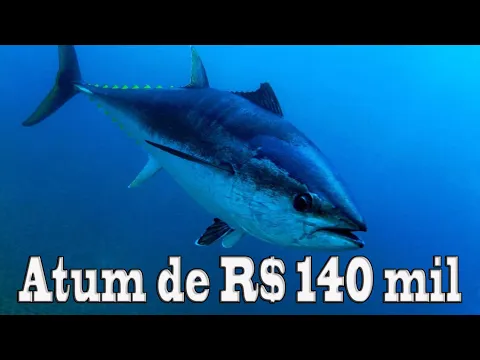

Today, Japan operates mega marine complexes with giant ocean pens, fattening systems that handle individuals exceeding 3 meters and 450 kg, larviculture centers, and environmental monitoring technologies that have transformed the country into the global epicenter of “bluefin aquaculture.” While lab-produced juvenile fish represent about 3% of the total, according to the Nutritime article, the combination of controlled capture of wild juveniles and advanced farming techniques keeps Japan decades ahead of the rest of the world in this high-value industry.
-
It seems like space technology, but it has become defense in the field: China uses basalt fibers tested on the Moon to protect crops against desertification.

-
Brazil takes 82 companies to the largest food fair in Asia and aims for US$ 3.3 billion in deals to expand the strength of agribusiness in China.

-
Macaúba has ceased to be a pest in the cerrado and has become a billion-dollar bet to supply planes and trucks, with Mubadala eyeing R$ 15 billion, vegetable oil, degraded lands, and sustainable fuel that still depends on future commercial-scale harvesting.

-
Mother and daughter left the city, became cheesemakers, and now sell sheep’s milk products in RS, according to a report, with award-winning sweets, their own agribusiness, and a demanding routine balancing motherhood, animals, climate, production, and sales in a niche market.



Bluefin Tuna: The Most Expensive Fish in the World and the Reason for Such Global Competition
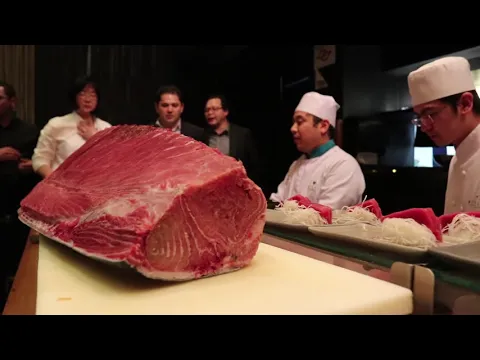
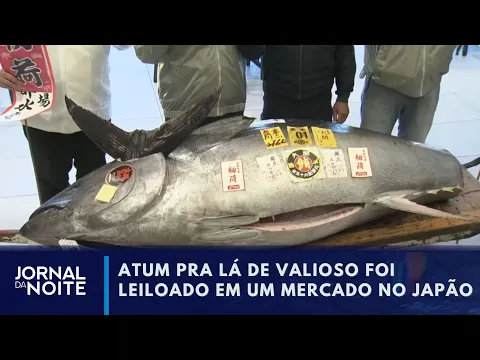
No other marine species commands such high prices in the market as Pacific Bluefin Tuna. In Tokyo auctions, a single specimen has exceeded US$ 3 million, solidifying the fish as a true “blue diamond.”
This valuation arises from technical and cultural factors:
- the bluefin can exceed 300 kg
- it has a high content of intramuscular fat, ideal for premium cuts such as otoro
- it supplies a culinary chain that generates billion-dollar revenues
- it is a species with growing demand in markets in Asia, the Middle East, Europe, and North America

With pressure on natural stocks and the need to meet domestic consumption, Japan has started to treat bluefin farming as a strategic matter for both economic and food security reasons.
Today, companies such as Nissui, Maruha Nichiro, Toyota Tsusho Seafood, and regional cooperatives control marine operations with hundreds of employees, continuous monitoring, and extensive health protocols.
How Japanese Bluefin Tuna Mega Farms Operate
The farming structures are distributed across regions such as:
- Kagoshima
- Ehime
- Nagasaki
- Oita
- Miyazaki
- Okinawa
In these locations, the “ocean farms” feature:
Giant Floating Enclosures
With up to 50 meters in diameter and dozens of meters deep.
Underwater Lighting Systems
Used to stabilize the species’ behavior during growth phases.
Computational Monitoring
With sensors for oxygen, temperature, ocean currents, and population density.
Automated Feeding
Controlled mixtures of sardines, mackerel, and special protein-rich feeds, distributed by high-precision feeders.
Live Transport Between Regions
Carried out by specialized vessels known as tuna carriers, which move juvenile fish thousands of kilometers without compromising quality.
According to the Japan Fisheries Research and Education Agency, these systems are designed to reduce mortality, optimize weight gain, and control stress, critical factors in bluefin management.
The Scientific Challenges Behind the Most Difficult Species to Farm
Farming bluefin tuna is not like farming tilapia, salmon, or bass. It is one of the most complex tasks in global aquaculture.
The reason?
- the bluefin requires large spaces to swim continuously
- it exhibits behavior highly sensitive to noise and currents
- its larvae are extremely fragile and have a low survival rate
- its metabolism is accelerated, requiring heavy and constant feeding
- transport between farms requires enormous expertise
Even within Japan, only a select group of companies and research centers possess complete closed-cycle technology— “full-cycle aquaculture”— allowing the species to reproduce entirely in captivity.
Most countries, including aquaculture giants like China and Norway, still rely almost exclusively on juveniles captured at sea for fattening. This is the difference between Japanese leadership and the rest of the world.
Economic Impact and Why Japan Dominates This Market
The value of bluefin justifies the effort. The Japanese farming industry:
- generates hundreds of millions of dollars annually
- regularly supplies the domestic market
- reduces pressure on wild stocks
- maintains jobs in traditional fishing regions
- exports premium cuts to high-income markets
Furthermore, the country leads in patents for:
- controlled reproduction systems
- larval incubation
- phase-specific nutrition
- anti-predator nets
- live long-distance transport
It is a chain that combines technology, marine biology, and gastronomy in an unprecedented way.
The Future of Bluefin Tuna Aquaculture and Japan’s Role in Global Leadership
The great debate for the coming years involves:
- sustainability
- environmental pressure
- wild stocks
- impact of juvenile capture by other countries
- potential international restrictions
Even so, FAO projections indicate that global consumption is expected to grow, and Japan will continue to lead in technology either through accumulated experience or mastering the most difficult stages of the cycle. The global competition starts now, but Japan is still years ahead.






-

-

-

-

-

17 people reacted to this.