






 Portuguese
  Spanish
  5 min of reading
  0 comments


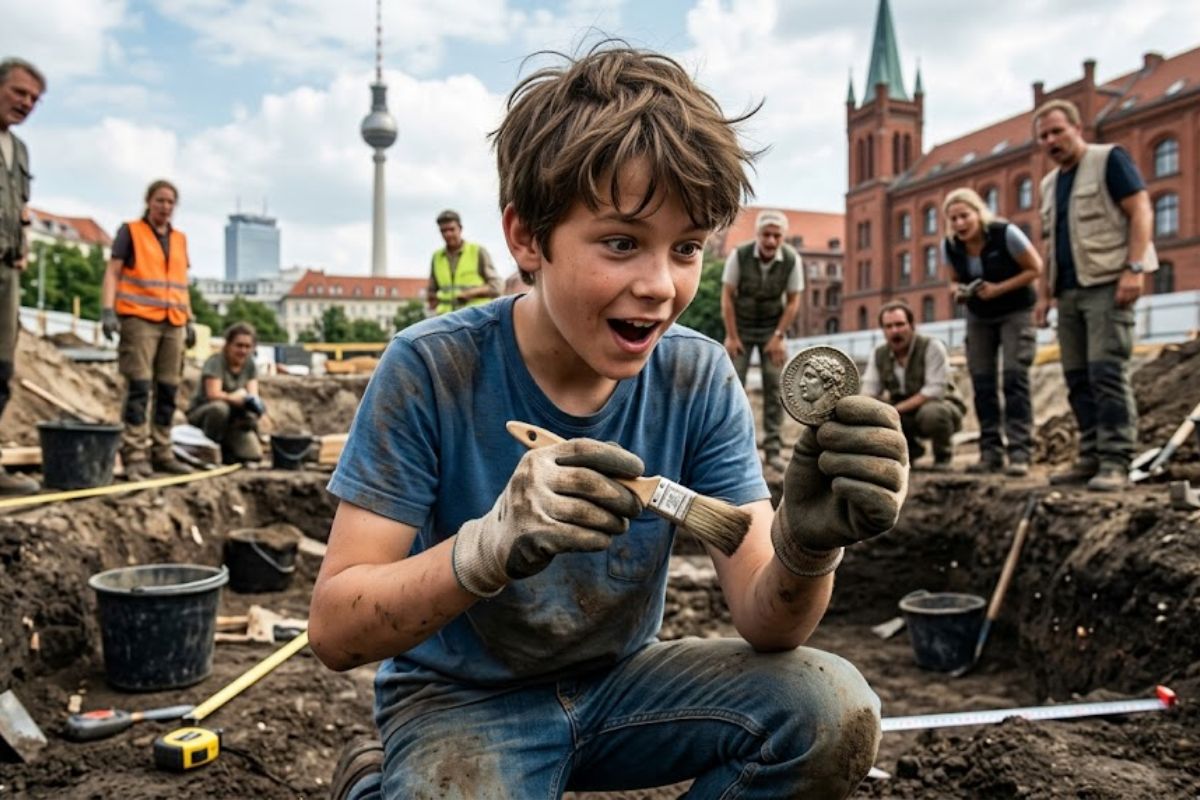
A 13-year-old boy found in Berlin a Greek coin from 2,300 years ago minted in ancient Ilion, the historical Troy, creating the first record of Ancient Greece in the German capital and surprising historians who had never located Hellenic vestiges in the city, with the piece going for exhibition at the Petri Museum.
A 13-year-old teenager did in Berlin, Germany, what entire teams of archaeologists had never achieved in the capital of the country: locating a Greek coin on Berlin soil. The object, about 12 millimeters in diameter and approximately 2,300 years old, was found while the boy was searching through a plot of land that, according to a subsequent survey by the authorities, served as a cemetery in earlier times. According to historians responsible for the analysis, the Greek coin was minted between 281 and 261 BC and belongs to the house of Ilion, a locality in the northwest of present-day Turkey that some scholars identify as the Troy of historical accounts.
The discovery carries unprecedented weight because, until now, no vestige of Ancient Greece had been identified in Berlin. The State Office for Monument Preservation of the city confirmed that, although Roman remains appear with some regularity in the region, Greek finds were completely nonexistent before this Greek coin emerged from a plot explored by a boy. The piece transforms the understanding of the reach of Hellenic influence in northern Europe and raises the question of whether the ancient Greeks maintained commercial contact with peoples far beyond the Mediterranean.
What the Greek coin from Ilion reveals about its details and origin

The piece found by the boy is small but full of visual information. On the front face, the Greek coin displays the figure of the goddess Athena wearing a Corinthian-style helmet, a classic iconography of Hellenic minting. On the reverse, there is another representation of Athena, this time wearing a typical head adornment of the time, called kalathos, and holding a spear raised in her right hand.
-
As the polar cold wave freezes the South this week, archaeology reminds us how the Kaingang dug underground houses on the Santa Catarina plateau to survive frosts millennia ago.

-
Federal Police involved in the case to identify the person responsible for hacking the Civil Defense system, which sent ten false alerts, frightened residents of different capitals, and turned messages about real risks into notifications with “misanthropy” and even alien attacks.

-
Extreme drought causes ghost village to reappear at the bottom of the reservoir that supplies Athens, revealing houses, a school, and ruins swallowed since the 1980s as the lake shrinks and exposes the water crisis threatening the capital of Greece.

-
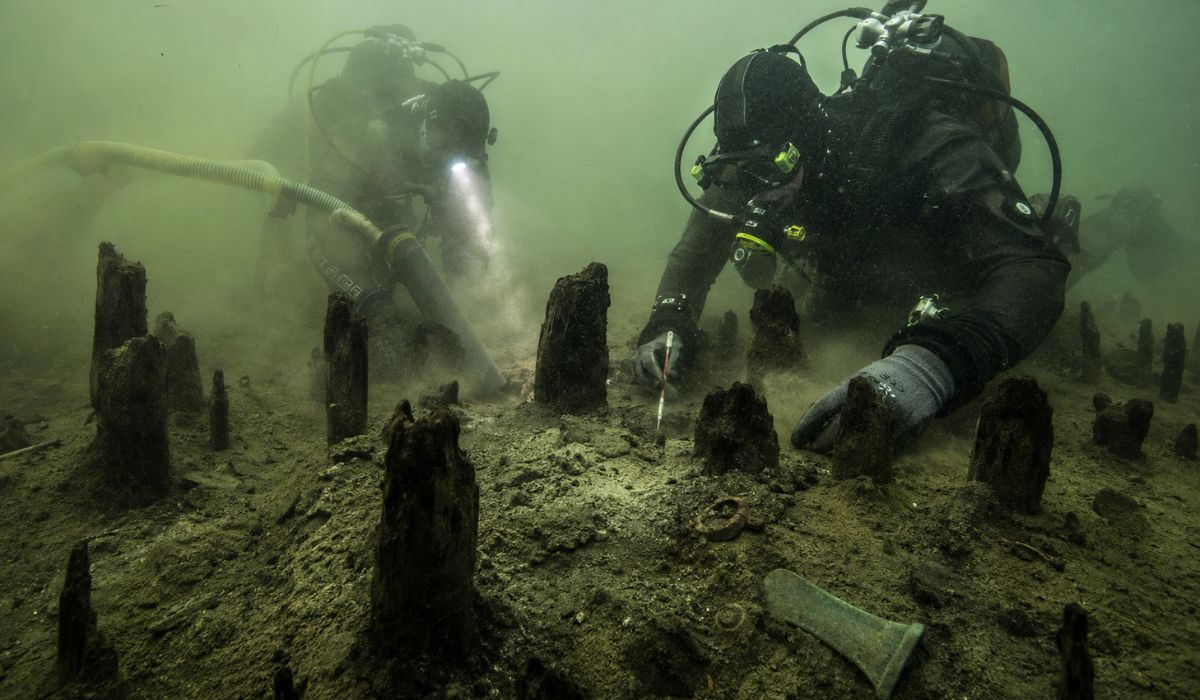
An entire village lay asleep at the bottom of a lake for 3,000 years: divers suction sediments in Italy and reveal more than 600 wooden stakes, bronze tools, and traces of a Bronze Age settlement hidden underwater.


The specialists identified the origin of the coin as Ilium, a city located in what is now northwestern Turkey. This region is often associated with the Troy of ancient accounts, which gives the Greek coin a symbolic value that goes beyond the archaeological. The dating between 281 and 261 BC places the minting in the Hellenistic period, a phase after the conquests of Alexander the Great, when the culture and commerce of Ancient Greece expanded significantly. A coin minted in Troy and found in Berlin is, in itself, a travel narrative that spans thousands of kilometers and centuries of history.
Why the discovery of a Greek coin in Berlin surprised historians
Ancient Greece did not operate as a unified territorial empire like Rome. Its organization was based on independent city-states that maintained trade exchanges, made political agreements, and frequently entered into conflicts with one another. The model changed partially after Alexander’s campaigns, but even so, Greek expansion occurred mainly through trade and cultural means, not through the permanent military occupation of distant territories.
What the Greeks did with remarkable efficiency was spread their products and their coinage throughout the Mediterranean and beyond. However, until the discovery by the boy in Berlin, historians had no material evidence of Greek presence in the German capital. Roman fragments appear from time to time in Berlin excavations, as do artifacts from other ancient cultures, but the Greek coin represents an entirely new category of record for the city.
How specialists dismissed the hypothesis of accidental loss of the Greek coin
The first reaction of historians was to question whether the coin might have belonged to some modern collector who lost it accidentally. To rule out this possibility, the authorities analyzed the context of the ground where the boy found the Greek coin and confirmed that the site served as a cemetery in ancient periods. Other diverse archaeological materials had already been recovered in nearby areas, including a Slavic sheath dated to the Roman imperial period.
This funerary context opens a relevant line of interpretation. Some historians raise the hypothesis that the Greek coin may have arrived at the site through burial rituals, a practice documented in various ancient cultures that deposited valuable objects with the dead. If this theory is confirmed, it would mean that the coin not only happened to be in Berlin but was considered valuable enough to accompany someone to the grave.
What the Greek coin suggests about trade between Greeks and Northern European peoples
The piece from Ilion adds material evidence to a discussion that has already existed among historians: the possibility that the ancient Greeks maintained trade routes with the Baltic peoples. The Mediterranean was the undisputed center of Greek economic activity, but the emergence of a Greek coin in Berlin indicates that Hellenic goods and coins traveled greater distances than the available documentation suggested. The piece may have passed through several hands and crossed multiple borders before reaching the ground where the boy unearthed it.
The authorities in Berlin decided to put the Greek coin on public display later this month in April, at the Petri Museum. The decision reflects the importance that experts attribute to the find: it is not just an ancient object, but a physical proof that expands the map of cultural and commercial influence of Ancient Greece. For Berlin archaeology, accustomed to dealing with Roman, Slavic, and Germanic remains, the arrival of a Greek artifact in the collection represents a completely new chapter.
A 13-Year-Old Boy and the Accident That Changed Berlin Archaeology
The fact that the discovery was made by a teenager, and not by a professional team, adds a layer of irony to the story. Berlin has been intensely researched by archaeologists for decades, and yet the Greek coin remained hidden until a boy decided to explore a site on his own. The case reinforces the role that chance continues to play in archaeology, even in an era of sophisticated sensing and excavation technologies.
Researchers acknowledge that elements are still missing to accurately determine how the Greek coin traveled from Troy, in Turkish territory, to northern Germany. However, the mere fact that it exists on Berlin soil has already altered what was known about the limits of Greek presence in ancient Europe. Each new analysis of the piece and the ground where it was found may bring additional clues, and the exhibition at the Petri Museum will allow the public to closely follow a find that was born from the curiosity of a 13-year-old boy.
And you, did you imagine that the ancient Greeks could have reached Germany? Do you think the Greek coin traveled through trade routes or was it carried by other means? Leave your opinion in the comments.







Be the first to react!