






 Portuguese
  Spanish
  3 min of reading
  0 comments


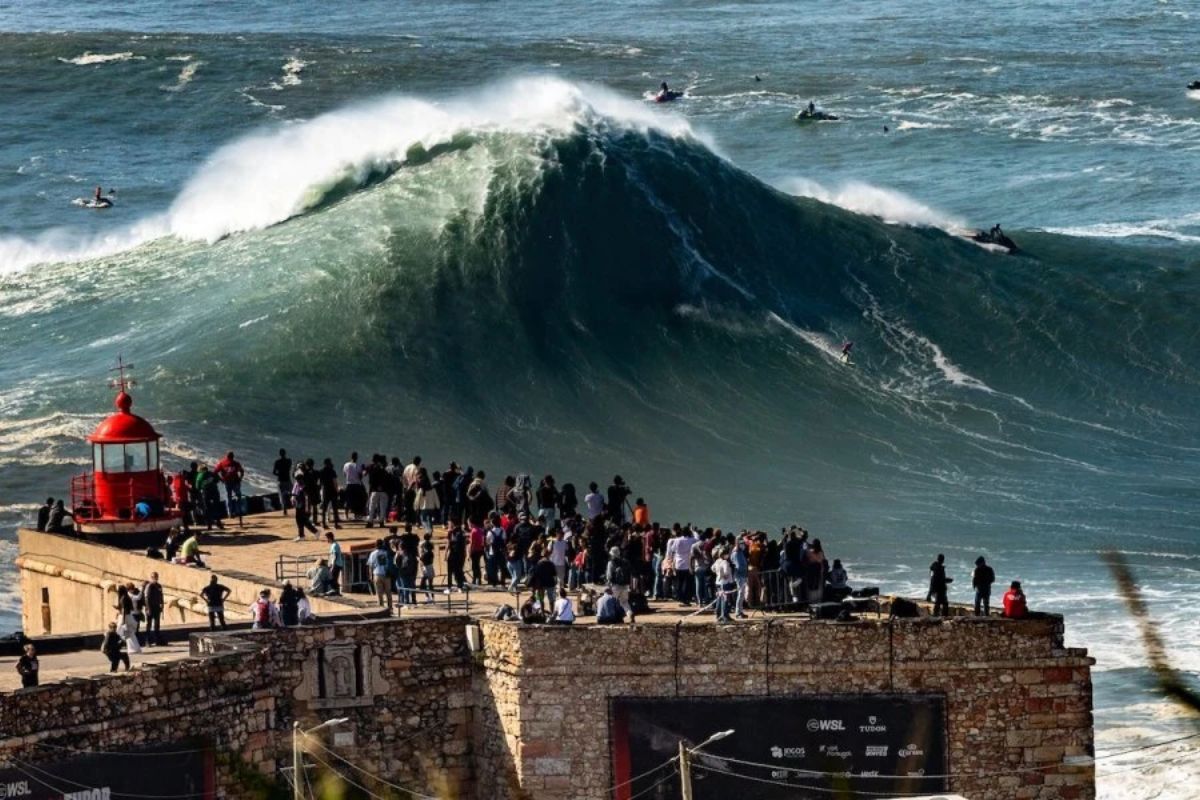
MIT researchers developed a tool called PlanetWaves that simulates the formation of waves in seas and lakes of other planets, and the most surprising result came from Titan, the largest moon of Saturn. According to the model published in April 2026 in the Journal of Geophysical Research: Planets, weak winds that would hardly form ripples on Earth can generate waves up to 3 meters high in the liquid methane seas of Titan. Saturn’s moon would be, by physics, the best surfing spot in the Solar System.
The secret lies in the combination of three factors that only exist together on Titan. The moon’s gravity is only 14% of Earth’s, which means the force pulling the waves back down is much lower. The liquid in the seas, made of methane and ethane, is significantly lighter than water. And Titan’s dense atmosphere allows even a gentle breeze to transfer enough energy to raise huge waves. On Earth, a light wind generates only ripples. On Titan, the same wind creates waves that would make any surfer look twice.
“If you were on the shore of that lake, you might feel just a gentle breeze, but you would see huge waves coming toward you,” explained Una Schneck, a PhD student at MIT and the lead author of the study. The problem, of course, is that no one could surf: the temperature in Titan’s seas is -179°C, and the liquid is not water, but hydrocarbons that remain in liquid form only because of the extreme cold.
How did MIT create a wave simulator for other planets?

The difference of PlanetWaves compared to previous models is that it does not consider only gravity.
-
They wanted artificial intelligence, but they drained the water from a village in Mexico: the water consumption of data centers caused a hepatitis outbreak, and big tech companies Amazon, Microsoft, and Google were forced to halt billion-dollar projects.

-
System created to save lives in disasters turned ‘against’ Brazilians overnight: a hacker attack sent out a false alert from Civil Defense with the word “misantropia” that went off on the phones of half the country, even in silent mode, and took down the Cell Broadcast.
-
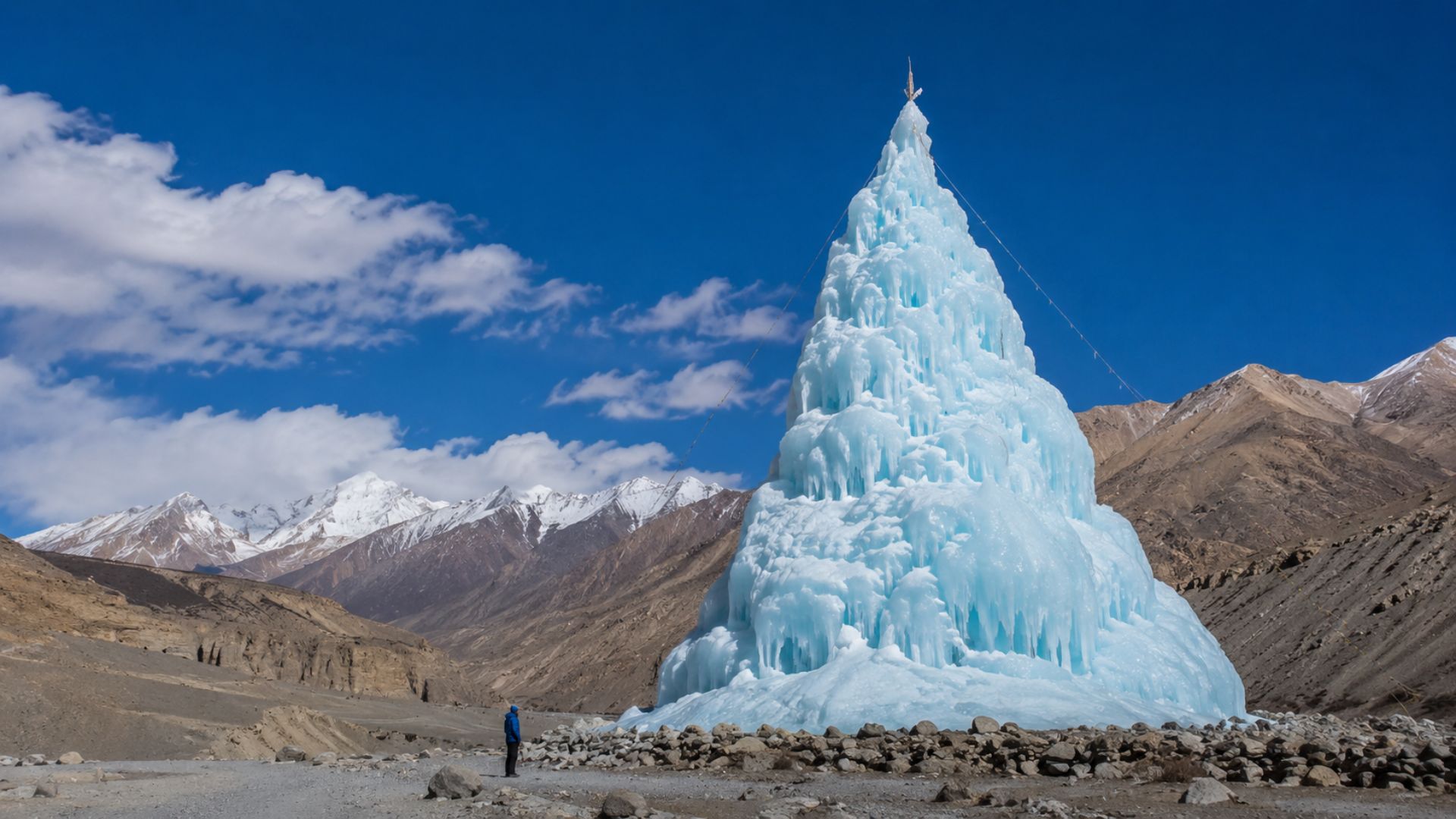
In the cold desert of Ladakh, where it hardly rains, engineer Sonam Wangchuk created the ice stupa, a tower that freezes winter water and stores it for irrigating crops in the spring, a simple engineering feat that mimics nature.
-
For the first time in history, solar and wind energy generated more electricity than natural gas worldwide in a single month, April 2026, a milestone in the energy transition that shows renewable sources taking the lead in the global electric system.



The tool incorporates atmospheric pressure, liquid density, viscosity, and surface tension, that is, the resistance each type of liquid offers to forming ripples.
This comprehensive approach is what allowed simulating waves in worlds with radically different conditions from Earth.
To validate the model, the team used 20 years of buoy data from Lake Superior, on the border between the United States and Canada, and was able to replicate the actual measurements accurately.
With the tool calibrated on Earth, they set out to other worlds.
In addition to Titan, PlanetWaves simulated waves on Mars, where billions of years ago there was liquid water and a thicker atmosphere, and weak winds were already enough to generate waves.
On LHS 1140b, a super-Earth in the habitable zone with up to 19% of its mass in water, the greater gravity makes the waves much smaller.
On the opposite extreme, on 55 Cancri e, a planet covered by lakes of lava, a hurricane-force wind (130 km/h) would be needed to create a simple ripple, because the lava is extremely viscous and dense.
Why does this matter beyond curiosity?
The discovery has direct practical applications. NASA plans to send the Dragonfly mission to Titan in 2028, with an expected arrival in 2034.
If a future mission wants to place a floating probe in Titan’s seas, knowing that 3-meter waves can form with weak winds completely changes the engineering design of the equipment.
It is pointless to build a probe for calm waters if the methane sea can stir without warning.
Titan’s waves may also solve an ancient mystery.
On Earth, when rivers meet the sea, they form deltas.
But Titan’s lakes, mapped by the Cassini-Huygens probe, have very few structures resembling deltas.
One hypothesis raised by researcher Taylor Perron, also from MIT, is that the constant waves may be eroding these formations before they can consolidate.
The PlanetWaves tool is available to the scientific community and can be applied to any world where the properties of the liquid, atmosphere, and gravity are known.
It is the first universal wave simulator for other planets.
Titan has methane seas at -179°C where a gentle breeze raises 3-meter waves.
It is the most extreme surfing in the known universe. Comment below: if it were possible, would you surf on another planet?





-

1 person reacted to this.