






 Portuguese
  Spanish


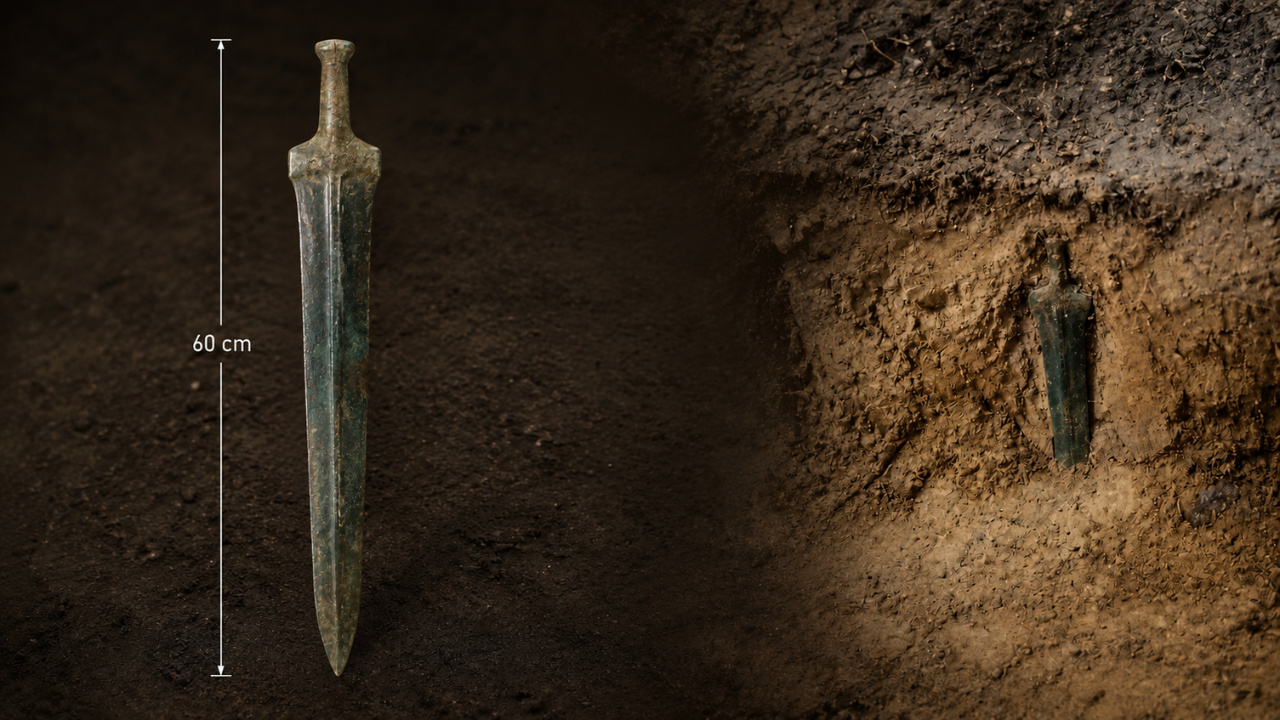

Understand the hypotheses and historical value of the new 2,700-year-old bronze sword found vertically embedded in a forest in Poland.
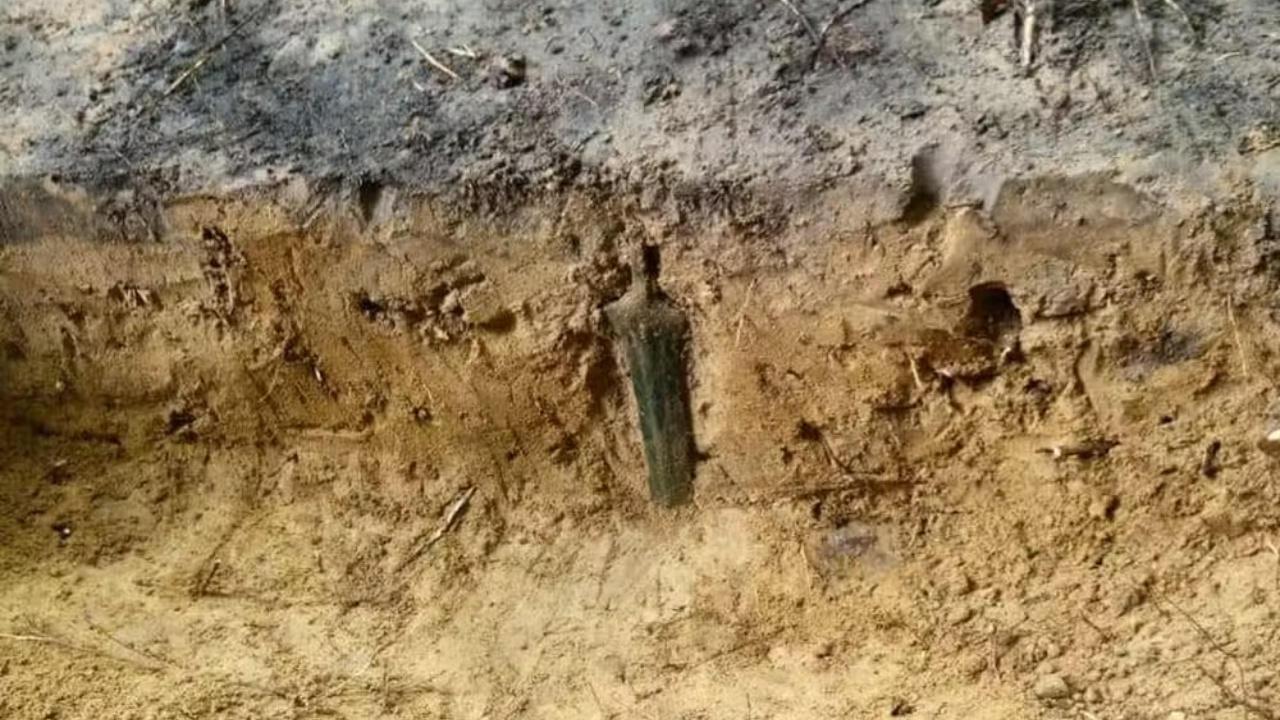
The regional office of archaeological heritage in Poland took custody of a sword made of bronze, measuring 60 centimeters and approximately 2,700 years old, which was discovered vertically embedded in the sandy soil of a forest near Gdańsk.
The historical find, dating back to the period between 900 and 700 B.C., was located by the experienced detectorist Marcin Wiśniewski during an authorized sweep with a metal detector. Upon realizing the significance of the artifact embedded upright in the ground, the explorer preserved the site and called in experts to coordinate the excavation and detailed recording of the area.
Due to the unusual positioning of the object and the absence of other materials nearby, researchers believe the item was intentionally placed there as part of an ancient Bronze Age ritual deposit, dismissing the theory of accidental loss.
-
At the bottom of the Mediterranean, Italian engineers have sunk a “plant” in the shape of a giant donut that uses the ocean’s own weight to store energy, storing electricity generated by wind and sun at the sea floor and returning it to the grid without dams, mountains, or chemical batteries.

-
Scientists create robotic bird that uses articulated wings to maintain balance, mimicking hawks and flying with stability where common drones fail.

-
U.S. university performs surgeries with remotely controlled humanoid robots
-
A 12-year-old boy from the municipal network of Canoas won gold in the Brazilian Mathematics Olympiad, earning the school’s first national medal in history and standing out in a competition that brought together more than 18 million students, demonstrating how public education can uncover hidden talents in Brazil.


The disappearance of collections and the recovery of local memory
The location of this new artifact ended up bringing to light an old memory of regional archaeology that had been lost in the past century. As reported in an official statement on the social network Facebook on June 17, 2026, the same forest area had already been the site of similar discoveries.
In the 1920s, two bronze specimens with handles decorated in the shape of an antenna were removed from a swamp located in this same forest and destined for the collection of the Provincial Museum of Gdańsk.
However, these two historical pieces disappeared without a trace during the armed conflicts of World War II, making the current find even more emblematic for the country’s heritage.
Anatomy of the sword and the preservative effects of time
With a total length of 60 centimeters, the physical structure of the weapon was classified by experts as belonging to the “with tang” model.
This style of forging features a narrower metal termination at the end, originally designed to receive the attachment of a handle made of wood, bone, or horn — organic materials that decayed and did not withstand the test of time.
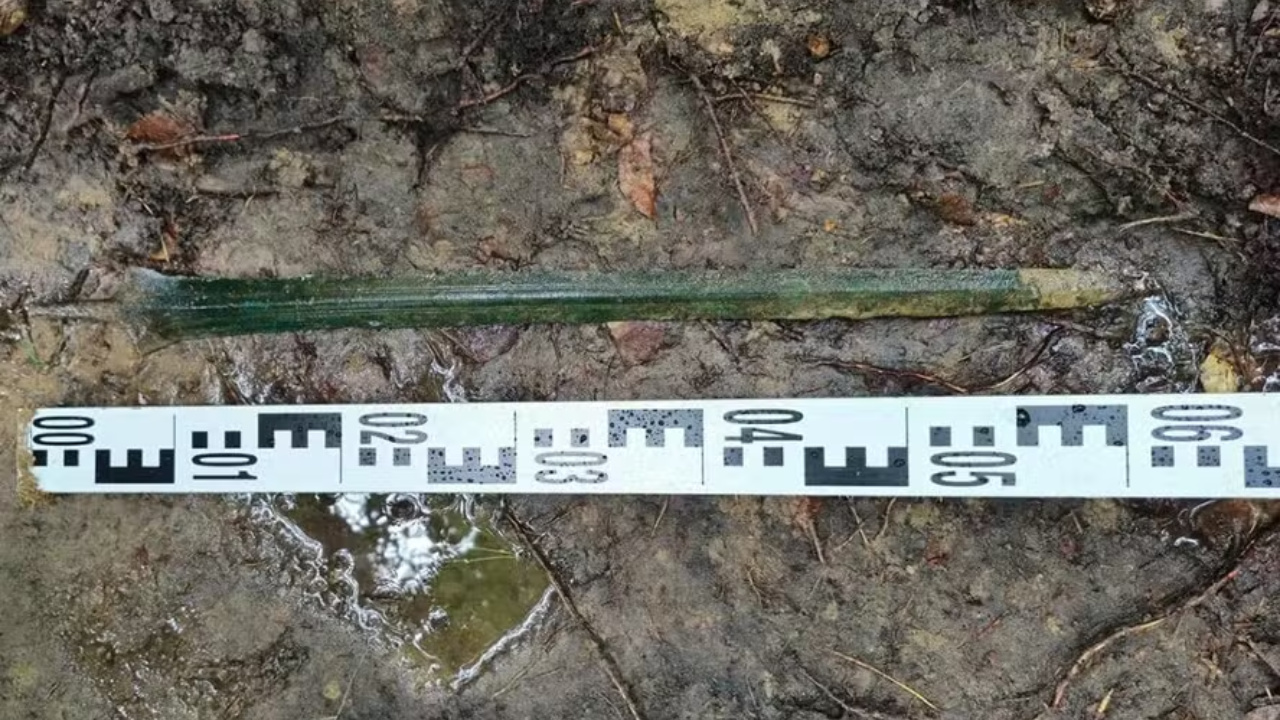
Characteristics and ornaments of the bronze blade:
- Greenish patina: Natural oxidation layer that covered the metal over the millennia and acted as a protective shield against degradation.
- Engraved arches: Artistic and geometric details carved into the surface of the bronze.
- Longitudinal grooves: Decorative lines running the length of the blade.
- Transverse lines: Small well-preserved horizontal decorative carvings at the base.
Social prestige and the economic value of bronze
The decorative details identified on the blade indicate that the object corresponds to the prestige weapons manufactured during the fourth and fifth periods of the Bronze Age.
Possession of an instrument with this level of aesthetic and martial refinement indicated a position of great prominence in the ancient social hierarchy.
Besides the undeniable historical value, the sword represented immense material wealth for the time of its manufacture. According to estimates released by the State Forests of Poland, a luxurious specimen like this had an exchange value equivalent to an entire herd of cattle.
This extremely high cost reinforces the archaeologists’ theory that the burial of the item could hardly have occurred by chance or carelessness in the middle of the forest.
Next steps for conservation and exhibition in museums
After the completion of fieldwork, in which the vertical position was meticulously cataloged before removal, the relic was sent to specialized laboratories to receive chemical treatments for metal stabilization.
Therefore, scientists are currently focusing their efforts on conservation analyses to confirm the exact classification of the metal alloy.
Once the chronological studies and restoration processes are fully completed, the Provincial Heritage Conservator will issue the final opinion to decide which museum institution will receive the custody and the right to house the artifact for public visitation.
With information from Revista Galileu


