Portuguese
  Spanish


Tesla, Elon Musk’s electric car company, announced in July 2026 its official operation in Uruguay, the neighboring country where electric cars already account for about 20% of new cars sold. According to NSC Total, the brand parks right next to Brazil but leaves out precisely the largest car market in the region.
The move has a curious address. Tesla formalized the arrival with a local subsidiary already registered in its investor documents, named Tesla Uruguay SAS, and placed the first models in the queue for approval to sell there.
The company of Elon Musk treated the landing as a new milestone in its plan for Latin America and said it chose Uruguay because it sees the country as one of the leaders in the region in adopting electric cars. The detail that stands out is geographical: the brand is now practically next to the border, but Brazil, the largest automotive market on the continent, still has no official operation.
The announcement that brought Tesla closer to the border
The news was released in a statement sent to the Uruguayan press, in which Tesla classified the entry into the country as a “new milestone” in its regional plan. It is not an exaggeration. Until now, the brand’s official presence in South America was limited to Chile and Colombia, the only two countries on the continent that appear with stores and superchargers on the company’s global unit list. Planting a flag there means taking the operation to the far south of the continent, just a few kilometers from Santana do Livramento and Chuí.
-
This Mars rover may finally reveal if life ever existed on Mars.

-
A nearly 70-year-old Chinese inventor has registered 90 patents and created a device that stores water in the roots, helping seedlings survive drought while trying to transform the arid slopes of the Loess Plateau into green areas without relying on heavy irrigation.

-
Researchers want to change the way of producing rare earth magnets, reducing purification steps and making better use of the elements found in Swedish deposits.
-
5.5 tons pulled from the seabed: a ‘living carpet’ of invasive coral was suffocating the Baía de Todos-os-Santos until the Brazilian Navy descended with divers, steel brushes, and acid salt to carry out the largest eradication operation of the species ever conducted in the country.



The choice says a lot about the automaker’s strategy. Instead of immediately targeting the giant market, the company chose a small country, but one mature for the electric car. It is a calculated bet: enter where the consumer already understands the technology, test the sales and charging structure, and only then think about the larger neighbors. For the Brazilian public, the message is ambiguous.
The company has never been so close geographically and, at the same time, still has no date to officially land here.
The distinction is worth noting. An official operation is not the same as seeing a brand’s car driving on the street. It means having its own structure, direct sales, model approval with local authorities, and, on the horizon, a network of assistance and charging with the manufacturer’s endorsement. This is the package that Uruguay now has and that the Brazilian market, for now, still does not have.
What Tesla will sell there (and what it hasn’t revealed yet)
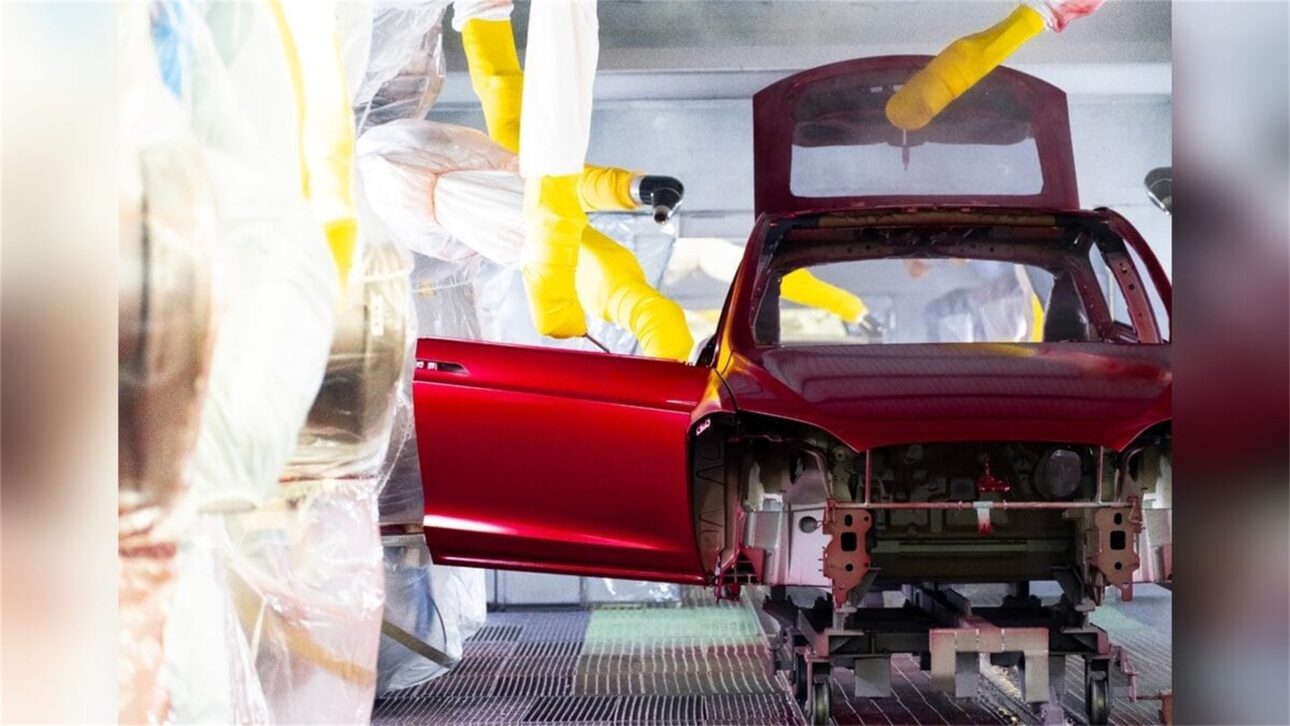
Despite the announcement, the brand was economical with information. The company did not provide an opening date, official prices, or sales points in the country. What is already known comes from the technical paperwork: the two initial models will be the Model 3, the brand’s sedan, and the Model Y, the SUV that became the best-selling car in the portfolio, each of them approved in three versions.
The technical specifications give a sense of what is coming. The configurations range from the entry-level Standard Range to the top-of-the-line Long Range and Performance, with power ranging from 283 to 460 horsepower and batteries of 63 kWh and 85 kWh.
The announced range reaches 629 kilometers in the longer-range versions, while the Performance, more focused on performance, runs about 528 kilometers on a charge. These are numbers that put the two electric cars directly against the new wave of Asian rivals.
There is a revealing logistical detail. The units destined for the Uruguayan market will not come from the United States, but from China. The cars will come from the factory that the company maintains in Shanghai, the same one that supplies a large part of the markets outside North America. It’s a reminder that, even being a symbol of the United States, the automaker increasingly depends on its Asian base to grow far from home.
A small country that became a showcase for electric cars
To understand Tesla’s choice, just look at the local market numbers. In 2025, the neighboring country sold 71,442 new vehicles, a historic record. Within this total, 14,443 were electric cars, a jump of 146.7% compared to 2024. The result is impressive: electric cars came to represent about 20% of all new cars sold there, a share that most markets in the world are still pursuing.
This level transforms the neighboring country into a kind of South American showcase for electrification. There, the electric car has ceased to be a niche purchase and has become a street item, present in fleets and in the daily life of Montevideo. It helps that the country is compact, with relatively short distances, which dilutes the old range anxiety that usually hinders those thinking of switching from a combustion engine to a battery.
This is the environment the brand encounters upon arrival. Unlike a market that needs to be convinced from scratch, the Uruguayan consumer is already accustomed to the idea of driving electric. For Elon Musk’s brand, this shortens the path: the competition shifts from being about the technology itself to being about name, price, service, and charging network. A field where Tesla likes to play.
The infrastructure and clean energy that attracted Elon Musk
An electric car only makes sense with a nearby outlet, and in this regard, the neighboring country is also ahead. At the beginning of 2026, the country had 587 chargers installed in its territory, 150 of which were private and the rest connected to the state energy company UTE. And the count didn’t stop there: the forecast was to install another 300 charging points throughout 2026, further expanding the network that provides security to those driving electric.
More decisive, however, is where this energy comes from. In 2025, 98% of the electricity generated in the country came from renewable sources, according to information from the National Energy Directorate released by the Uruguayan Ministry of Industry, Energy, and Mining. For a company that sells not only electric cars but also a sustainability discourse, running on almost entirely clean energy is a hard-to-beat selling point.
The sum of these factors explains the destination’s appeal for Elon Musk. A market that already buys electric, an expanding charging network, and an almost entirely renewable energy matrix create the ideal scenario for the manufacturer to showcase its service. It’s the kind of showcase the company can use as proof of concept before tackling more complicated markets, including the Brazilian one.
Tesla arrives after the Chinese have already accelerated
However, the automaker does not catch the local market off guard. Elon Musk’s brand arrives in a territory where Chinese manufacturers have already raced ahead. A Reuters report showed that names like BYD, Geely, and GWM gained rapid ground in South America, supported by cheaper models and a wide network of local importers. In the neighboring country, the effect is visible: BYD was already the third-largest brand among all vehicles sold, behind only Chevrolet and Hyundai.
The Asian advance is not timid. The market share of Chinese brands in the Uruguayan market more than doubled since 2023, a pace that reshaped the competition even before the manufacturer set foot in the country. In other words, the company does not debut in an empty field but in one where there is already aggressive price competition and a clientele accustomed to buying electric cars of Chinese origin.
This makes the Uruguayan debut more strategic than it seems. Tesla will have to fight for space with rivals who arrived earlier and with more accessible price tags. The brand’s trump card remains the strength of its name and technology, but the battle for price and charging network promises to be tough. In a way, the country anticipates in miniature the challenge the brand would face in a larger market, where the Chinese are also advancing rapidly.
And Brazil? Why the largest market was left out
Here comes the question that interests the reader here: if Tesla is already in the backyard, why not enter the house right away? The answer, for now, is silence. While Uruguay officially enters the plans, Brazil remains outside the direct operation of Elon Musk’s brand.
In Tesla’s global list of units, the South America section appears with stores and superchargers in Chile and Colombia, and now with the Uruguayan neighbor on the radar, but without any listed presence for Brazil.
This does not mean that there are no electric cars of the brand running around here. There are, and not a few, but they arrived through independent importation, done at the buyer’s own risk. It is a very different situation from an official operation, with its own structure, direct sales, and eventual support network from the manufacturer. Those who own a Tesla in the country today live with the absence of an official brand backup.
The contrast is almost ironic. The largest automotive market in the region, one that any global automaker would like to have in its portfolio, watches the brand set up operations in a neighbor with just over three million inhabitants while still waiting for its turn. The announcement in Uruguay makes it clear that Elon Musk’s company does have an appetite for Latin America. What is not yet known is when this appetite will finally include the continent’s largest market.
Brazil’s backyard before the owner of the house
The Uruguayan step did not come alone. The same regional push by Tesla also targets Argentina, with an Argentine executive, Joaquín Lizarralde, appointed to lead operations in the Southern Cone. It is a coordinated move that geographically surrounds Brazil without, however, crossing the border. Elon Musk’s brand spreads through the neighborhood and leaves the giant for later.
For the consumer here, there is the feeling of being so close yet so far. Tesla has never been physically so close and yet the official purchase of one of its electric cars remains out of reach in the country. The landing in Uruguay, therefore, places the brand in Brazil’s backyard before reaching the largest automotive market in the region, a message that mixes showcase, strategy, and a certain suspense about the future.
The question that lingers with each new step of the automaker in the region remains: how long will the largest car market in Latin America continue to watch, from the other side of the border, Tesla parking everywhere but at home?