






 Portuguese
  Spanish


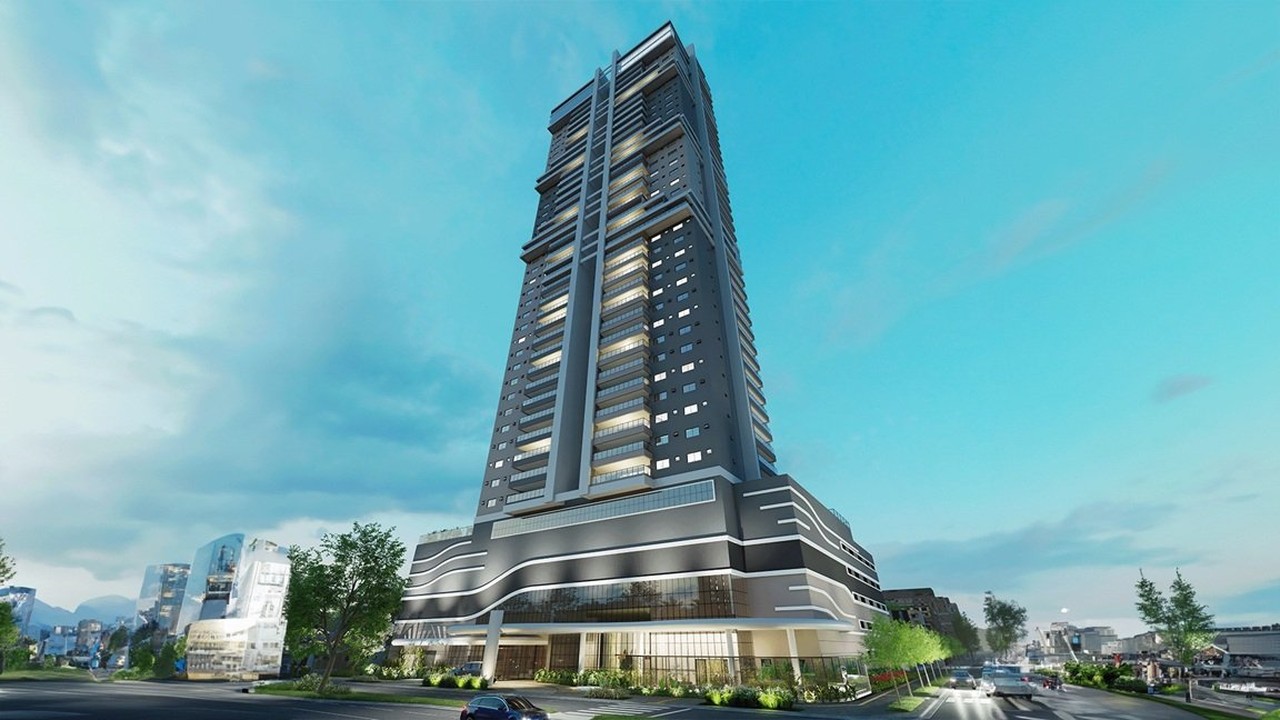
The Raízes building, 154 meters and R$ 500 million investment, rises on soil great for planting and poor for building, marking the shift of Mato Grosso farmers who are swapping giant houses for apartments
Amidst a sea of soybeans, a 42-story building sprouts in the center of Sinop, in the interior of Mato Grosso: the Raízes, over 150 meters tall, supported by 50 meters of stakes underground, a project by the São Benedito developer, one of the most recognized in the Midwest, according to Exame, in a January 2026 report. The comparison that gives the dimension of the work: the Senna Tower, in Balneário Camboriú, which will have more than 150 floors, has a foundation 40 meters deep, 10 less than the Mato Grosso building.
The numbers of the construction site seem like a power plant: the construction, on a 5,000 square meter plot, plans to use more than 15,000 cubic meters of concrete and 350,000 kilos of steel, which requires approximately 1,900 concrete trucks and 13 steel trailers, with the foundation alone budgeted at more than R$ 10 million, according to IstoÉ Dinheiro, which visited the region. The reason for so many stakes is ironic: the soil of Sinop is great for soybeans and poor for skyscrapers.
The city that is not even 50 years old and already wants a skyline
Sinop is a phenomenon of speed. The city is not even 50 years old, the airport is less than 20, and it already ranks 2nd in the state for passenger movement, and the municipality is among the 100 richest in Brazilian agribusiness, according to Exame. “It’s a very young city, growing at an extraordinary pace. Previously, people relied on Cuiabá for services like colleges and airports, but Sinop is becoming a regional center,” says Omar Maluf, CEO of the developer, in the report.
-
Instead of sending families far from the city, a project in Chile intentionally created incomplete houses on expensive urban land and left technical space for each to grow.

-
EPS duplex house is ready in up to 5 days without conventional pillars and beams: fair in Espírito Santo showcases sand made from mining waste, a 250 m² modular house assembled in 15 days, and technologies that can change the time, cost, and waste on construction sites.

-
Dubai will invest US$ 22 billion in sewage tunnels up to 90 meters deep, replacing pumps with gravity and replacing more than 100 old stations, in an attempt to save a city of skyscrapers, artificial islands, and rapid growth from an underground problem that has already overflowed into the streets.

-
The history of the Hercílio Luz Bridge involves controversies, love, and renewal: From its iconic construction to its reopening, it is a symbol of Santa Catarina.


IstoÉ Dinheiro completes the picture: the fourth largest city in Mato Grosso, 216,000 inhabitants, per capita income above R$ 64,000, and a built area that nearly doubled in five years, from 538.3 thousand square meters in 2020 to over 1 million in 2024. Even the city’s name tells the story: Sinop is an acronym for Sociedade Imobiliária Noroeste do Paraná, a legacy of the southern colonization of the 1970s.
The farmer swapped the giant house for the apartment
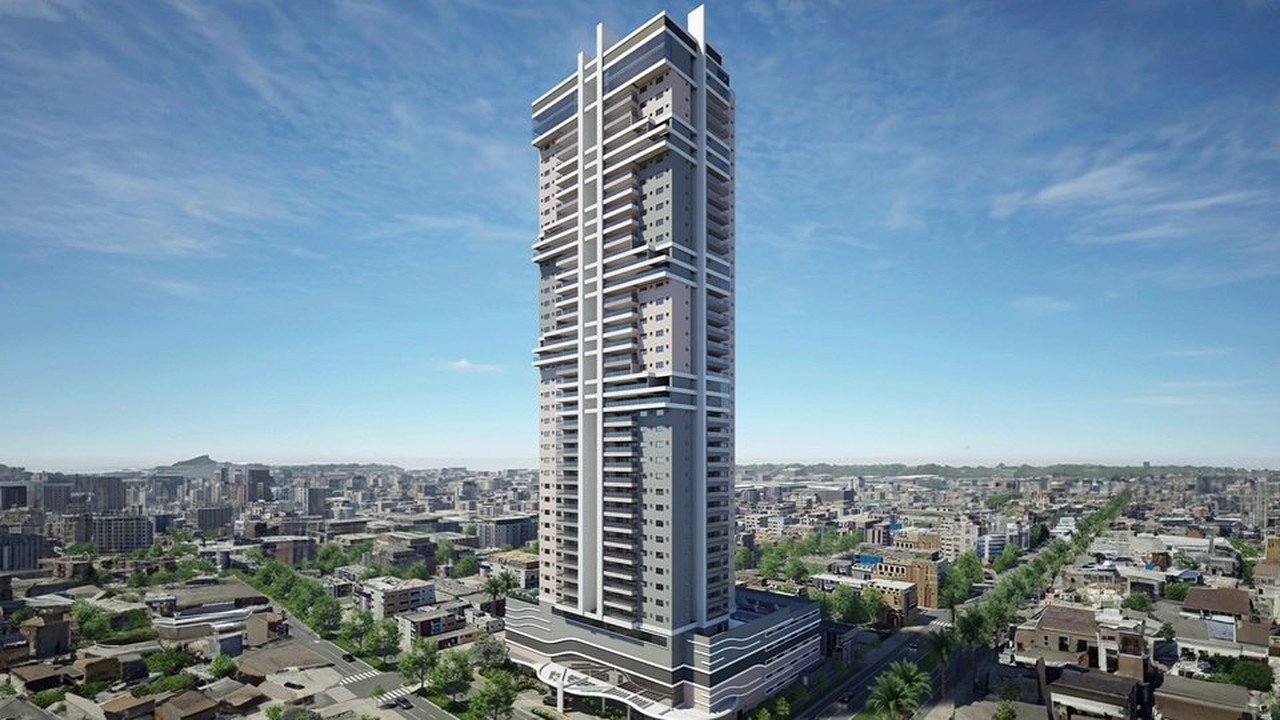
Cultural change is the engine of sales. Farmers in the region are starting to prefer apartments to large houses, seeking convenience, security, and lower maintenance costs, and to cater to the local culture that values space, the developer designed layouts with the feel of a suspended house, including 30 square meter balconies, with the smallest apartment in Raízes measuring 194 square meters and the largest, 766, according to Exame.
The price matches the ambition: the square meter in the plan is negotiated at R$ 15,000, a value close to that practiced in Balneário Camboriú and more than double the average in Cuiabá, with the expectation that it may even double after the work is completed, according to IstoÉ Dinheiro. The R$ 500 million development will have 132 apartments and is expected to be delivered in August 2029.
The Lebanese family that started by selling televisions
Behind the giant lies an immigrant saga. São Benedito was born in 1983, but the story begins with the arrival of Lebanese Samir Maluf in Brazil in the 1950s: he was the first to sell televisions in the Cuiabá region, expanded to building materials, and after erecting some buildings, founded the developer now run by his grandsons Omar and Amir Maluf, according to Exame.
The current portfolio shows the size of the empire: 1.5 million square meters built and delivered in more than 55 vertical developments, totaling 5,000 homes, a growth of about 50% in the last four years and a total sales value of R$ 2 billion during the period, according to IstoÉ Dinheiro. The developer is part of a holding that also includes solar energy businesses, livestock, and 16 units of a large gym network, spread from Manaus to Chapecó.
The strategy that saved the company: owning 15% of everything it builds
The family’s financial secret is counterintuitive. Since its inception, São Benedito has purchased 15% of its own developments, keeping apartments for rental as assets, a strategy that sustained the company during crises such as the pandemic, according to Exame. “Every building we make, we leave our apartments there to rent, to be our asset. And that’s what saved us in times of crisis,” explains Amir Maluf in the report.
While many companies went bankrupt, the asset backing and low indebtedness ensured credit in banks and the delivery of projects even with weak sales, reports Exame. It is the opposite of the industry standard, which is to turn over quickly and owe a lot.
The “Brazilian Texas” and the brothers who bet everything on Mato Grosso
The investment thesis has a nickname. “Mato Grosso is being compared to a Brazilian Texas, due to its strong and rapid growth linked to agriculture,” evaluates Amir Maluf to IstoÉ Dinheiro, also citing mining and tourism of the state’s three biomes as vectors, which records the company’s expectation to grow 60% in revenue by 2025 and the possibility of entering commercial projects, in Minha Casa, Minha Vida, and partnerships with hotels.
In Cuiabá, the developer is erecting two other skyscrapers: the Baalbek, presented to IstoÉ Dinheiro as the future tallest residential building in the Midwest, with 183 meters, 50 floors, and a 48-meter pool inspired by a famous hotel in Singapore, named after the historic city in Lebanon from where the founder came, and the Harissa, with layouts accommodating up to 7 bathrooms, according to IstoÉ Dinheiro.
What Raízes means for Sinop
The building is treated as a turning point. Due to the magnitude of its dimensions, Raízes is considered the initial milestone of Sinop’s verticalization, with the expectation that other builders will follow the example in the rapidly expanding city, according to Exame. The local economy, which originated from wood and shifted to soybeans in the 1990s, now hosts the largest corn ethanol producer in the country and serves about half a million people in the region, completes IstoÉ Dinheiro.
Here is the observation from this editorial, duly noted: Brazil has become accustomed to measuring the wealth of agriculture in sacks and hectares, but the most visual thermometer is rising in the form of concrete in the middle of the Nortão, floor by floor, on soil that until recently only knew soybean roots.
From the fields to the 42nd floor, the story of Raízes shows that the Brazilian agricultural frontier is now also growing upwards.
Tell us in the comments: would you live in a skyscraper in the middle of soybean land, or does a building of this size only make sense on the coast?


