






 Portuguese
  Spanish


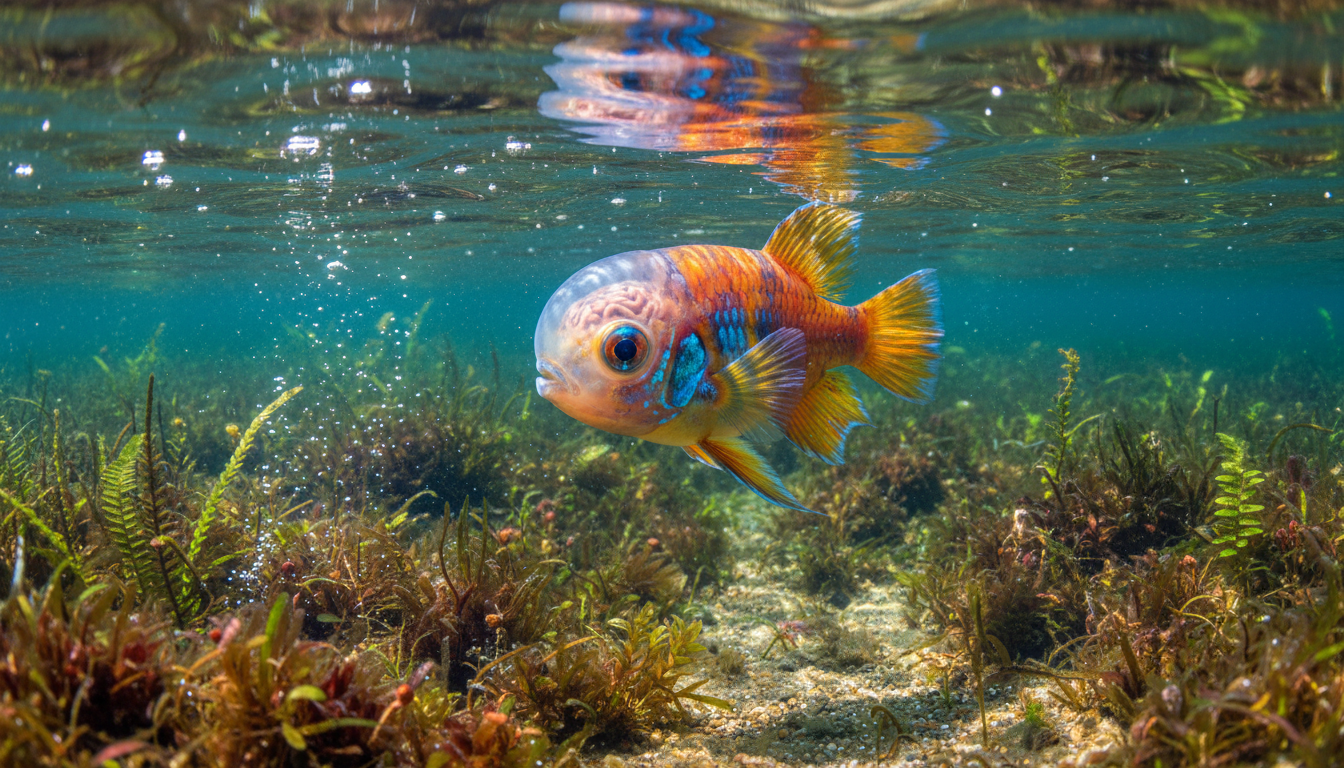


A 38-day expedition by Conservation International recorded over 2,000 species in Alto Mayo, northwestern Peru, and confirmed 27 completely new to science, with up to 48 others pending genetic analysis
No one expected to find so much hidden life in a place where 280,000 people live. A 38-day scientific expedition, led by Conservation International, traversed the landscape of Alto Mayo in northwestern Peru — a transitional region between the Andes and the Amazon — and recorded over 2,000 species of plants and animals. Of these, 27 new species had never been documented by science, including a fish with an entirely transparent bubble-shaped head and a semi-aquatic rat with webbed feet that swims as if it were amphibious.
As reported by CNN Brasil, the expedition took place between June and July 2022, but the results were only officially published in December 2024, in a 474-page report. The widespread release in 2026 caught the attention of outlets such as The Guardian, BBC News, and Smithsonian Magazine.

The bubble-headed fish and the most bizarre creatures on the list
Among the 27 confirmed new species, the composition surprises with its variety:
-
OnePlus N6 Smartphone to Launch in India with 8,000mAh Battery and 45W SuperVOOC Charging, Lasting Up to Three Days

-
Scientists Plan to Release Air Bubbles Underwater to Protect Antarctica’s “Doomsday Glacier” from Melting

-
Chinese R6000 Drone Combines Airplane and Helicopter Features, Carries Up to 12 People for Multiple Missions
-
Couple Sold Everything to Restore a 300-Year-Old Abandoned Mansion, Uncovering Ancient Books and Untouched Rooms





- 8 to 10 fish — including the catfish with a transparent globular head and prominent eyes
- 10 butterflies — with wing patterns never recorded before
- 4 mammals — including the semi-aquatic amphibious rat with webbed feet
- 3 amphibians — in cloud forest habitats
The amphibious rat has been classified as one of the rarest rodents in the world. It feeds on aquatic insects and has adaptations that no other mammal in the region possesses. Additionally, the expedition identified critically endangered primates, such as the Peruvian yellow-tailed monkey and the San Martin titi, both endemic to the region.
“We were very surprised to find such high biodiversity in a landscape with so much human influence,” said Trond Larsen, director of the Rapid Assessment Program (RAP) at Conservation International and leader of the expedition.

Camera traps and river DNA: how science found the invisible
The team used technologies that transformed the way biodiversity is studied in the field. Bioacoustic sensors recorded sounds of nocturnal animals. Camera traps captured species that would never allow themselves to be observed during the day. And environmental DNA (eDNA) samples collected directly from rivers revealed the presence of fish that traditional collection methods would never have found.
In this way, the expedition managed to catalog over 2,000 species in just 38 days — a number that would normally take years of conventional research. The final report, consisting of 474 pages, was published by Conservation International as an official document of the discovery.
Similar expeditions in other parts of the world have also revealed extraordinary surprises. In the Pacific, a 28-day expedition found a submarine mountain of 3,109 meters with over 100 species never recorded. In Japan, researchers discovered a rare “glass castle” inhabited by unknown species at nearly 5,000 meters depth.

Biodiversity under threat: what threatens the new species of Peru
Alto Mayo encompasses 1.9 million hectares of forests and agricultural areas. The region is home to 280,000 people in cities, towns, and indigenous communities — and faces intense deforestation, agricultural expansion, and land conversion. At least 49 species found by the expedition are listed on the IUCN Red List, indicating a real risk of extinction.
“There is a lot of agriculture and land conversion in the area. Despite this, this team was still able to document new species, which is exciting,” highlighted Reynaldo Linares-Palomino, tropical biologist at Smithsonian’s National Zoo and Conservation Biology Institute, as published by Smithsonian Magazine.
However, researchers warn that at least 34 species appear to be endemic — meaning they exist only in Alto Mayo and the San Martin region. If the habitat continues to shrink, these species may disappear before they are even studied. Additionally, up to 48 additional species await confirmation through genetic studies, meaning the actual number of discoveries could nearly double.
Some of the species listed as “new to science” were already known to local indigenous communities, who identified them by their own names for generations — although they had never received formal scientific classification. Therefore, collaboration with these communities was essential for the success of the expedition and will continue to be crucial for any conservation efforts in the region.


