






 Portuguese
  Spanish


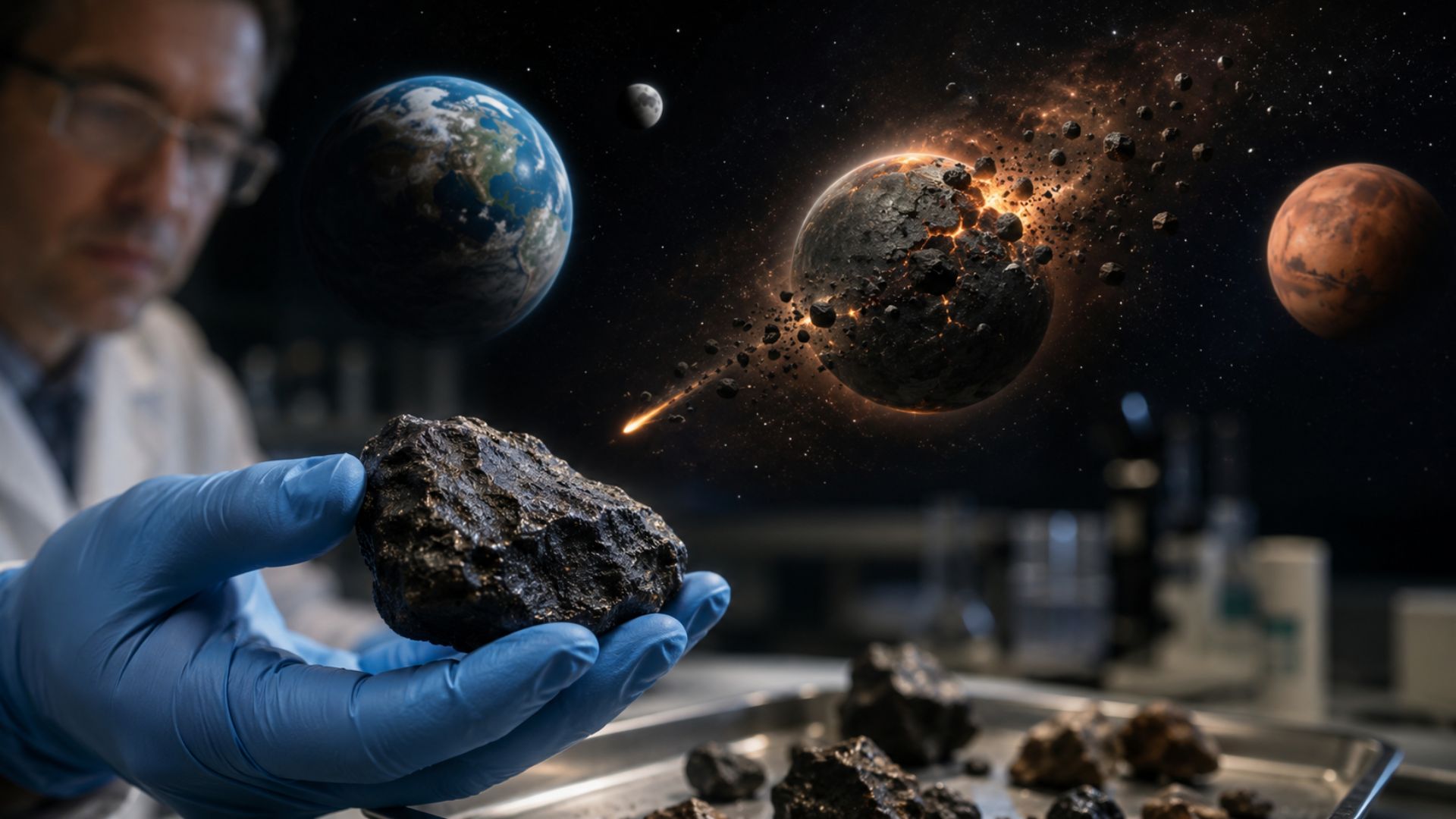


The meteorite NWA 12774, found in the Sahara in 2019, is a rare angrite, and the pressure in its minerals points to a body between the Moon and Mars. The existence of this world is a hypothesis deduced from the 454-gram stone that fell to Earth.
A 454-gram stone found in the Sahara desert may be the last piece of a planet that existed at the beginning of the Solar System. According to R7, the meteorite called NWA 12774 carries clues of a celestial body the size between the Moon and Mars, which would have been destroyed billions of years ago for reasons still unknown. The conclusion is from a study conducted by the team of geoscientist Aaron Bell, from the University of Colorado.
The rock is a rare angrite, about 4.56 billion years old, and it was the pressure recorded in its minerals that changed the scientists’ interpretation. According to the study, published in the journal Earth and Planetary Science Letters, these conditions could only exist within a much larger body than an asteroid, with something between 1,800 and 3,200 kilometers in diameter. The researchers say they know of the existence of this world only because fragments of it landed on Earth.
A 454-gram stone found in the Sahara desert
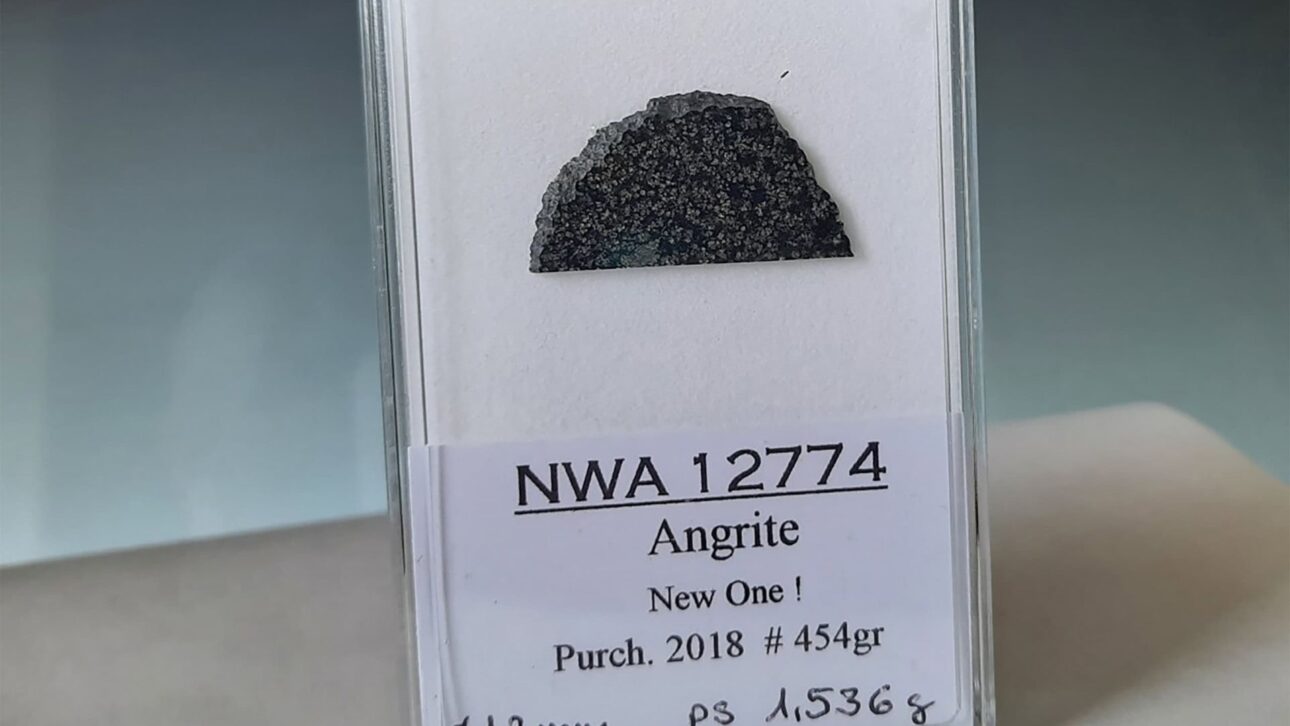
According to R7, the meteorite named NWA 12774 is a 454-gram stone found in 2019 in the Sahara desert.
-
U.S. City Spent Millions Building Subway Tunnels and Stations, But No Trains Have Run There

-
Portugal Develops Graphene Coating to Make F-16s Nearly Invisible on Radar, Aiming to Use It for Military Drones and Aircraft

-
Sweden Introduces New Rules Requiring Frequent Supervision and Daily Interaction for Cat Owners
-
Workers Discover 18th-Century Wooden Shipwreck During Routine Pipeline Work in Croatia


It was classified as an angrite, a rare type of meteorite that is among the oldest volcanic rocks known.
The rarity helps to size the find.
According to the publication, the angrite formed just a few million years after the beginning of the Solar System, about 4.56 billion years ago.
To give an idea, of more than 80,000 meteorites already cataloged, less than 70 are of this type, which makes this 454-gram stone an especially uncommon material.
The pressure signal that changed history
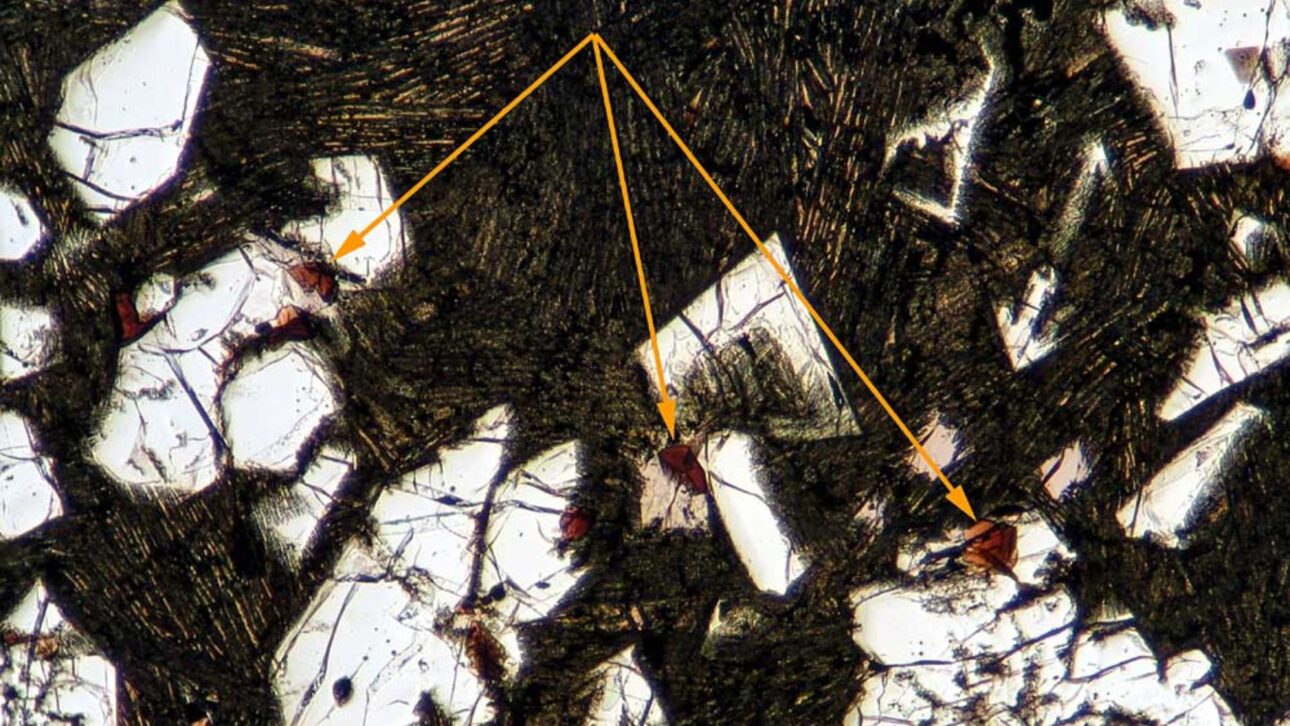
According to R7, the analyses revealed that the 454-gram stone contains an aluminum-rich clinopyroxene, a sign that it formed under immense pressure.
Previously, it was believed that angrites came from the destruction of an asteroid about 200 kilometers in diameter.
The numbers found, however, pointed to something much larger.
By reconstructing the formation conditions, the team led by Aaron Bell from the University of Colorado concluded that the mineral required pressures of at least 17.5 kilobars, more than 17 times the pressure at the bottom of the Mariana Trench, the deepest point on Earth.
According to the study, published in the journal Earth and Planetary Science Letters, such conditions would not fit inside a small asteroid.
A lost planet between the Moon and Mars
The conclusion points to a celestial body much larger than previously imagined.
According to R7, scientists hypothesize that this 454-gram stone formed in the first kilometers of a body at least 1,800 kilometers in diameter, slightly larger than the Moon.
Maximum estimates indicate that this protoplanet would still be smaller than Mars, which is 3,200 kilometers.
This world, however, would have disappeared in the early Solar System.
One hypothesis is that it was destroyed after a catastrophic collision, a common event during that formation phase, although the exact cause remains unknown.
For Aaron Bell, it is impressive to imagine that such a large world once existed.
“We only know it existed because some fragments of it ended up landing on Earth,” stated the researcher in a statement.
What the discovery suggests about the beginning of the Solar System


More than an isolated case, the finding opens a window to the past.
According to the researchers cited by R7, the chemical signature of the rock suggests that some of the earliest worlds in the Solar System developed differently from other rocky planets.
It is a clue, not a definitive certainty, about how this corner of our universe was formed.
And there may be more discoveries stored away in drawers.
Scientists state that many meteorites remain stored in university laboratories and that new analyses may reveal the existence of other lost worlds from the early Solar System.
In other words, the 454-gram stone might just be the first clue to several forgotten worlds yet to reappear.
The story of the NWA 12774 meteorite shows how a small object can carry the memory of an entire world.
If Aaron Bell’s team’s hypothesis is correct, a simple 454-gram stone is what remains of a planet between the Moon and Mars, destroyed billions of years ago.
For now, it is a scientific interpretation based on the rock’s chemistry, still open to further studies.
And you, did you imagine that a meteorite could be the last piece of an entire planet? Do you think science will still find other lost worlds hidden in meteorites around the world? Leave your opinion in the comments, respecting different views, and share this article with those who love astronomy and space.


