Portuguese
  Spanish


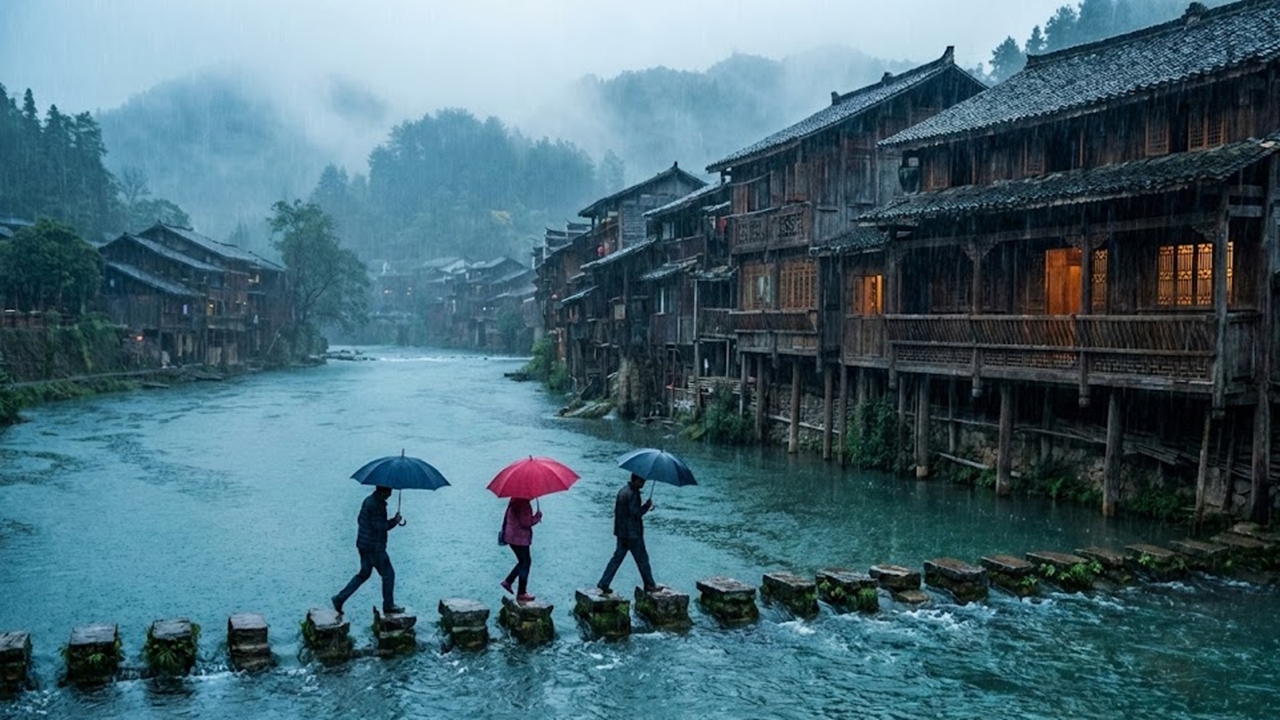


Among The Mountains Of Southern China, A Historical Center Preserves Traditional Architecture, Urban Organization Shaped By The Relief And Cultural Practices Associated With Ethnic Minorities, In A Scenario Influenced By The River, By Constant Humidity And By Contemporary Tourism.
Located in the west of Hunan province, in southern China, the historical city of Fenghuang preserves an urban core marked by traditional wooden constructions, narrow streets, and buildings erected along the banks of the Tuojiang River.
Set in a mountainous and humid valley, the locality maintains architectural characteristics associated with imperial periods, which supports its image as a city little changed over the centuries.
Today, Fenghuang functions as a populated area and structured tourist destination, with ticket charges for attractions in the historical center, active commerce, and services aimed at visitors.
-
Experts Reveal Surprising Uses for Air Conditioner Drip Water and Common Mistakes to Avoid

-
Brazil’s Paraíba State Builds Senior-Friendly Community with 40 Accessible Homes, Health Center, and Gardens, Replicates Model in 5 Cities, Earns National Merit Award in 2015

-
Brazilian Government Launches New ID System Using Tax Number as Unique Identifier, Reaching 870,000 People with 7,000 Free Issuance Slots Available

-
Giant Stone Spheres on New Zealand Beach Reveal Crystal Interiors Formed Over 4 Million Years


Still, the old urban layout and a significant part of the buildings remain preserved, allowing observation of forms of occupation associated with historical dynamics of inland China.
Geography, Relief And Urban Formation In Fenghuang

According to the portal BMC News, the urban development of Fenghuang is directly related to the rugged relief of western Hunan and the course of the Tuojiang River, which runs through the city.
Academic research on the region indicates that the settlement has consolidated as a strategic point for regional circulation, in an area historically marked by internal trade routes and territorial disputes.
Instead of broad horizontal expansions common in flat areas, the city grew along slopes and riverbanks.
This process resulted in an urban set composed of narrow passages, connecting bridges, and buildings adapted to the limitations of the terrain.
Experts in historical urbanism point out that this type of occupation reflects practical solutions in the face of geographical constraints, rather than a deliberate aesthetic choice.
Why Fenghuang Is Seen As A City Preserved In Time
The association of Fenghuang with the notion of a “city frozen in time” often appears in tourist materials and travel articles, especially due to the contrast between the historical center and modernized areas of other Chinese cities.
In the old core, the predominant presence of traditional constructions, combined with the absence of significant contemporary interventions, contributes to this perception.
Another recurring factor is the persistence of cultural references linked to the Miao and Tujia ethnicities, who have historically inhabited the Xiangxi autonomous prefecture region.
According to anthropological studies, architectural and cultural elements associated with these groups have been incorporated into the visual identity of the historical center and have come to be valued as cultural heritage.
In addition, local climatic conditions influence the landscape.
The proximity of the river and the high humidity favor the formation of fog at certain times of the day, especially in the early hours of the morning and at night.
The phenomenon, widely recorded in photographs and videos of the location, reinforces the image of a visually distinct environment, often associated with historical preservation.
Houses On Stilts And Traditional Chinese Architecture
One of the most characteristic elements of the historical center of Fenghuang is the houses known as diaojiaolou, wooden constructions erected on stilts along the river.
According to research on vernacular architecture in southern China, this technique is linked to the need to cope with unstable land, seasonal floods, and high humidity levels.
The elevated buildings reduce direct contact with the ground and facilitate natural ventilation, which contributes to the preservation of the structures in a humid environment.
Technical studies also indicate that the model promotes space utilization in areas where flat land is limited, such as narrow valleys and slopes.
In practice, the set of houses forms a continuous alignment facing the river.
This set is connected by walkways, bridges, and balconies.
This configuration integrates urban circulation and residential use, while also becoming one of the city’s main postcards.
The Tuojiang River As The Axis Of Urban Life
The Tuojiang River plays a central role in the organization of urban space in Fenghuang.
In addition to defining the positioning of the historical buildings, it conditions circulation routes and economic activities aimed at tourism.
Visual records and local promotional documents show the presence of traditional waterwheels installed in the riverbed, historically associated with artisanal processes.
Crossings over the Tuojiang are made by stone and wooden bridges, connecting different areas of the historical center.
There are also boat rides aimed at visitors, with routes that cover more preserved sections of the river.
Official information and tourist guides indicate that the charges vary according to the type of ticket and the time.
Combined tickets for central attractions and daytime tours are advertised for 128 yuan.
Other modalities are listed for about 85 yuan.
These variations are explained by local tourism authorities as a result of distinct packages, specific times, and additional services.
The Great Wall Of Miao And The Defensive Past Of The Region

Another element frequently associated with Fenghuang is the so-called Miao Wall, also known as the Miaojiang Great Wall.
Unlike the more famous wall in northern China, this is a regional defensive system located in southwestern Hunan.
According to historical and tourist materials, the set is about 190 kilometers long and includes sections located in Fenghuang county.
Researchers indicate that construction began during the Ming dynasty.
The goal was to control internal borders and strategic routes in a region of difficult access.
The system does not present itself as a continuous and uniform structure.
It consists of walls, towers, and passages adapted to the mountainous relief.
Currently, preservation levels vary.
There are areas restored for visitation.
Other sections remain fragmented.
This requires caution in interpreting the set as a single intact monument.
By bringing together natural elements, architectural solutions, and traces of a past of border, Fenghuang presents itself as an example of urban adaptation to specific geographical and historical conditions.