






 Portuguese
  Spanish


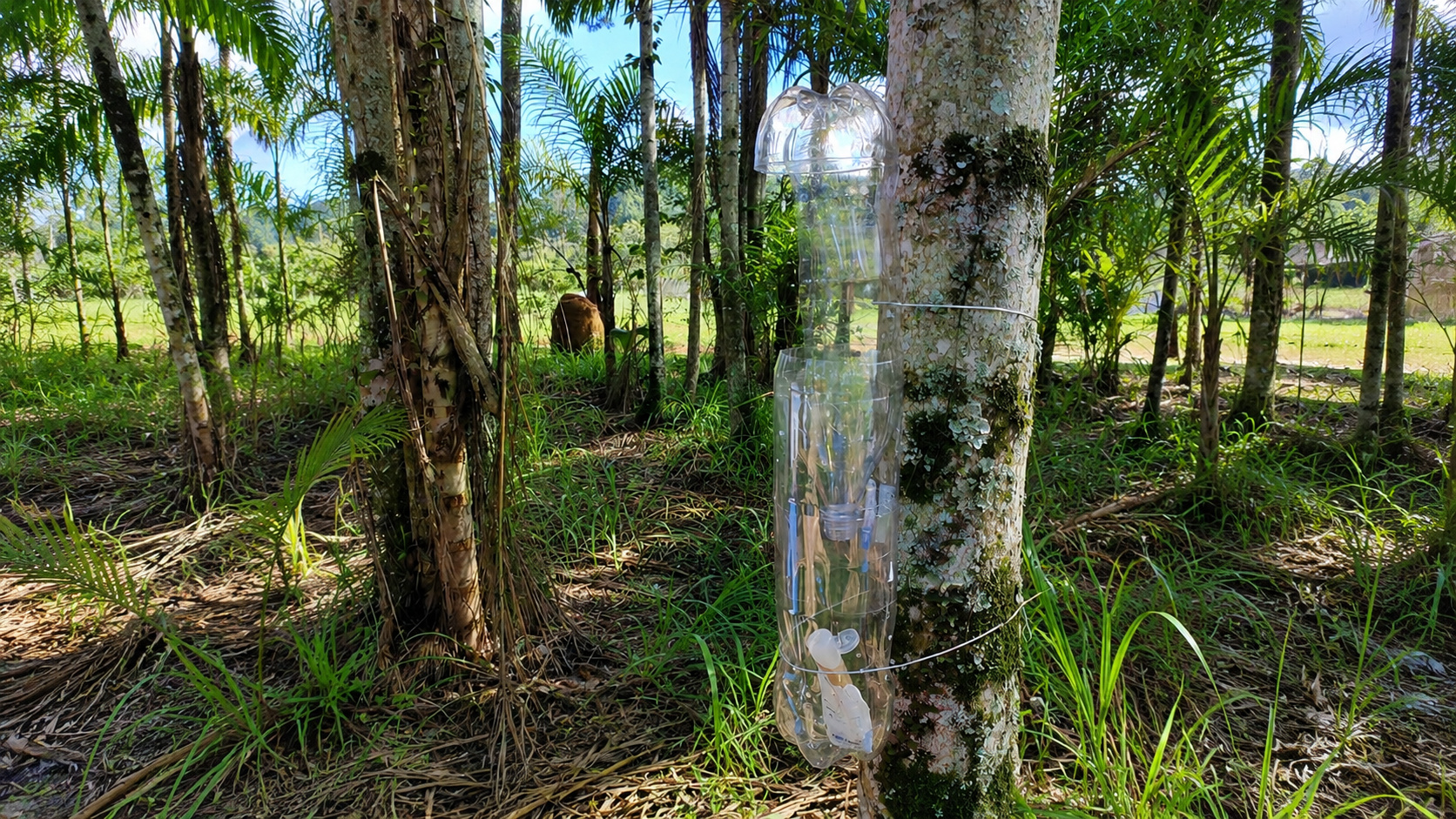
Equipment installed by the Ministry of Agriculture and Livestock uses baits to capture possible specimens of the red palm weevil, a species not yet officially recorded in Brazil. The device will remain for three months at the University of Taubaté, with weekly inspections and the possibility of extending the monitoring.
The Ministry of Agriculture and Livestock installed a trap at the University of Taubaté, in the interior of São Paulo, to verify the presence of the pest Rhynchophorus ferrugineus, known as the red palm weevil.
The species does not have an official record in Brazil and remains classified as an absent quarantine pest. Despite this, there are suspicions that the insect may have been introduced into the country, which motivated the monitoring action.
Trap will be monitored for three months
The installation took place last week and was conducted by the Department of Plant Health, linked to the Agricultural Defense Secretariat of Mapa. Regional units of the ministry in Guaratinguetá and São José do Rio Preto supported the operation.
-
Global Alert: Report Finds 159 Pesticides in Coffee Beans Sold in Europe, Posing Serious Risks to Millions of Farm Workers

-
Low-Demand Brazilian Beef Offal Gains Popularity Abroad: Indonesia Purchases $19.5 Million, Boosting Revenue and Reducing Waste
-
Soy Expansion in Former Brazilian Savanna Sparks Water and Land Conflicts in Major Agricultural Frontier
-
Mexican Pest Threatens U.S. Cattle Herds at Historic Lows, Potentially Boosting Brazilian Beef Exports as Burger Prices Soar



The Agronomy Department of the University of Taubaté is also accompanying the work. The area was chosen for its security conditions and the presence of host plants, important factors for the efficiency of the monitoring.
The trap uses sexual and food attractants, capable of luring and capturing possible specimens of the red palm weevil. The equipment will remain installed for three months, the period corresponding to the durability of the bait used in the device.
During this interval, responsible teams will conduct weekly checks. The goal is to identify if there is the presence of the insect in the region or confirm its absence at the monitored point.

Pest threatens economically valuable palm trees
The red palm weevil can affect economically important crops, such as coconut palms, oil palms, and date palms. The greatest risk is associated with the action of the larvae, which bore galleries inside the trunk of the palm, equivalent to the stem.
These galleries can reach the apical meristem, the structure responsible for the plant’s growth. When this region is compromised, the formation of new leaves can be hindered, and the damage may cause the death of the palm tree.
Plan provides response in case of detection
If new suspicions arise, other traps may be installed in different locations in the state. The expansion will depend on the information obtained during monitoring and the emergence of new relevant points.
Meanwhile, the Department of Plant Health is preparing a contingency plan. The proposal is to allow large-scale monitoring and organize control measures if the presence of the pest is officially confirmed in the country.
The monitoring draws attention because it involves crops present in different Brazilian regions. Do you consider it important to expand preventive surveillance before an official confirmation? Leave your opinion in the comments and share how palm trees, coconut palms, or oil palms are part of the landscape and economy of your region.
With information from MAPA.


Be the first to react!