






 Portuguese
  Spanish
  5 min of reading
  0 comments


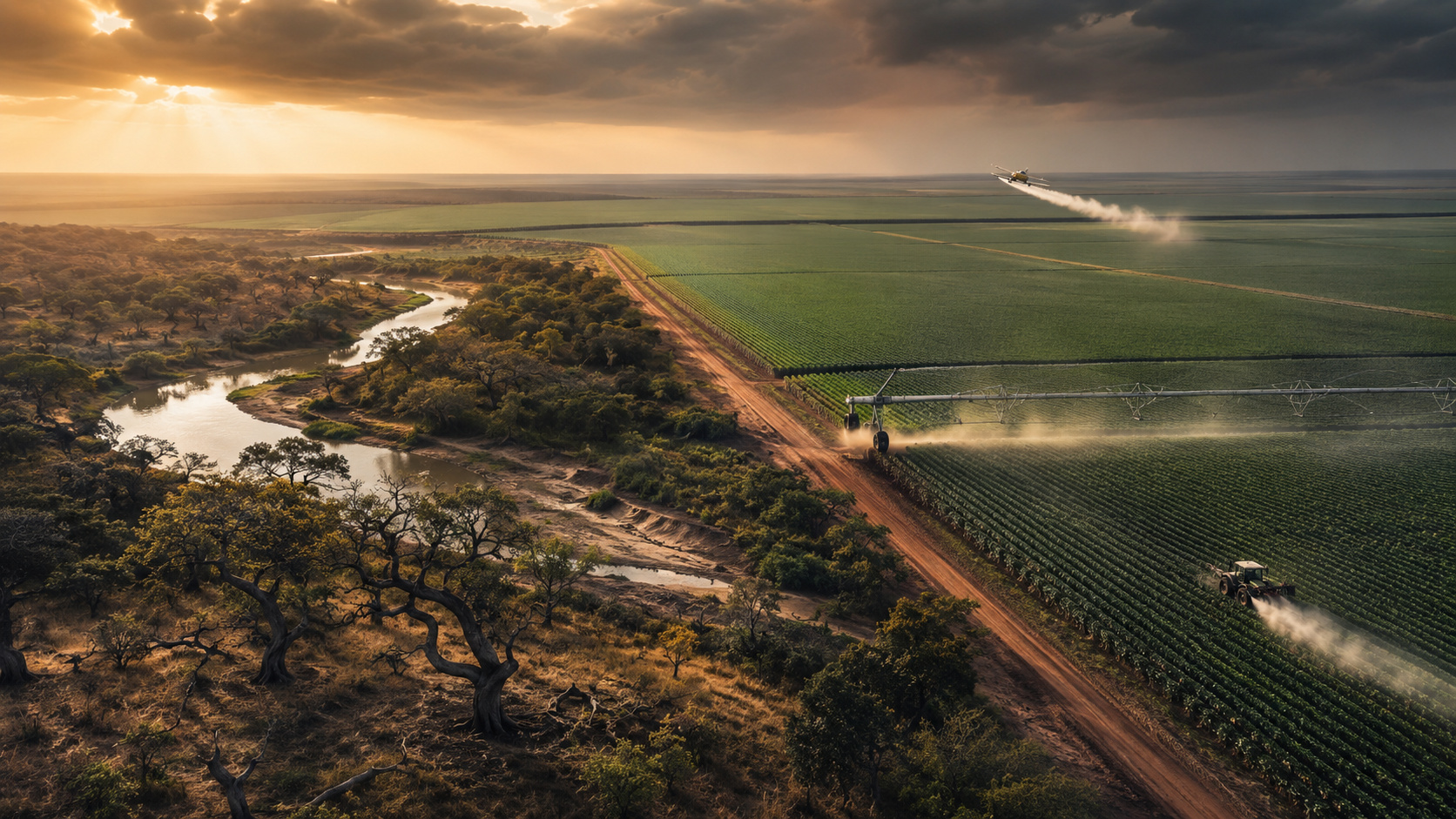
Soy in Matopiba jumped from 1 million to 3.4 million hectares and intensified the debate on water, Cerrado, and traditional communities.
The expansion of soy in Matopiba changed the scale of agricultural production in the Cerrado and helped consolidate the region as one of the most strategic areas of Brazilian agribusiness. According to Embrapa, Matopiba has established itself as an important agricultural frontier, and in the last decade analyzed by the study, regional soy and corn production went from 6 million to 14 million tons, in a movement accompanied by an increase in indicators such as HDI and GDP in the municipalities of the region.
At the same time, the advance of crops began to concentrate increasingly strong criticisms on the conversion of native vegetation, pressure on water, and changes in the way of life of small producers and traditional communities. In the Agroicone report, the soy area in Matopiba went from 1 million to 3.4 million hectares between 2000 and 2014, with a growth of 253%, and much of this expansion occurred precisely over areas of native Cerrado vegetation.
Matopiba became the major front of soy expansion in the Cerrado
The technical literature itself began to treat Matopiba as the most aggressive front of soy growth in the biome. The Water Alternatives study describes the region as the main soy frontier in the Cerrado and Brazil in recent years, while Embrapa points out that the productive incorporation of the territory relied on land availability, agricultural modernization, and policies aimed at production expansion.
-
Mexican Pest Threatens U.S. Cattle Herds at Historic Lows, Potentially Boosting Brazilian Beef Exports as Burger Prices Soar

-
Avocado Boom for European and U.S. Markets Fuels Water Crisis in Drought-Stricken Chilean Region

-
Capixaba farmer created in 14 years the first registered ginger cultivar in Brazil, with a productivity of 145 tons per hectare, more than double the state average, and is already receiving orders from South Africa and Peru.
-
In Virginia, a family of small-scale farmers refused to swap the countryside for the city and transformed their milk production into award-winning artisanal cheese from Mantiqueira de Minas.


This productive leap is clearly reflected in the numbers. Embrapa records that in Matopiba, soy production doubled from 4.3 million tons in 2004 to 8.6 million tons in 2014, and corn advanced even more in the same interval.
The same study states that agricultural growth helped to boost local economies and was accompanied by structural transformation in areas previously seen as marginal for mechanized agriculture.
The economic weight of the region, however, never eliminated the controversy over how this expansion occurred. Since the early 2000s, Matopiba has come to be seen simultaneously as a symbol of productive power and as a laboratory for an increasingly intense dispute between agricultural growth, land use, and environmental conservation.
Soy expansion in Matopiba advanced over native Cerrado vegetation
The most sensitive data of the expansion lies in the type of area converted. According to Agroicone, in Matopiba soy expanded from 1 million to 3.4 million hectares between 2000 and 2014, and most of the agricultural expansion occurred over native vegetation: 68% between 2000 and 2007 and 62% between 2007 and 2014, with emphasis on Maranhão and Piauí.
This pattern differentiates the region from other parts of the Cerrado where expansion occurred more over pastures and already converted areas.
In the case of Matopiba, the report itself describes the region as the current agricultural frontier of the biome, precisely because recent growth has been more strongly connected to the opening of new areas.
The result was a profound transformation of the landscape. In a few years, areas of native Cerrado were incorporated into the logic of large crops, which increased the production and competitiveness of the region, but also raised questions about the environmental cost of this expansion model.
Water became the most sensitive point of expansion in western Bahia
If land conversion exposed the territorial dimension of agricultural advancement, water began to reveal its more delicate side.
The study by Water Alternatives shows that western Bahia has become the most emblematic region of water conflicts within Matopiba. In the case of the Rio Corrente basin, the irrigated area jumped from 9,166 hectares to 47,047 hectares between 2000 and 2017, equivalent to an increase of 413%.

The same research states that the volume of water licensed for agro-industrial companies grew 431% between 2013 and 2021. The authors describe this process as a movement of basin closure, in which soy producers increase the use of surface and underground water for central pivot irrigation, while downstream communities begin to see their traditional irrigation systems lose strength.
It was in this environment that the most symbolic episode of the dispute occurred. In November 2017, about 1,000 small producers participated in an uprising in Correntina after the sharp drop in the level of the Rio Corrente, in a protest that became a national landmark in the debate on irrigation, water use, and agribusiness expansion in western Bahia.
Small producers and traditional communities began to feel the pressure in the territory
The debate in Matopiba does not only involve planted hectares or exported volume. The Water Alternatives research highlights that, in western Bahia, the advance of agribusiness occurred in a region that brings together hundreds of indigenous, quilombola, and other traditional communities, many of them with reduced access to land and with historical production systems strongly linked to the rivers, wetlands, and wetland areas of the Cerrado.
The authors report that, in areas downstream of large plantations, family farmers have been recording a reduction in the average flow of rivers, the gradual disappearance of smaller tributaries, and the drying up of wetlands previously used in local production.
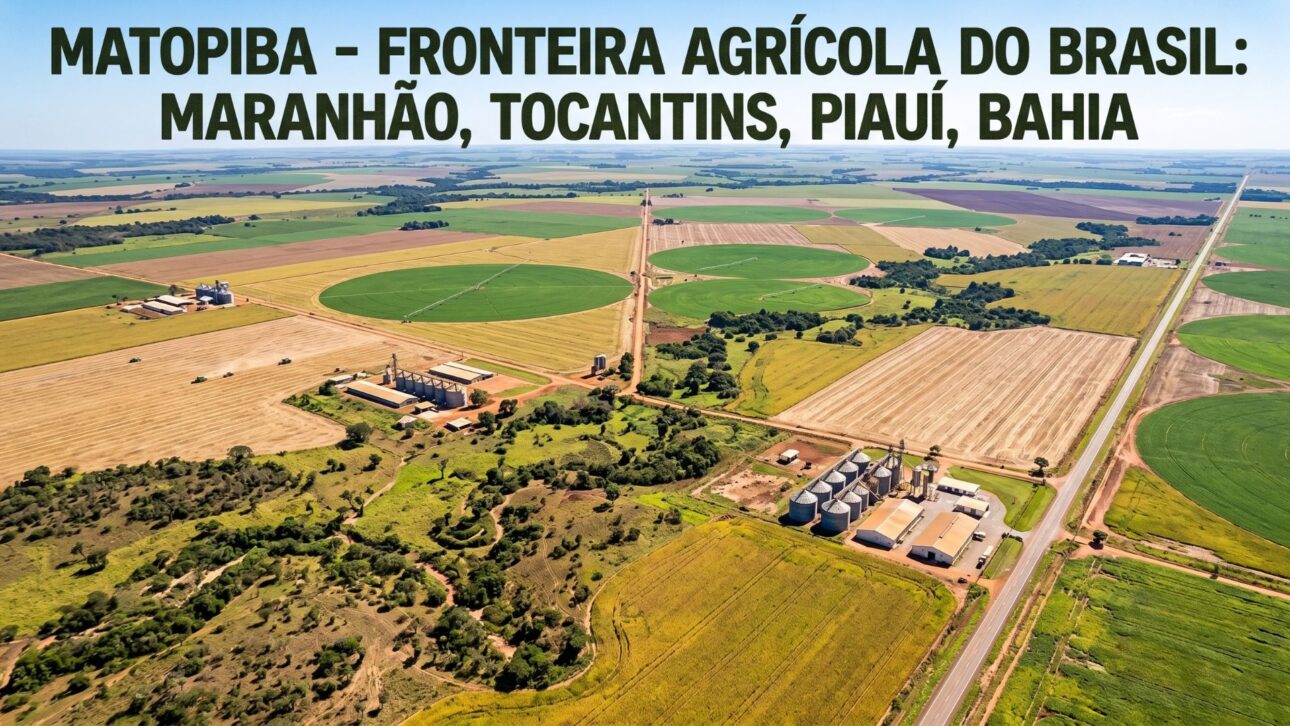
In the Arrojado River valley, residents identified eight watercourses that have dried up, while traditional irrigation channels have been operating partially or insufficiently since 2013, reducing the productive capacity of smaller properties.
This point is crucial to understand why Matopiba has become a discussion that goes beyond agriculture. What is at stake is not just the economic occupation of the Cerrado, but also the permanence of ancient forms of water and land use in territories where the new agricultural frontier has imposed another scale, another technology, and another correlation of forces.
The challenge for Matopiba now is to reconcile production, Cerrado, and water security
The trajectory of Matopiba shows why the region has become central to the future of Brazilian agribusiness. On one hand, Embrapa documents the production leap, the consolidation of the agricultural frontier, and the advancement of socioeconomic indicators in municipalities driven by agriculture.
On the other hand, Agroicone and Water Alternatives show that this growth has been accompanied by significant conversion of native vegetation and increasing pressure on territories and water resources.

The great impasse is that the same region that concentrates an important part of the soybean expansion has also become a showcase of the limits of this model.
When production advances over native Cerrado, expands irrigation, and intensifies disputes in sensitive basins, the debate ceases to be merely economic and starts to involve water, territory, sustainability, and rights of local populations.
Therefore, the future of Matopiba tends to be measured not only by the quantity of grains harvested but by Brazil’s ability to find a balance between productivity, conservation of the Cerrado, and protection of the communities that have lived in this space for generations. This tension has transformed the region into one of the most important and sensitive discussions of Brazilian agribusiness in the 21st century.








Be the first to react!