









Drop in sugarcane production, reduced stocks, and the advancement of biofuels may drive India away from international trade and limit the global sugar supply.
A significant change in international agricultural trade may occur during the upcoming harvests.
India may remain practically out of the global sugar market for at least three years, according to government representatives, producers, and industry executives.
The country once held the position of the world’s second-largest exporter of the product.
-
Quarantine Pest Threatening Palm Trees Puts Brazilian Authorities on Alert, Prompts Monitoring at University of Taubaté and Potential Control Measures Across São Paulo

-
Global Alert: Report Finds 159 Pesticides in Coffee Beans Sold in Europe, Posing Serious Risks to Millions of Farm Workers
-
Low-Demand Brazilian Beef Offal Gains Popularity Abroad: Indonesia Purchases $19.5 Million, Boosting Revenue and Reducing Waste
-
Soy Expansion in Former Brazilian Savanna Sparks Water and Land Conflicts in Major Agricultural Frontier


The combination of El Niño, reduced rainfall, and growth in ethanol production threatens to decrease the amount available for export.
Millions of tons may remain out of the international market. Importers in Asia, Africa, and the Middle East may face a more limited supply.
Benchmark prices traded in London and New York may also remain under pressure.
India restricts exports to protect the domestic market
Sugar represents an economically and politically sensitive product in India.
The country leads global consumption, while millions of families use the food as an affordable source of calories.
The government’s priority, in this scenario, will be to ensure domestic supply before allowing new international shipments.
India exported, on average, 6.8 million tons per year in the five harvests ending in 2022-23.
This volume represented approximately 10% of all global sugar exports.
The current harvest recorded about 800,000 tons exported before the suspension of shipments, valid until September 30, 2026.
Indian mills need government authorization to sell sugar to other countries.
New Delhi may suspend permits annually, without officially announcing a ban valid for several harvests.
El Niño threatens plantations and reduces water availability
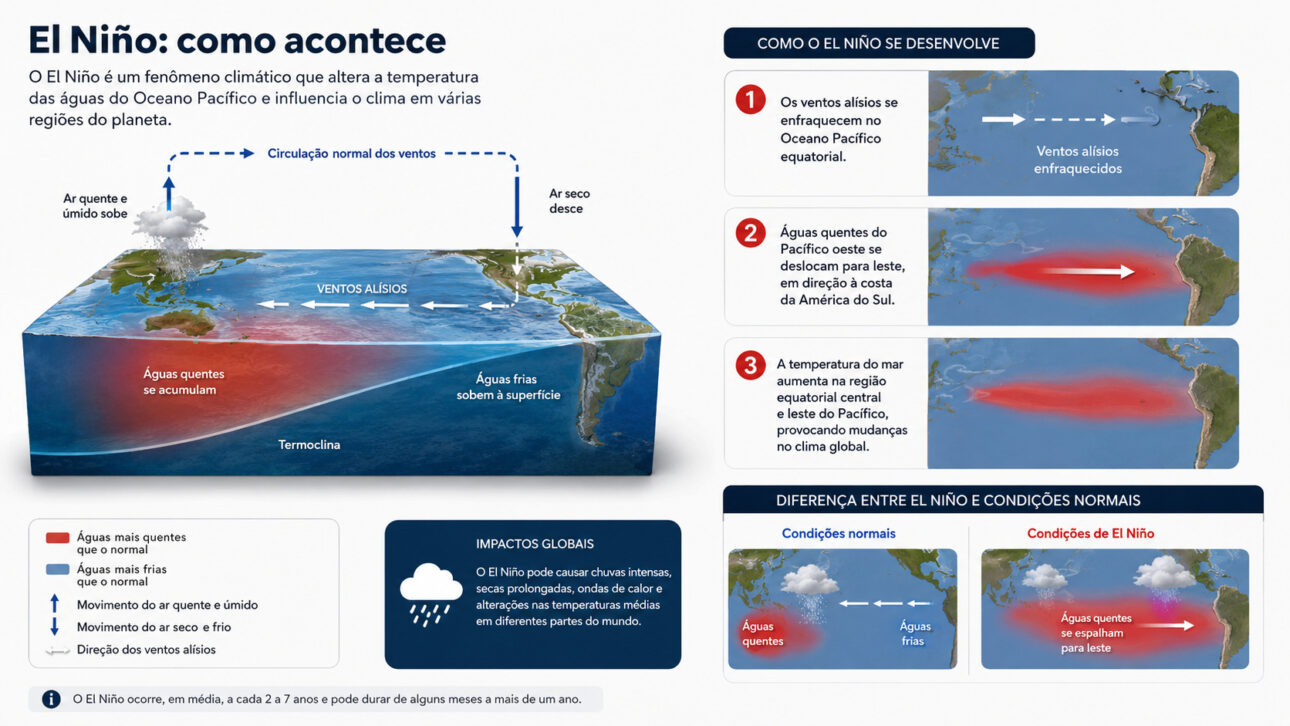
Conditions associated with El Niño may weaken monsoon rains in India during 2026.
Rainfall may reach the lowest level recorded in 11 years, according to projections presented by the sector.
Rainfall was more than 40% below average in June, leading many farmers to delay sugarcane planting.
Producers have also started evaluating crops that require less water, especially in the agricultural regions of Maharashtra.
Local authorities have begun to encourage the cultivation of:
- soybeans;
- pigeon peas;
- other varieties of legumes.
The water supply for irrigation has also been limited in certain producing areas.
Prakash Naiknavare, Director-General of the National Federation of Cooperative Sugar Factories, warned of possible effects on the 2027-28 crop.
The reduction in plantations could compromise the availability of cane and further decrease Indian production.
Sugar production may fall below consumption
India’s production was initially projected at 30.95 million tons of sugar.
The estimate was later reduced to 27.9 million tons.
The new volume will fall below the country’s annual consumption, calculated at approximately 28.5 million tons.
The mills’ stocks may start the next harvest, on October 1st, with only 3.5 million tons.
Rahil Shaikh, Managing Director of MEIR Commodities India, stated that this would be the lowest level recorded in more than three decades.
The reduction in stocks increases the need to prioritize the domestic market and makes it difficult to resume exports.
Cane gains space in ethanol production
India is also increasing the ethanol blend in gasoline and encouraging the use of flex-fuel vehicles.
The objective of the policy is to reduce dependence on imported oil, which is responsible for high costs for the country.
Indian demand for ethanol currently varies between 12 billion and 13 billion liters.
Industry estimates indicate that this consumption could reach about 30 billion liters by 2039-40.
Maruti Suzuki presented, in June 2026, the country’s first flex-fuel car.
Hero MotoCorp also launched a motorcycle compatible with fuels that have a higher ethanol concentration.
The government eliminated the tax on the production of gasoline mixed with higher levels of the biofuel.
A fuel with up to 85% ethanol was also launched to support the adoption of flex-fuel vehicles.
India may stop exporting and start importing sugar
Future Indian policies should prioritize ethanol production over sugar exports.
A significant reduction in cultivated area could worsen the situation during the 2027-28 harvest.
India may need to import sugar to meet domestic demand if El Niño severely affects production.
Brazil and Thailand could also face climatic effects, increasing pressure on international supply.
The simultaneous absence of major suppliers could alter global flows and sustain higher prices over several harvests.
Should India prioritize sugar production to protect prices or expand ethanol to reduce its oil dependence?


Be the first to react!