Portuguese
  Spanish


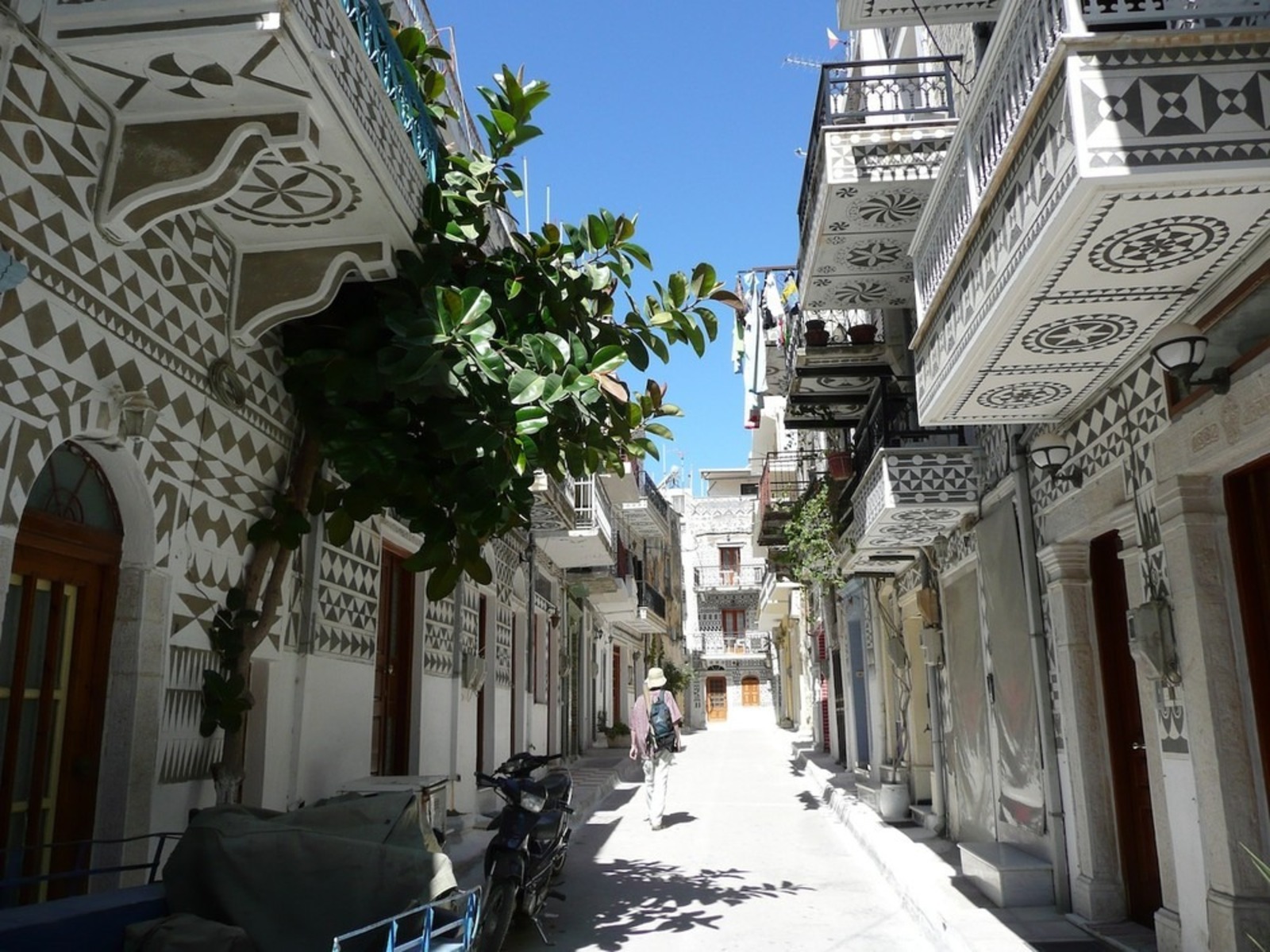


Pyrgi, On The Island Of Chios, Preserves Secular Tradition Of The Xysta Technique With Geometric Black And White Facades In Historical Village Of About One Thousand Inhabitants In Southern Greece
The village of Pyrgi, located in the south of the island of Chios, Greece, has become known for its facades decorated with the xysta technique, a pattern of geometric paintings applied over plaster that defines the urban landscape. This method spans centuries, remains active, and reinforces the local architectural identity.
Millennia-Old Paintings: Origin Of The Village Known As “Painted City”
In the south of the island of Chios, Greece, the small village of Pyrgi earned the nickname “painted city” due to its facades covered by the xysta technique.
The black and white geometric pattern covers much of the houses and creates a unique architectural scene.
-
A Brazilian street cleaner built a machine to recycle PET bottles in the hinterlands of Paraíba, transforming the trash he swept from the streets into threads, brooms, and equipment sold even outside Brazil, and began earning about R$ 7,500 per month with his own invention.

-
In a city where every piece of land is worth gold, he began buying plots in the 1960s and built a real estate empire with over a thousand properties.

-
An artist sank over 500 life-sized human statues at the bottom of the Caribbean Sea, and what seemed like macabre art turned into a living reef covered with corals that attracts divers from all over the world.

-
A fossil kept for years in a small museum in Montreal concealed 450-million-year-old soft tissue, a discovery that has only happened once before in history.


The visual effect is the result of the direct application of xysta onto the plaster of the buildings. The technique consists of applying a dark layer to the wall and then scraping parts of the surface to reveal the lighter underlying tone.
Through this process, shapes such as diamonds, spirals, and other graphic patterns emerge. The repetition of these designs along the facades creates a continuous visual identity that characterizes the entire village.
Xysta Technique Defines Architectural Identity Of The Village With Millennia-Old Paintings
In Pyrgi, xysta does not appear in isolation on some buildings. The pattern is distributed throughout many houses, forming a visually homogeneous urban ensemble.
The buildings are terraced and organized in narrow streets, a typical configuration of medieval Mediterranean villages.
In this compact environment, the decorative coating has become a distinctive element of the local architecture.
The repetition of the patterns reinforces the aesthetic unity of the village and contributes to the preservation of its historical urban landscape.
Historical Debate About The Origin Of The Tradition
Historians present different interpretations regarding the origin of the designs applied by the xysta in Pyrgi.
One hypothesis suggests Ottoman influence. In this case, the patterns would have been inspired by kilim rugs brought from Constantinople in the 19th century.
Another interpretation points to an even older origin. According to this view, the patterns may have emerged during the period when the island was under Genoese rule, between the 14th and the 16th century.
Tradition Maintained By About One Thousand Inhabitants
The village of Pyrgi has about one thousand inhabitants and maintains the practice of xysta across generations. The technique continues to be applied and periodically restored on the facades of the houses.
This work ensures the preservation of the decorative tradition that spans centuries and maintains the characteristic appearance of the village.
Pyrgi is also part of the Mastihohoria group, villages located in southern Chios associated with the production of mastic.
The resin is extracted from the Pistacia lentiscus tree and has played an important role in shaping the cultural identity of the region.
Mastic Production Recognized By UNESCO
The production of mastic has shaped the economic and cultural life of these villages over the centuries.
This traditional system of cultivation and extraction was recognized in 2014 as Intangible Cultural Heritage of Humanity by UNESCO.
Thus, in Pyrgi, xysta remains a prominent element of the urban landscape, integrating architecture, history, and local tradition over time, keeping alive a decorative practice that defines the identity of the village.
With information from Casa e Jardim.