






 Portuguese
  Spanish
  6 min of reading
  0 comments


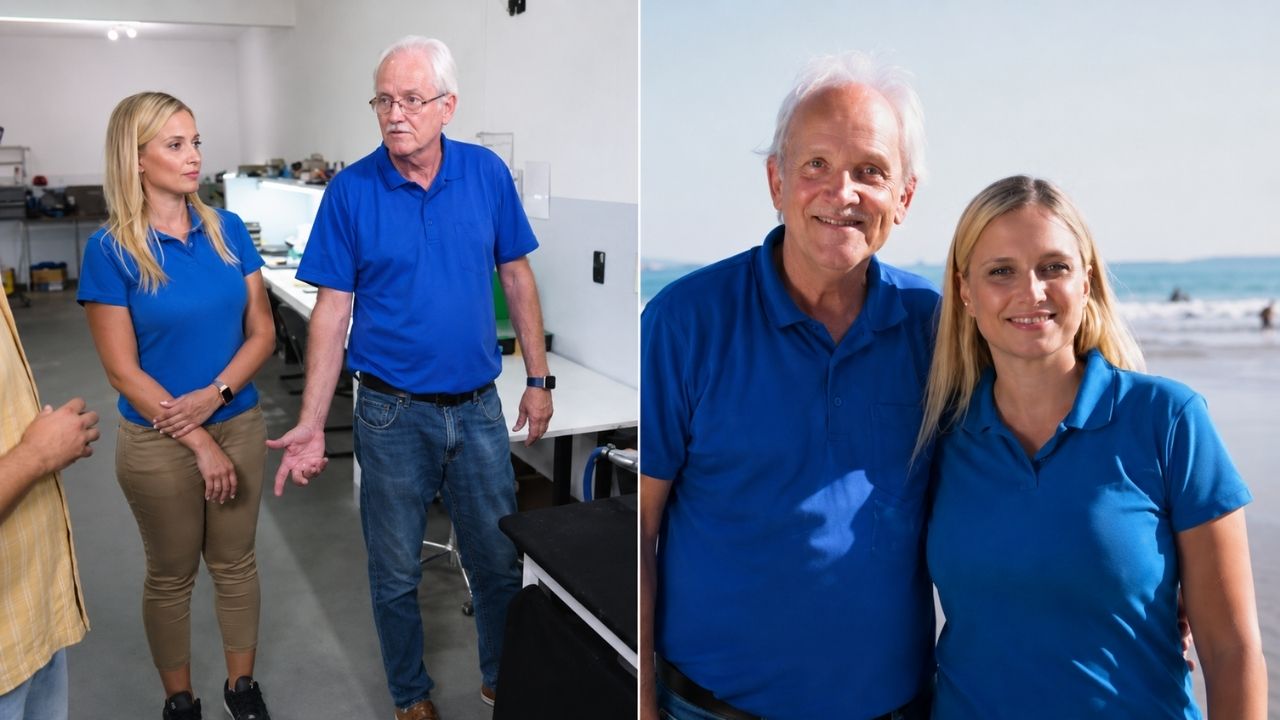
Seawater becomes a daily resource on vessels with equipment created by a family from the coast of São Paulo, which uses reverse osmosis, national production, and local parts to transform saltwater into potable water, reduce refueling stops, and quickly serve clients in different coastal regions of Brazil.
Freshwater has always been a basic necessity for those who live, work, or spend long periods at sea. On the coast of São Paulo, Wilson Valencio Filho and his daughter Bruna Valencio transformed this daily problem into a business by developing equipment capable of converting saltwater into potable water for use on vessels.
According to information from the portal sonoticiaboa, the solution uses reverse osmosis, a technology that removes salt and impurities from seawater. With national production and family operation, the company grew, began serving different regions of Brazil, and entered a market that is advancing alongside the search for more autonomy in boats, yachts, and sea voyages.
Idea born from the routine of those who know the sea intimately
The project began with the experience of Wilson Valencio Filho, who was born on the coast and grew up in contact with boats, fishing, and sea travel. This experience helped identify a frequent difficulty for those who spend hours or days on board: ensuring enough freshwater for basic tasks.
-
Helicopter Drops 180 Tons of Sand and Gravel on Swedish River to Revive Ecosystem Damaged by Decades of Exploitation

-
Brazilian Company Launches Retro Smartphone with 48 MP Camera, T9 Keyboard, and Privacy Features for Social Media-Free Use

-
Self-Taught Chinese Farmer Builds 5-Ton Submarine from Scrap, Launches It in Anhui River
-
Invisible Induction Technology Enables Wireless Power for Blenders, Coffee Makers, and Air Fryers, Reducing Countertop Cables





On a vessel, the lack of potable water affects bathing, cleaning, food preparation, and even the duration of voyages. When the boat relies solely on reservoirs, planning must include refueling stops and consumption limits.
It was from this need that Wilson decided to create his own solution. The first reported investment was approximately R$ 20,000, back in the early 2000s, when the project began to move from idea to practical form.
The unique aspect of the story lies in transforming a common difficulty at sea into a product specifically aimed at those who face this problem every day.
Reverse osmosis transforms saltwater into potable water
The equipment works by reverse osmosis, a process used to separate salt and other impurities from seawater. In practice, saltwater passes through filters and membranes that retain unwanted particles until it can be used in daily activities.
After the process, the water can be used for bathing, washing dishes, cleaning the vessel, and even washing machines, according to the company. The proposal is to increase onboard autonomy and reduce dependence on shore-based supply.
Each machine can produce up to 130 liters of freshwater per hour, a significant number for those undertaking longer voyages or needing to maintain an operational routine within the boat. This capacity helps transform the equipment into a kind of permanent support for vessels.
Instead of carrying large volumes of water, the user can produce part of what is needed during the voyage itself.
Family business grew with father, daughter, and national production

With the business’s advancement, the operation began to involve the family. Bruna Valencio joined as a partner and participates in the company’s management, while another daughter also works on the team, handling the financial and legal areas.
The family structure did not prevent expansion. On the contrary, the company began to position itself as a national solution for a recurring problem in the nautical sector, focusing on vessels that need freshwater for different usage routines.
Today, Sincro has representatives in cities like Itajaí, Angra dos Reis, and Paraty, as well as locations on the coast of São Paulo. The presence in these regions makes sense because they concentrate marinas, leisure boats, fishing, tourism, and sea-related services.
The expansion shows that demand is not restricted to one city or a specific type of boat. Where there is a vessel and difficulty in supply, there is room for solutions that produce potable water with greater autonomy.
National parts help reduce waiting times and dollar dependence
One of the points highlighted by the company is production made in Brazil. National parts help reduce waiting times and prevent customers from depending on long import periods to receive or maintain equipment.
In practice, this can be decisive for those who use their boat frequently. When a component needs to be replaced, local availability reduces interruptions and facilitates service.
Another effect is on the price. With national manufacturing and negotiation in Brazilian Real, the company avoids some of the fluctuations linked to the dollar, which can make planning more predictable for the customer.
For the nautical sector, speed of delivery and accessible maintenance can weigh as much as the technology itself. Useful equipment needs to work, but it also needs support when the user depends on it during trips.
Desalination market grows with search for water autonomy

Desalination technology has been gaining ground worldwide because the demand for water is increasing in coastal regions, on vessels, islands, and areas with difficulty in regular supply.
According to Fortune Business Insights data cited in the report, the global market moved around US$ 27.8 billion in 2025 and could reach US$ 59.3 billion by 2034. This growth shows that transforming saltwater into usable water has ceased to be merely an extreme solution and has become integrated into different sectors.
In the case of vessels, the appeal is direct. Boats that previously depended on stock and resupply can gain more flexibility by producing water during navigation or at stopping points.
Desalination alone does not solve all water access challenges, but it becomes an important tool where the sea is nearby and fresh water is limited.
Technology facilitates travel and reduces mandatory stops
For those who spend days on a vessel, continuous access to fresh water changes the routine. Bathing, cleaning, cooking, and boat maintenance no longer depend exclusively on the amount stored before departure.
This does not mean uncontrolled consumption. Even with the equipment, rational water use remains important, especially on long trips. However, the possibility of producing water on board offers a greater margin of safety and comfort.
The solution can also serve boats of different profiles, from leisure vessels to professional uses. In all cases, the logic is similar: reduce external dependence and increase autonomy.
The equipment becomes a practical answer to an old question for those at sea: how to ensure enough water without making supply a constant limitation?
Brazilian innovation emerged from the coast and gained space in various regions
The story of Wilson and Bruna shows how a simple problem can generate a business when it meets technology, practical experience, and real demand. Seawater, once seen only as an unavailable resource for direct consumption, is now treated as a possible source for daily use on vessels.
The growth of the family business also reinforces the potential of national solutions in the nautical sector. Producing in Brazil, serving different regions, and reducing import dependence are factors that help bring technology and market closer.
Still, progress depends on cost, maintenance, production capacity, and consumer confidence. Anyone who buys this type of equipment needs to believe that it will function in a demanding routine, far from common urban infrastructure.
In the end, the idea created by father and daughter on the coast of São Paulo shows that saltwater can become a solution when there is technology and real need. Do you think national equipment like this can gain more space on boats and in coastal regions of Brazil? Share your opinion.




Be the first to react!