Portuguese
  Spanish


The Geological Process That Will Create a New Ocean in Millions of Years Is Already Manifesting with Volcanoes, Earthquakes, and a Rift That Advances 7 Millimeters Per Year.
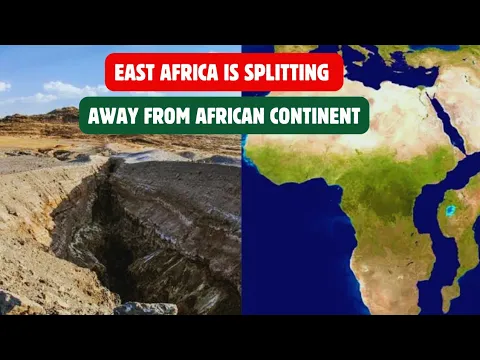
The image of a giant fissure ripping apart the African continent feeds the idea that Africa Is Dividing imminently. The reality, however, is a monumental yet extremely slow geological process that is indeed separating the continent and, in a distant future, will give rise to a new ocean.
This phenomenon, known as the East African Rift System (EARS), is not a theory, but a slow-motion process that is already tearing the continent apart with active volcanoes, earthquakes, and dramatic fissures. Understand what is behind this great division, how science monitors it, and what its consequences will be for the planet’s future.
What Is the East African Rift System?
The Earth’s surface is formed by tectonic plates that are in constant motion. The East African Rift System is an area where the African Plate is splitting into two: the Nubian Plate (larger) and the Somali Plate (smaller). This process is similar to what separated South America from Africa and created the Atlantic Ocean millions of years ago.
-
Brazilian Students Turn Recycled Plastic Bottles into Synthetic Yarn for Scarves to Aid Needy Families

-
Why the Same Citrus Fruit Has Different Names Across Brazil and How Varieties Differ
-
India Paints Road Red and Uses Smart Asphalt to Slow Drivers and Protect Wildlife in Nature Reserve

-
Yellow vs. White Fat: The Little-Known Difference That Can Impact the Quality and Flavor of Your Barbecue



This separation is driven by a mantle plume, a column of superheated rock rising from the Earth’s depths, acting as a geological ‘torch’ beneath the continent. This plume heats and stretches the crust below, weakening it and causing it to fracture. The result is the formation of a vast system of valleys, faults, and volcanoes that extends for about 3,500 km, from Ethiopia to Mozambique.
Volcanoes and Earthquakes: The Manifestations of Ongoing Division
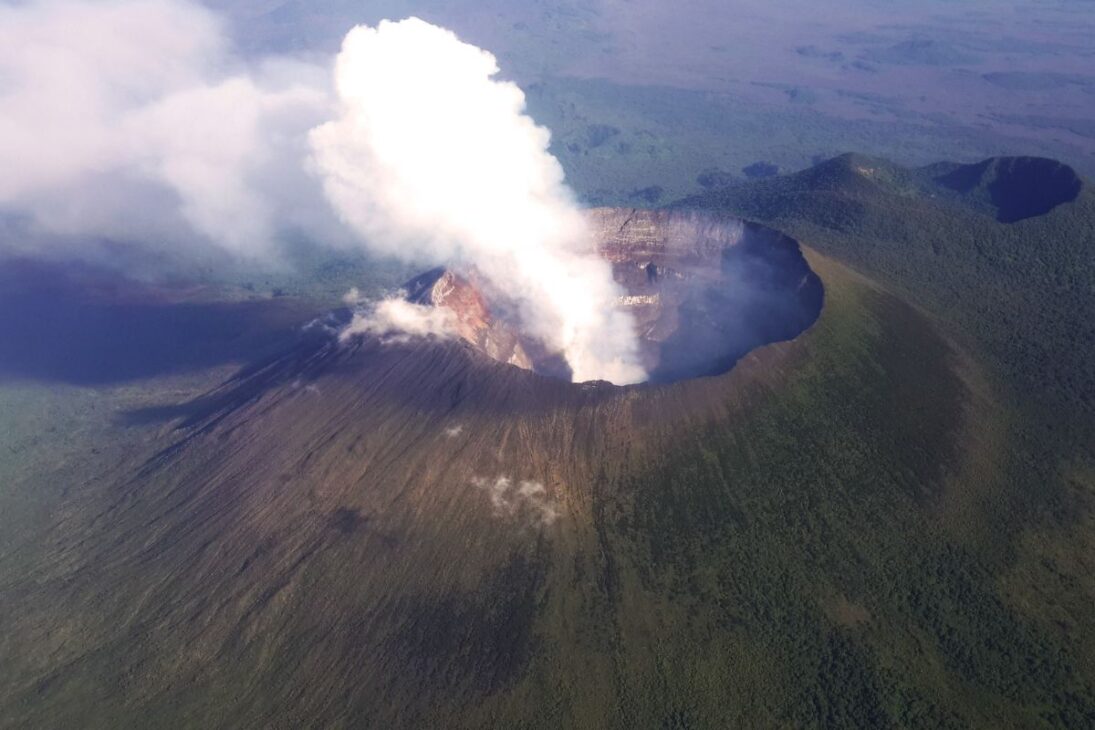
The most visible proof that Africa Is Dividing is the intense geological activity along the rift.
Volcanoes: The region is home to some of the most active volcanoes in the world. Nyiragongo in the Democratic Republic of the Congo is famous for its fast and dangerous lava flows. Erta Ale in Ethiopia has a rare persistent lava lake. Even the highest points in Africa, like Mount Kilimanjaro, are dormant volcanoes formed by this activity.
Earthquakes: The EARS is the Earth’s most seismically active rift system. Although most tremors are low in magnitude, the system can generate large, destructive earthquakes.
Fissures: In 2018, a fissure several kilometers long opened in Kenya, cutting through a highway and catching the world’s attention. The event was caused by the erosion of volcanic ash filling a pre-existing fault. The difference between the two branches of the rift explains this variety of events: the eastern branch, hotter and with more magma, tends to ‘bleed’ off tension in eruptions; whereas the western branch, cooler, accumulates tension for longer, releasing it in larger, more destructive earthquakes.
The Science That Measures the Rift: The 7 Millimeters That Africa Is Moving Apart Each Year
Thanks to satellite technologies like high-precision GPS and InSAR (interferometric radar), scientists can measure the movement of the plates in real time. Data confirms that the Somali Plate is moving away from the Nubian Plate at an average rate of 6 to 7 millimeters per year.
Although it seems small, on a geological timescale, this movement is significant. It is this precise measurement that allows scientists to project the future of the continent with high confidence.
A New African Ocean: What Will the Future Look Like in 10 Million Years?
If the separation continues at the current pace, the end result will be the creation of a new ocean. The process will happen in stages over millions of years.
First, the rift valley will continue to widen and sink. Eventually, the crust will completely rupture, and the waters of the Red Sea and the Gulf of Aden will flood the entire length of the fissure. This will form a new narrow sea, which over time will expand to become a complete ocean basin. The whole process is expected to take 5 to 10 million years. The map of Africa will be drastically redrawn, with the Horn of Africa and parts of other countries forming a new large island continent. Countries that currently do not have access to the sea, such as Uganda and Zambia, will suddenly have a new coastline, forever changing the geopolitics and economy of the region.
The Risks and Resources Created by the Rift

For the millions of people living in the region, the realization that Africa Is Dividing brings a reality of dangers and opportunities.
Risks: Geological activity poses a constant threat. Earthquakes, eruptions, and fissures can destroy cities and infrastructure, especially in a region with many vulnerable structures.
Opportunities: The same geological forces also create valuable resources. The heat from the mantle that fuels the volcanoes gives the region immense potential for geothermal energy generation, a clean and renewable source. Kenya is already a global leader in this sector. Additionally, the process concentrates significant mineral deposits, such as gold and iron.
The future of East Africa will depend on its ability to manage this duality, harnessing the heat that generates clean energy while preparing for the shaking ground. It is an engineering and planning challenge that will define the destiny of millions of people living on a transforming continent.