






 Portuguese
  Spanish
  6 min of reading
  0 comments


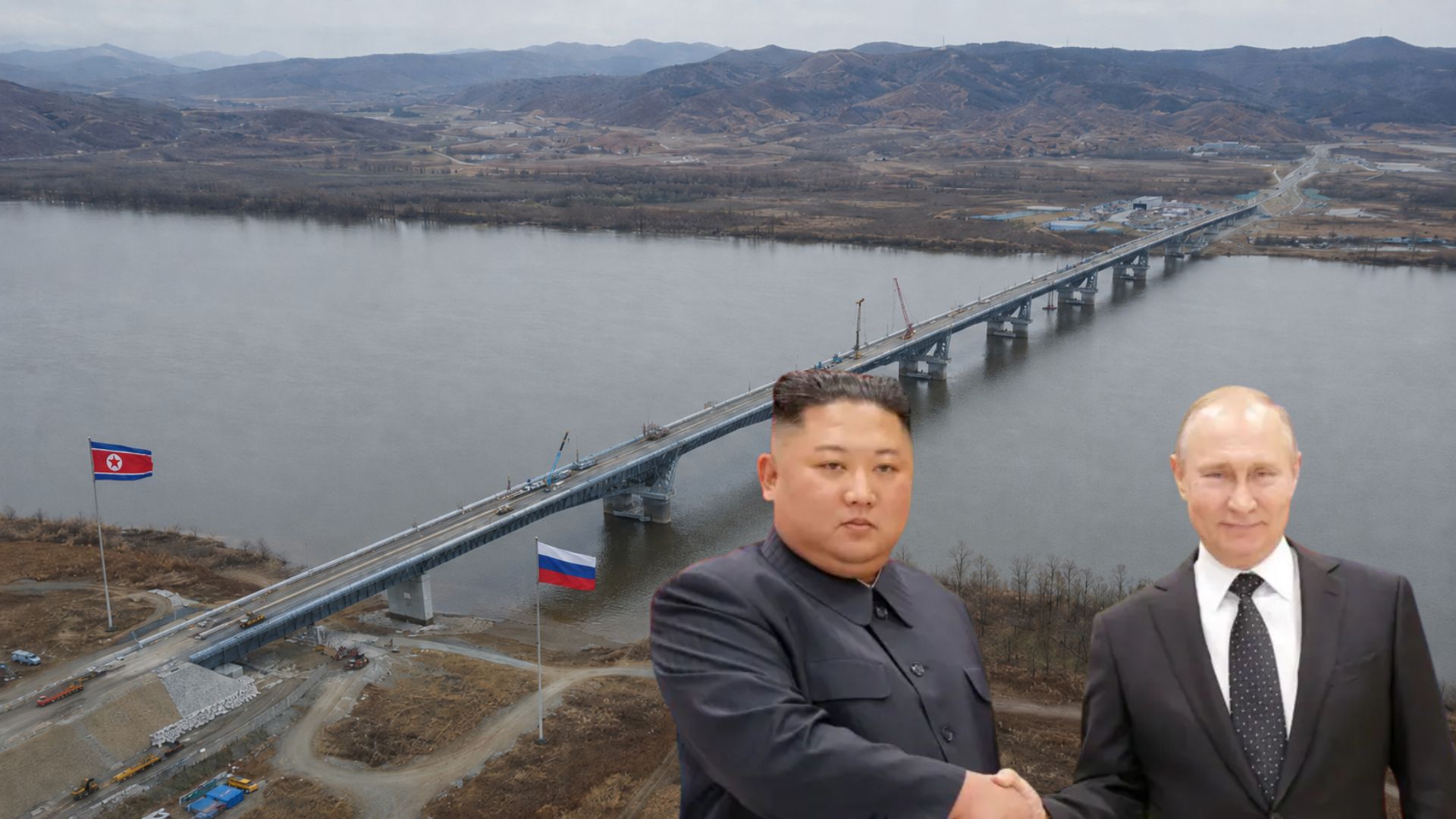
According to information from the BBC, the first road bridge linking North Korea and Russia is almost complete over the Tumen River, one kilometer long, with capacity for 300 vehicles and 2,850 people per day, an estimated cost of US$120 million, and an inauguration scheduled for June 19. Experts state that the work symbolizes the deepening military alliance between Pyongyang and Moscow in the context of the war in Ukraine.
North Korea and Russia are about to realize a physical connection that until recently would have been unthinkable given the speed with which it was executed. Satellite images analyzed by BBC Verify show that the first road bridge between the two countries is almost complete, with the main structure already joined and visible supporting infrastructure on the banks. The bridge, known as Khasan-Tumangang, was built in approximately one year after an agreement signed during Russian President Vladimir Putin’s visit to Pyongyang in June 2024, when he met with North Korean leader Kim Jong Un.
The Russian Ministry of Foreign Affairs stated that the opening of the bridge “will become a truly landmark stage in Russian-Korean relations” and that “its significance goes far beyond a purely engineering work”. The bridge is located a few hundred meters from the only other connection between North Korea and Russia, the Friendship Bridge, which is exclusively railway. With the new road crossing, the two countries will now have a route for cargo transport by trucks, significantly expanding logistical capacity between their territories.
One kilometer of concrete over the Tumen River

An image released by the Russian Ministry of Transport shows the ceremony marking the joining of the two banks of the new road bridge.
The road bridge connecting North Korea and Russia is approximately one kilometer long and crosses the Tumen River, the waterway that forms part of the border between the two countries in the far northeast of Asia. The Russian Ministry of Transport reported that the structure was designed to support up to 300 vehicles and 2,850 people per day, numbers that indicate a significant capacity for the movement of goods and people between the two territories.
-
Bolivian Female Construction Workers Form Association to Combat Discrimination and 38% Pay Gap in the Industry

-
Near Amsterdam, residents buy land and discover they must also build streets, manage drainage, handle waste, and grow food on half their plot.
-
Brazil’s WEG to Open New Factory in China by 2027, Expanding Production of Large Rotating Electric Machines and Low to Medium Voltage Motors in Rugao

-
Chinese Shipyard Secures $1 Billion in Orders for Low-Carbon Container Ships Amid Global Fleet Renewal Efforts


The total cost of the work is estimated at over 9 billion rubles, equivalent to approximately US$120 million or more than R$600 million, according to Russian state media. The most recent satellite images, dated May 2026, show the completed bridge alongside new access roads, a border control post, supporting infrastructure, and parking. A ceremony to mark the joining of the two sides of the bridge was held on April 21, and the Russian embassy in North Korea reported that construction is expected to be fully completed by June 19.
The speed of the work speaks as much as the bridge itself

The speed with which the bridge between North Korea and Russia was built impresses international analysts. Victor Cha, from the Center for Strategic and International Studies (CSIS) think tank, stated that the speed of construction is a reflection of the volume of commercial activity between the two sides, suggesting that the demand for a road connection was urgent enough to justify an accelerated timeline. The work began approximately one year after the agreement between Putin and Kim and is already in its final phase of completion.
For comparison, bridges of similar scale in conventional contexts usually take two to five years from design to delivery. The fact that North Korea and Russia completed the structure in about 12 months indicates maximum priority from both governments. According to Cha, this haste is largely driven by North Korea’s supply of troops, weapons, ammunition, and workers to support Russia in the war against Ukraine, a relationship that requires robust logistics and reliable transport routes.
The military context behind the bridge
The new bridge between North Korea and Russia cannot be analyzed outside the context of the war in Ukraine. Edward Howell, a Korea expert at the British think tank Chatham House, stated that the bridge will offer a useful route for transferring military goods and ammunition in both directions. North Korea has already sent about 15,000 soldiers to fight alongside Russian forces in Ukraine, according to South Korean estimates, in addition to missiles and long-range weapons. Seoul also estimates that approximately 2,000 North Koreans have died in the conflict.
Neither Pyongyang nor Moscow have officially confirmed these numbers, but recent actions indicate that military cooperation is deep. Last week, Kim Jong Un and Russia’s Defense Minister, Andrey Belousov, inaugurated a memorial in Pyongyang for North Koreans who died fighting in the Ukraine war. Belousov stated that he discussed long-term military cooperation with North Korean officials. In exchange for providing soldiers and weaponry, North Korea is believed to have received food, fuel, and military technology from Russia.
The 2024 agreement that created the bridge
The road bridge is one of the concrete developments from Vladimir Putin’s visit to Pyongyang in June 2024. In addition to agreeing on the construction of the crossing, Putin and Kim Jong Un signed a historic pact promising that North Korea and Russia would help each other in case of “aggression” against either country. This mutual defense agreement represented a formal escalation in the alliance between the two governments and signaled to the world that the bilateral relationship had surpassed the stage of ad hoc cooperation.
BBC Verify used satellite images to track the construction progress since the start of the works. Records from May 2025 show the beginning of the foundation on both sides of the Tumen River. By November, the structure was already extending over the water. In April 2026, the bridge appears practically complete, with access roads, checkpoints, and support infrastructure clearly visible. The sequence of images documents one of the fastest and most geopolitically significant infrastructure constructions in recent years.
How the bridge will work in practice

The logistics of operating the bridge between North Korea and Russia will have specific characteristics that reflect the nature of the two regimes. According to CSIS, Russian and North Korean drivers will likely have to transfer loads from full trucks at the crossing itself, as they will be restricted to operating vehicles only near the border, without permission to advance further into the other country’s territory. This transshipment model at the bridge is common at high-control borders, where each government limits foreign access to its interior.
Railway traffic on the neighboring Friendship Bridge remained high throughout the construction of the new road bridge. This indicates that commercial demand between North Korea and Russia already exceeds the capacity of the existing railway connection and that the road bridge does not replace, but complements, the flow of goods. Experts believe that the new crossing should quickly become one of the main trade routes between the two countries, moving both civilian products and materials of military interest.
A bridge that symbolizes an alliance beyond the war
The Khasan-Tumangang bridge is almost ready and is expected to open in June. With a kilometer in length, capacity for 300 vehicles per day, and a cost of over US$120 million, the first road link between North Korea and Russia is the most visible symbol of the deepening alliance between Pyongyang and Moscow. As Edward Howell highlighted, the construction symbolizes how the ties between the two countries seem destined to continue beyond any eventual end to the war in Ukraine.
What do you think about the construction of this bridge between North Korea and Russia? Tell us in the comments if you believe this road link has mainly commercial or military purposes, how you assess its impact on the war in Ukraine, and what you think about the speed of the construction work. We want to hear your analysis of this geopolitical movement.





-

1 person reacted to this.