Portuguese
  Spanish


Electrodynamic shields create electric fields to repel lunar regolith, protect astronauts, preserve spacesuits, keep sensors clean, reduce solar panel failures, prevent damage to vital equipment, and make future lunar bases much safer during prolonged missions.
Space science has advanced a solution that could change the routine of future crewed missions to the Moon.
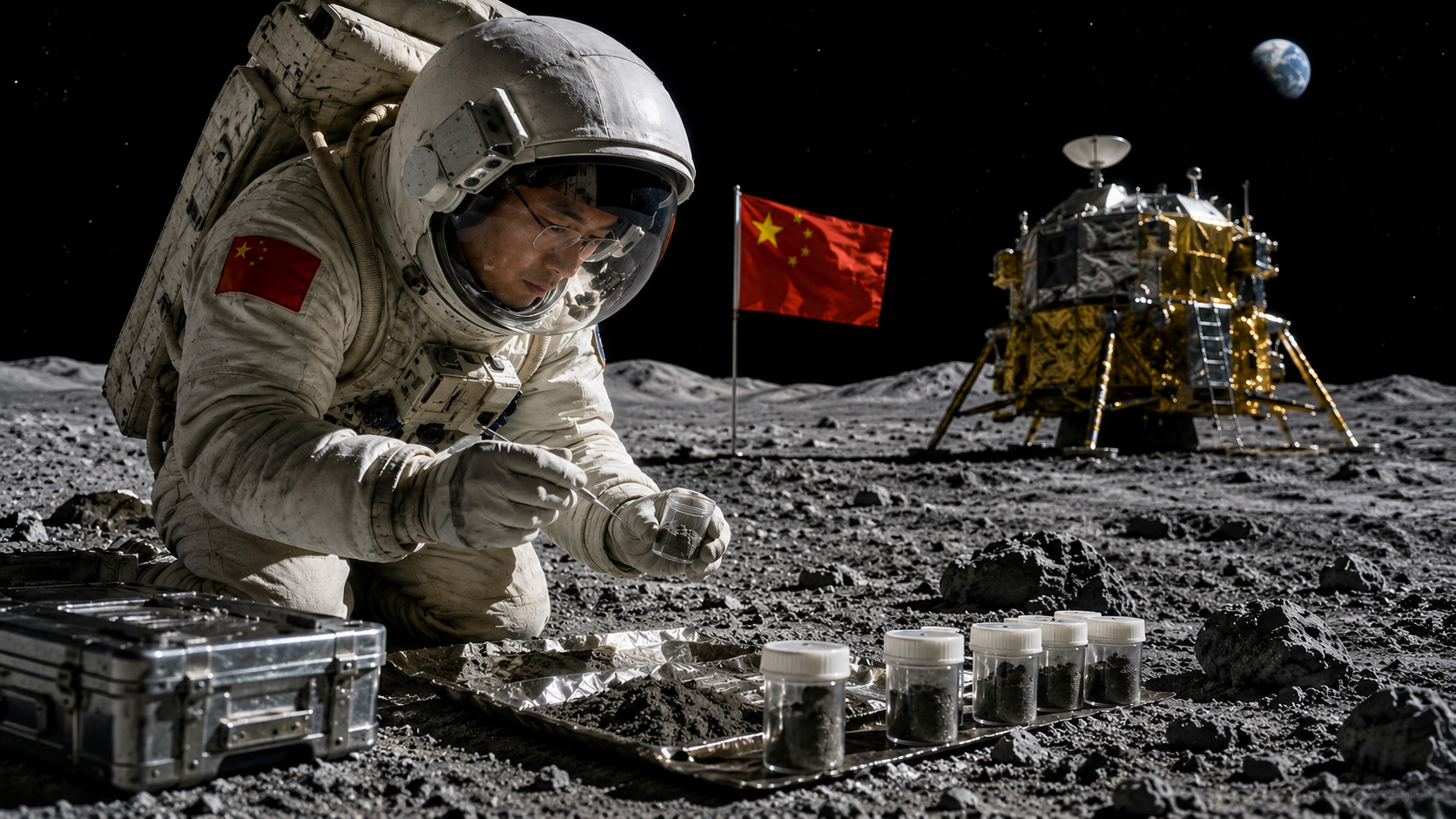
Researchers are developing electrodynamic shields capable of creating electric fields to repel lunar dust, one of the biggest obstacles for astronauts, spacesuits, and sensitive equipment.
During the Apollo program, conducted between 1969 and 1972, astronauts reported that the dark regolith quickly stuck to modules, clothing, and instruments.
-
Scientists Convert Food Waste into Aviation Fuel, Successfully Test 50% Blend with Conventional Kerosene to Cut Emissions and Promote Sustainable Flights

-
OnePlus N6 Smartphone to Launch in India with 8,000mAh Battery and 45W SuperVOOC Charging, Lasting Up to Three Days
-
Scientists Plan to Release Air Bubbles Underwater to Protect Antarctica’s “Doomsday Glacier” from Melting

-
Chinese R6000 Drone Combines Airplane and Helicopter Features, Carries Up to 12 People for Multiple Missions


According to technical records from NASA, this fine dust caused respiratory irritations, reduced equipment efficiency, and hindered safe operation on the lunar surface.
How lunar dust threatens future missions
Lunar dust is not just ordinary dirt. In fact, lunar regolith is fine, abrasive, and electrically charged by constant solar radiation.
Still, the greatest risk lies in its sharp-edged particles, similar to small cutting fragments.
Therefore, they can wear down spacesuits, damage sensors, cover solar panels, and compromise vital radiators.
This problem concerns space agencies because future lunar bases will depend on stable systems for long periods.
Therefore, any dust accumulation can increase costs, failures, and risks to crew members.
Technical investigation reveals an invisible defense
To face this challenge, scientists began testing so-called electrodynamic dust shields.
This technology uses small, flexible electrodes positioned on exposed surfaces.
Thus, variable electric fields push charged particles away before they accumulate.
According to research associated with NASA, the system can protect lenses, thermal sensors, solar panels, helmets, and external structures.
In this way, the technology reduces the need for brushes, solvents, and manual cleaning in hazardous environments.
New materials enhance shield resistance
Initially, tests used copper on flexible films. This metal conducts electricity with high efficiency.
However, copper can crack when subjected to many bends in severe conditions. For this reason, researchers also tested an alternative based on reduced graphene oxide.
This material offers greater flexibility, lightness, and mechanical resistance. As a result, the shields can be applied to curved surfaces, such as helmets, rovers, and pressurized suits.
Among the main advantages are:
• Greater structural resistance compared to rigid metals.
• High lightness for foldable and portable patches.
• Extreme flexibility for curved surfaces.
• Extended durability in vacuum and thermal variation environments.

Vacuum tests indicate active prevention
The most important tests occurred in a deep vacuum chamber. In this environment, researchers used artificial dust to simulate lunar surface conditions.
Once the dust was fixed, the copper adhesives removed a large part of the accumulated layer. However, the best performance appeared when the particles were still in motion.
Thus, the main strength of the technology lies in the **prevention of initial adhesion**. That is, the system acts before dust adheres to sensors, panels, and critical surfaces.
Technology could change lunar bases
With less accumulated dust, future lunar bases will be able to operate more safely.
In this scenario, life support systems, hatches, and ventilation ducts could be preserved for longer.
This protection can also reduce the shipment of spare parts and decrease maintenance on prolonged missions.
Therefore, **force fields against lunar dust** emerge as a strategic solution for off-Earth exploration.
After all, if dust has always been a silent enemy on the Moon, can this technology transform human presence on the satellite into a safer reality?