






 Portuguese
  Spanish


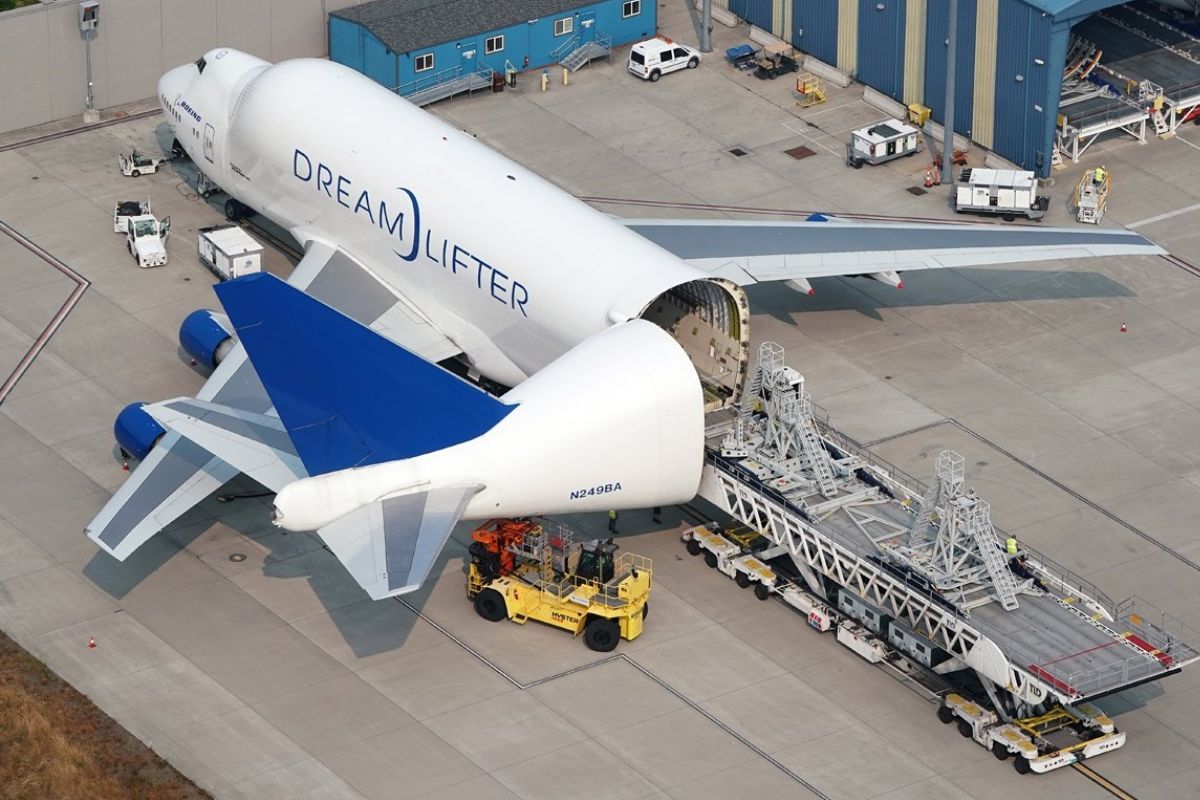


The Boeing Dreamlifter Is The Backbone Of 787 Dreamliner Production, A Unique Engineering Solution For A Global Logistics Challenge.
The 747-400 LCF, more commonly known by the nickname Boeing Dreamlifter, is one of the most unusual and fascinating aircraft in the world. At first glance, it looks like a design error, an anomaly in the skies. But this awkward appearance hides its true identity: that of Boeing’s ‘flying factory,’ the pillar that supports the complex global production of the modern 787 Dreamliner.
With a cargo hold three times larger than that of a standard 747 freighter, the fleet of just four Boeing Dreamlifters has the mission of transporting the immense wings and fuselage sections of the 787 between the company’s factories in Italy, Japan, and the United States. This is the story of engineering, logistics, and the paradox behind Boeing’s indispensable giant.
Why Did Boeing Need To Create Such A Unique Aircraft? The Puzzle Of 787 Dreamliner Production
In the early 2000s, Boeing revolutionized its approach to aircraft manufacturing. For the 787 Dreamliner program, the company adopted a global production chain, where over 50 international partners would build large parts of the aircraft, which would then be assembled in the U.S. The wings, for example, would come from Japan, and fuselage sections from Italy.
-
Award-Winning Japanese Restaurant Reveals It Has Preserved Part of the Same Frying Oil for 66 Years

-
American Youth Transforms from Severe Obesity to U.S. Air Force Enlistment, Losing 90 Kilograms in Two Years
-
11-Year-Old Entrepreneur Sells 60 Homemade Sweets Daily, Mastering Cost Calculation, Social Media Promotion, and Client Negotiation Since Age 7

-
Peruvian Mountain’s 5,200 Aligned Holes May Unveil Ancient Indigenous Market for Corn and Cotton


This strategy, however, created a gigantic logistical problem. The parts of the 787 were too large to fit in containers or existing freighters. The alternative would be maritime transport, but bringing the wings from Japan to the U.S. by ship would take 30 days. The Boeing Dreamlifter was born to solve this, reducing transport time to less than a day of flight. It was not an option, but the only possible solution to avoid the collapse of a multibillion-dollar program. Without the Dreamlifter, the Dreamliner would never have taken off.
The “Hump,” The Tail That Opens, And The Secrets Of The Boeing Dreamlifter
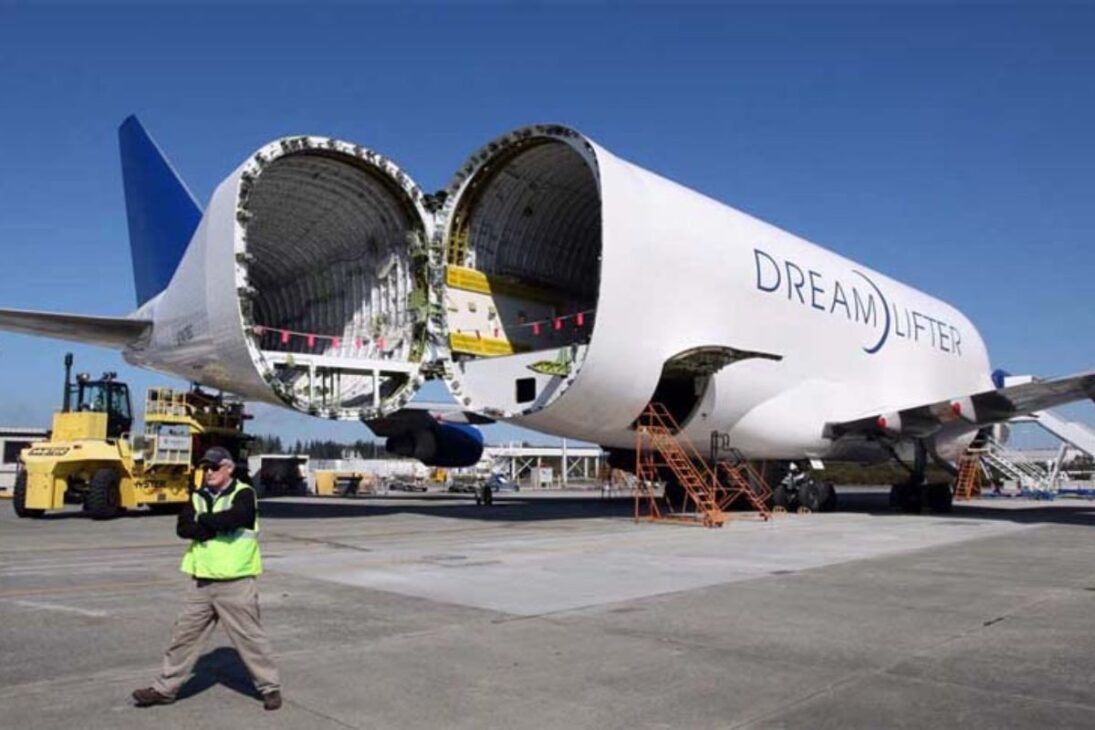
The Boeing Dreamlifter is a modified used 747-400 passenger aircraft that has been radically altered.
The Giant “Hump:” The most obvious modification is its upper fuselage, which has been widened to create a cargo hold with 1,840 cubic meters of volume. This cargo space is unpressurized, which saved weight and complexity in the design.
The Opening Tail: Since the raised cabin of the 747 prevented a nose cargo door, engineers created an unprecedented solution: the entire tail disconnects and swings to the side on a colossal hinge, like a flying hangar door. This engineering feat exposes the entire fuselage for loading from the rear.
Ground Dependency: The tail system is so complex that it cannot be operated by the aircraft itself. It relies on a special truck, the largest cargo loader in the world, to open and close the tail. Furthermore, the Boeing Dreamlifter lacks an APU (Auxiliary Power Unit), meaning it relies entirely on external power on the ground, limiting its operation to a few prepared airports.
A Fleet Of Just Four: The Aircraft That Became Dreamlifters And Their Routes Around The World
The entire fleet of Boeing Dreamlifters consists of just four aircraft, all converted from outdated 747-400 passenger planes that flew for airlines like Air China and Malaysia Airlines. The conversion took place in Taiwan, with the design being a global effort involving Boeing offices in Moscow and Spain.
Since 2010, the fleet has been operated by Atlas Air, the largest operator of 747s in the world. They do not fly just anywhere. They operate on a closed and dedicated circuit, connecting suppliers to Boeing factories. The main routes link Taranto, Italy, and Nagoya, Japan, to the assembly lines in Charleston (South Carolina) and Everett (Washington) in the U.S., with stops for refueling in Anchorage, Alaska.
The Success That Arose From A Problematic Program
Here lies the great paradox of the Boeing Dreamlifter. The aircraft is a triumph of engineering and a logistical success, fulfilling its mission of transporting parts quickly and efficiently. However, it was created to serve a production strategy for the 787 that proved to be deeply flawed.
Radical outsourcing and poor supply chain management led to unprecedented delays and severe quality issues within the 787 program. The Dreamlifter perfectly transported the parts, but often these parts arrived late or out of specifications, requiring costly rework on the assembly line. The Boeing Dreamlifter is, therefore, proof that sometimes the brightest engineering solution is the one born to fix the most expensive strategic mistake. It is a flying reminder of the complex realities of global manufacturing.
An Indispensable Giant And Its Future


In 2025, the importance of the Boeing Dreamlifter to Boeing remains absolute. With the 787 program in full production, the fleet of four giants is the lifeline connecting the company’s global factory. The frequency of its flights has become a barometer for analysts to measure the pace of Dreamliner production.
With an estimated lifespan of another 10 to 15 years, this clumsy giant will continue to be a rare sight in the skies. More than a cargo aircraft, the Dreamlifter is a flying monument to the complex and sometimes contradictory genius of modern engineering.


