






 Portuguese
  Spanish


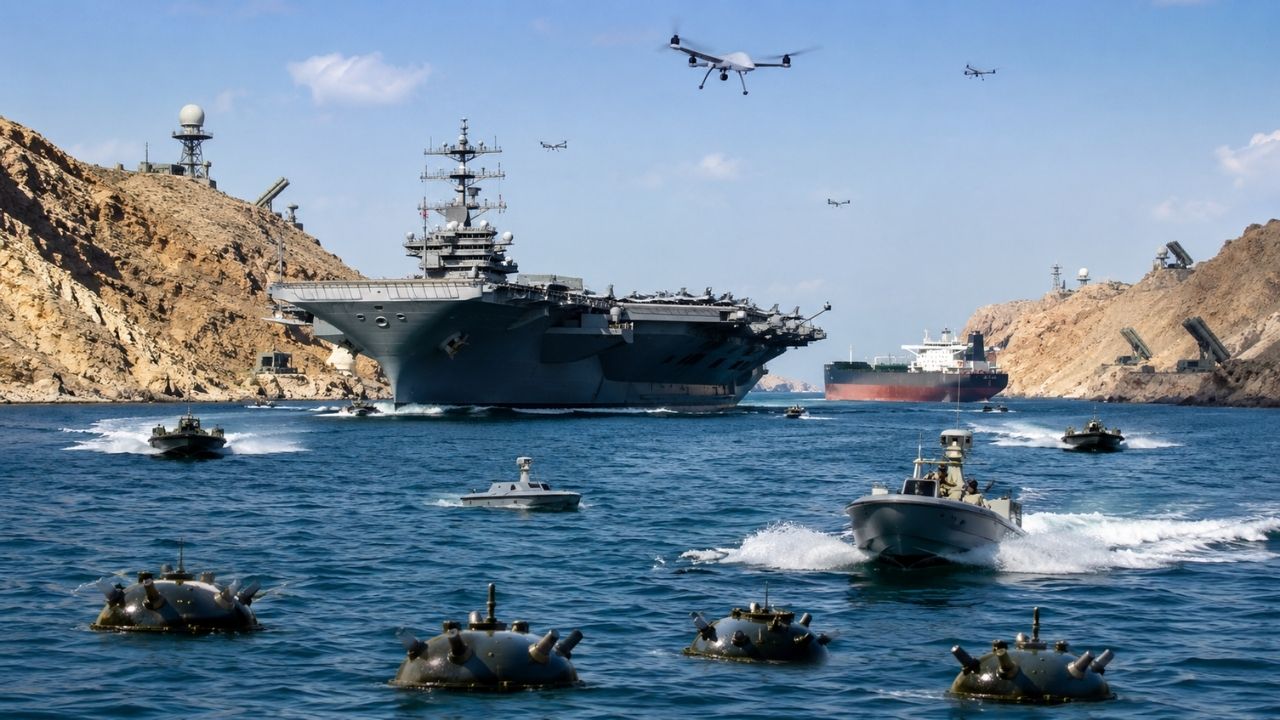
Billion-dollar aircraft carriers remain symbols of naval power, but the Strait of Hormuz exposes an uncomfortable shift: maritime drones, mines, coastal missiles, and fast boats can threaten vital trade routes, raise risks for merchant ships, and force major Navies to rethink how to protect global trade chokepoints in narrow passages.
Aircraft carriers continue to be the most powerful image of force in modern naval power, but the struggle for narrow areas like the Strait of Hormuz shows that size, range, and firepower no longer guarantee absolute control of maritime routes. In tight passages, smaller threats can produce global effects.
According to DW, the change is simple to understand and difficult to solve: a Navy may have billion-dollar ships, bases around the world, and cutting-edge technology, but still face difficulty neutralizing drones, mines, coastal missiles, and fast boats operating near the coast. The problem is not winning a classic naval battle, but keeping trade flowing when the risk alone is enough to deter ships.
Aircraft carriers remain powerful, but do not solve all types of threats

For decades, aircraft carriers were treated as the pinnacle of military projection at sea. They carry aircraft far from national territory, sustain operations for long periods, and function as mobile platforms for deterrence, attack, and strategic presence.
-
Oil Company Robots Discover 3,300-Year-Old Canaanite Shipwreck in the Mediterranean, Proving Ancient Mariners Navigated Open Seas Using Stars Long Before Historians Thought

-
Helicopter Drops 180 Tons of Sand and Gravel on Swedish River to Revive Ecosystem Damaged by Decades of Exploitation

-
Brazilian Company Launches Retro Smartphone with 48 MP Camera, T9 Keyboard, and Privacy Features for Social Media-Free Use

-
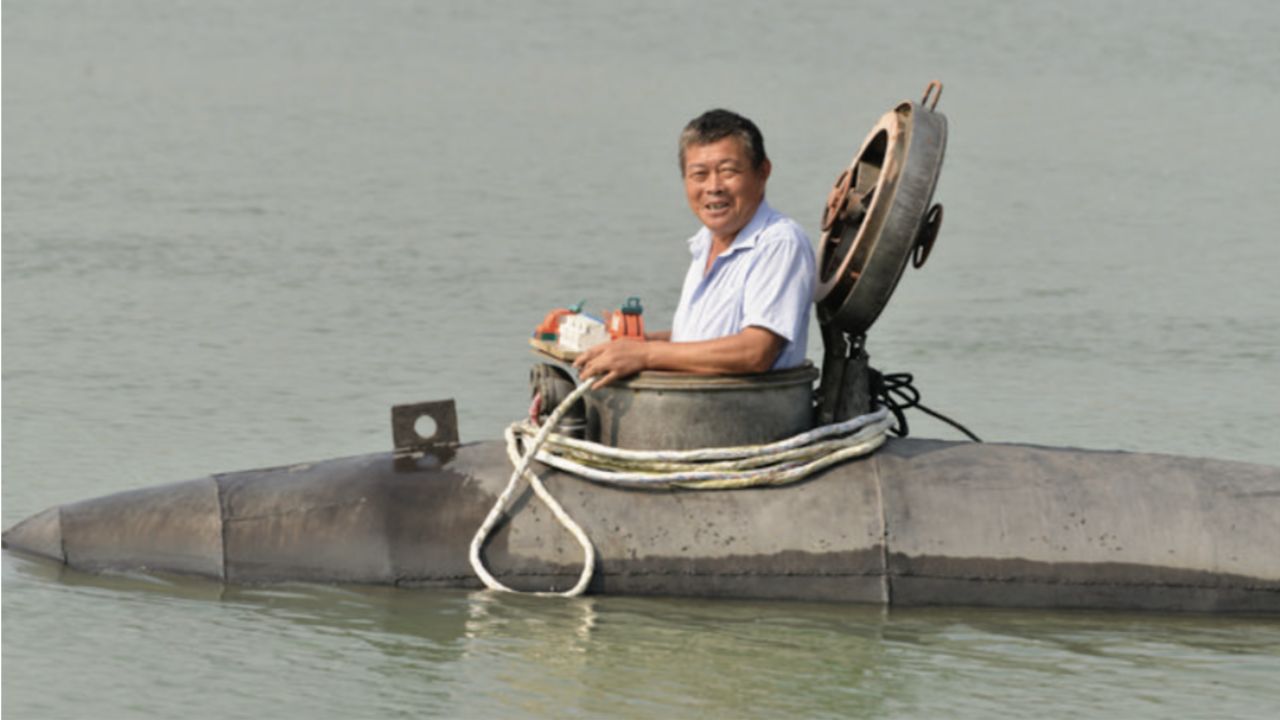
Self-Taught Chinese Farmer Builds 5-Ton Submarine from Scrap, Launches It in Anhui River



The USS Gerald R. Ford, for example, is officially presented by the United States Navy as a highly capable, adaptable, and lethal combat platform, designed to maintain global power projection capability at sea.
But the current challenge is not just about measuring which ship is bigger or more expensive. In areas like Hormuz, Bab el-Mandeb, or other maritime chokepoints, maneuver space is smaller, the coast is close, and cheap threats can be rapidly deployed.
It is at this point that aircraft carriers cease to be the sole answer. They remain important in the open sea, but need to operate protected by escorts, sensors, anti-missile defense, electronic warfare, intelligence, and anti-drone systems.
Strait of Hormuz shows the weight of maritime chokepoints
The Strait of Hormuz is one of the most sensitive points in global energy trade. According to the U.S. Energy Information Administration, in 2024, about 20 million barrels per day of petroleum and other liquids passed through the strait, a volume equivalent to approximately 20% of global petroleum liquids consumption.
This data explains why a local threat can generate international impact. When a chokepoint of this type is at risk, insurers, shipowners, and energy companies recalculate routes, costs, and deadlines even before a total blockade occurs.
In 2026, tension in the Strait of Hormuz returned to the center of global concerns, with the statistical agency of the U.S. Department of Energy assuming a scenario of effective closure until the end of May and gradual resumption of traffic thereafter.
For maritime trade, the perception of risk is already a form of partial blockade. A merchant ship does not need to be hit to avoid a route; often, the mere possibility of attack is enough to raise insurance, freight, and delays.
Drones, mines, and fast boats change the logic of naval warfare

Asymmetric naval warfare has gained strength because cheaper technologies have begun to threaten much more expensive platforms. Aerial drones, maritime drones, unmanned vessels, mines, and coastal missiles can be used to saturate defenses and create operational uncertainty.
This cost difference is central. An aircraft carrier costs billions of dollars and needs an entire escort group to operate safely. A naval mine, a fast boat, or a drone, however, can be launched by a much smaller actor and still create a disproportionate risk.
This does not mean that large ships have become obsolete. It means they need to operate in a more complex environment, where the threat does not always come from another warship. The adversary may not have a large Navy, but can still disrupt an essential route.
In narrow areas, this asymmetry becomes more dangerous. Proximity to the coast facilitates the use of land-based radars, missiles, fast vessels, and improvised systems, while larger ships need to maintain distance to reduce exposure.
Global trade depends on vulnerable routes
The fragility of maritime routes is not a technical detail. According to UNCTAD, more than 80% of the volume of world trade is transported by sea, and bottlenecks such as canals, straits, and Red Sea routes are increasingly exposed to geopolitical tensions, conflicts, and climate change.
This makes the control of narrow passages an economic issue, not just a military one. When a route becomes more expensive or risky, the impact can reach the price of fuels, food, industrial inputs, and imported products.
The case of the Red Sea has already shown this effect in recent years, when attacks and threats in the region led companies to divert ships via longer routes. In Hormuz, the risk is even more sensitive due to the concentration of oil and gas.
The new naval dispute is not limited to sinking enemy ships. It involves keeping insurers confident, ports operating, cargo moving, and countries supplied even under constant threat.
World’s largest Navy depends on the criterion used
When speaking of the “world’s largest Navy,” it is necessary to separate the criteria. The United States still maintains an enormous advantage in aircraft carriers, nuclear submarines, global projection, overseas bases, and warship tonnage.
On the other hand, China has already surpassed the United States in the number of warships over one thousand tons, according to data from the International Institute for Strategic Studies cited by Reuters, although the American Navy remains larger in tonnage and with more numerous and powerful aircraft carriers.
This difference shows that sheer size alone does not solve the problem. Having more ships helps, but controlling commercial routes requires constant presence, maintenance, intelligence, industrial capacity, alliances, and a quick response to small threats.
China’s growth also reinforces the changing era. Beijing invests in ships, shipyards, drones, technology, and maritime presence, while Washington tries to adapt a force built to dominate open oceans to more distributed and unpredictable conflicts.
Naval power now needs to combine large ships and small systems


The response of large Navies tends to involve a mix of forces. Aircraft carriers remain relevant, but need to operate alongside drones, autonomous vessels, advanced sensors, swarm defense systems, and lower-cost weapons.
This movement is already evident in the design of modern fleets. Instead of relying solely on large crewed ships, powers seek to combine expensive platforms with unmanned systems capable of surveillance, patrolling, mine detection, and risk absorption.
The future of naval warfare seems less concentrated on a few giant symbols and more distributed across networks of sensors, drones, and connected ships. The logic is to reduce vulnerabilities and increase response capability in narrow areas.
Still, adaptation is not simple. Changing doctrine, training crews, integrating artificial intelligence, protecting communications, and producing systems at scale requires time, money, and industrial coordination.
The era of aircraft carriers is not over, but it has become more difficult
Aircraft carriers have not lost relevance. They continue to be instruments of power, military presence, and rapid response. What has changed is the environment around them, especially in narrow commercial routes and near adversaries with cheap weapons.
The Strait of Hormuz clearly shows this new reality. A naval power may have superiority in the open sea, but face great difficulty in ensuring safe passage in a corridor pressured by drones, mines, coastal missiles, and political risk.
The central question is no longer just who has the biggest ship. Now, the question is who can protect the flow of global trade when small threats can generate enormous consequences.
Do you think aircraft carriers are still the ultimate symbol of naval power, or are drones, mines, and fast boats changing this game faster than major Navies can keep up? Share your opinion.




-

-

2 people reacted to this.