






 Portuguese
  Spanish




An Invention Of The 1930s Transformed Assembly Lines And Spread Around The World, Connecting Engineering, Automotive Industry And Household Use, On A Journey That Began With A Patent And Ended In Toolboxes.
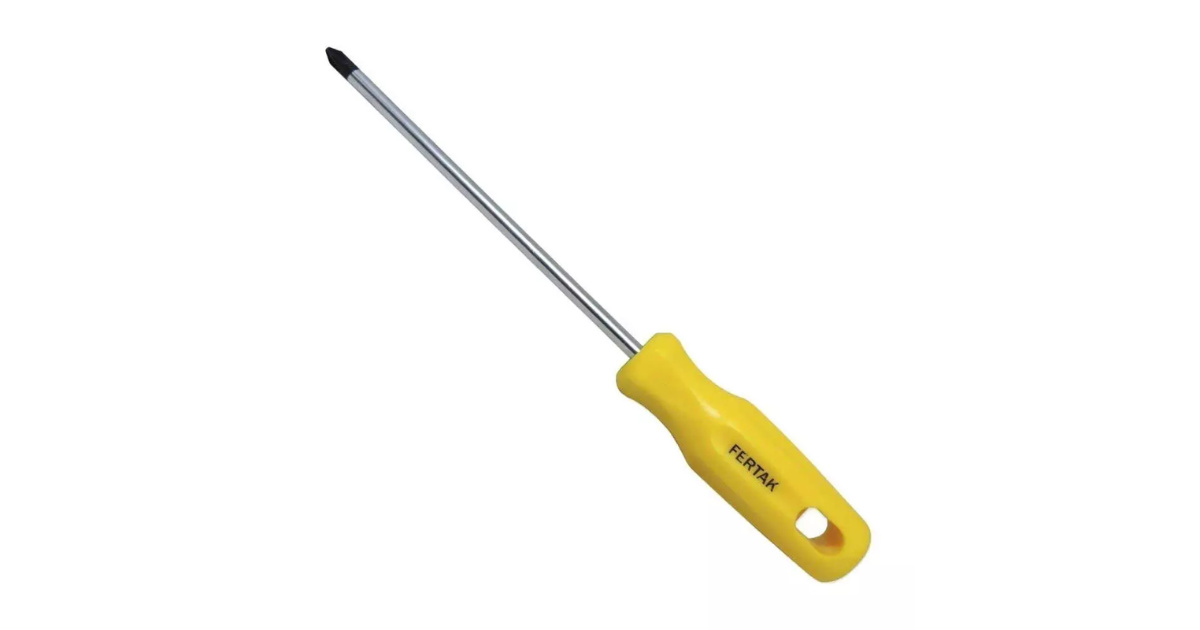
The Phillips screwdriver, present in practically every household toolbox, was born from an unlikely combination: a patent from 1932, the decision of a mining executive to take on the project, and the model’s adoption by General Motors in its assembly lines.
This meeting between invention, licensing, and industrial-scale application consolidated the cruciform screw as a global standard throughout the 20th century.
Origin And Trajectory Of The Patent
The starting point was John P. Thompson from Portland (USA), who applied for a patent in 1932 for a screw with a cross groove and the respective screwdriver.
-
Award-Winning Japanese Restaurant Reveals It Has Preserved Part of the Same Frying Oil for 66 Years

-
American Youth Transforms from Severe Obesity to U.S. Air Force Enlistment, Losing 90 Kilograms in Two Years
-
11-Year-Old Entrepreneur Sells 60 Homemade Sweets Daily, Mastering Cost Calculation, Social Media Promotion, and Client Negotiation Since Age 7

-
Peruvian Mountain’s 5,200 Aligned Holes May Unveil Ancient Indigenous Market for Corn and Cotton


There was a predecessor, 60 years earlier, with inventor John Frearson and his “cross hole,” but it was Thompson’s solution that found commercial and technical traction.
Shortly after, Thompson gave up on moving the product forward and ceded the rights to Henry F. Phillips, then managing director of Oregon Copper Company, a mining company in eastern Oregon.
The patents were granted in 1933 directly in Phillips’ name, while keeping Thompson credited as the creator.
From this move, Phillips founded the Phillips Screw Company in 1933 to license the design to manufacturers.
Among the first interested parties was E.E. Clark, president of the American Screw Company, who began production of the fasteners.
In the following four years, Phillips’ company obtained six more patents that refined the head and fit profile. The screw reached retail in 1936.
Technical Advantages And Industrial Operation
The success was not just legal or commercial. It can be explained by a functional advantage perceived in factories.
According to Professor Marcelo Alves from the Polytechnic School of USP, “the idea of this shape is to prevent the tool from slipping during tightening.”
The cruciform fit helps keep the tool centered, reducing lateral forces and limiting slips.
In factory floor practice, this means fewer injuries from slipping, less time wasted repositioning the tool, and gained repeatability in tightening, especially when multiple fasteners need to be applied in sequence.
The more centralized axis improves torque transfer and reduces the risk of damaging the screw head.
This combination fit well into a rapidly accelerating production scenario.
As Professor Vera Lúcia Arantes from the School of Engineering of São Carlos (USP) notes, “this capability is particularly beneficial in high-speed manufacturing environments where power tools are used.”
In automated or semi-automated lines, every saved millisecond in engagement and tightening translates into operational efficiency.
Adoption By General Motors And Market Expansion
The first major endorsement came soon after its arrival in retail. General Motors adopted Phillips screws in the production of Cadillac cars the following year, boosting the visibility of the standard.
The automaker’s use served as a technological showcase: suppliers and competitors began licensing the design to keep up with the productivity achieved in assembly lines.
The dissemination was rapid.
According to Vera Lúcia Arantes, “by 1940, 85% of American screw manufacturers had licenses to produce the design.”
For the industry, this was a low investment for measurable gains in pace, torque consistency, and finish quality, especially in internal panels and components where rework is costly.
Operational Reinforcement And Day-To-Day Impact
Besides compatibility with power tools, the cruciform fit brought clear operational gains.
The centering minimizes lateral shifts at the start of rotation and reduces “escapes” that round off the fastener’s head.
This avoids stoppages for replacing damaged screws and decreases the incidence of rework, one of the biggest productivity killers in mass assembly.
Another point is operator ergonomics. With less slipping and better guiding, the effort to keep the tool aligned decreases, which reduces fatigue throughout the shift.
In high-paced production environments, small reductions in effort and micro-adjustments convert into more cycles completed per hour and less variability in the process.
This consistency facilitates quality control and torque standardization at assembly stations.
For home maintenance, the advantages follow the same logic.
The screwdriver engages easily, the hand works more aligned, and the risk of scratching surfaces or “stripping” the screw decreases.
The result is a cleaner and more predictable tightening, even for those who do not use tools daily.
New Standards And Competition In The Industry
With the end of the patents, the market embraced variations of the cruciform concept and other geometries.
Professor Marcelo Alves recalls that the same technical standard that guides the Phillips describes the Type Z Cruciform Recess, commercially known as “Pozidrive” screw.
This alternative features changes in the design to meet specific needs for tightening and fit durability.
In parallel, styles like Torx and hex head screws gained space, especially in applications requiring high torque transfer or superior resistance to wear at the tool-screw interface.
Still, as Vera Lúcia Arantes points out, although the Phillips design faces competition from other types of drivers, it “remains competitive, due to its ease of use and compatibility with power tools.”
In practice, the choice of fit depends on the process.
In high cadence assembly lines, the tolerance for small misalignments and quick engagement weigh in favor of Phillips.
In applications with very high torque or in materials that require more care, other geometries may be preferred to reduce the risk of damage or premature wear.


Licensing And Legacy Of The Phillips Screwdriver
The journey that led the Phillips screwdriver to its current ubiquity results less from a sudden discovery and more from strategic decisions regarding intellectual property and technological diffusion.
By acquiring and organizing the licensing of the patents in 1933, Henry F. Phillips transformed a good idea from John P. Thompson into a productive ecosystem: manufacturers willing to produce, an automaker willing to adopt, and a final consumer starting to find the standard in retail from 1936.
Meanwhile, the incremental improvement of the design over the first years ensured robustness to the screw-driver system, paving the way for the automotive industry to lead the transition.
The cascading effect reached other manufacturing sectors and eventually homes, where the combination of usability and cost kept the Phillips screwdriver among the first tools purchased for furniture assembly, shelf installation, and small repairs.
The case illustrates how an operation-oriented design — quick centering, less slipping, better interaction with power tools — can redefine workflows and create lasting standards.
In times of new geometries and materials, the question remains relevant: on your workbench, is the Phillips screwdriver still the first choice or have you adopted another fit to save time and precision?


