






 Portuguese
  Spanish


The problem is not the size, it’s what is left behind. Even years after being shut down, the atomic heart of the vessel still emits radiation capable of killing in minutes. Therefore, the entire reactor is cut, sealed, and buried, while the rest of the steel gains a second peaceful life.
A war machine of over 10,000 tons, capable of destroying entire cities, cannot simply become common scrap. Dismantling a retired nuclear submarine has become one of the most dangerous and complex industrial operations on the planet, precisely because, even after decades out of service, reactors and radioactive materials remain inside that need to be isolated and buried for centuries, under extremely strict safety protocols.
The process is conducted in the United States at a single specialized facility, the Puget Sound Naval Shipyard, in the state of Washington, within an official program of the American Navy. Before detailing each step, here’s the context: it is an operation of engineering and safety, not a dramatic event or accident. Next, we explain why these steel giants are so difficult to dismantle and what happens, step by step, with each part of the vessel, based on information from the Navy and the United States Department of Energy.
Why a nuclear submarine cannot become common scrap
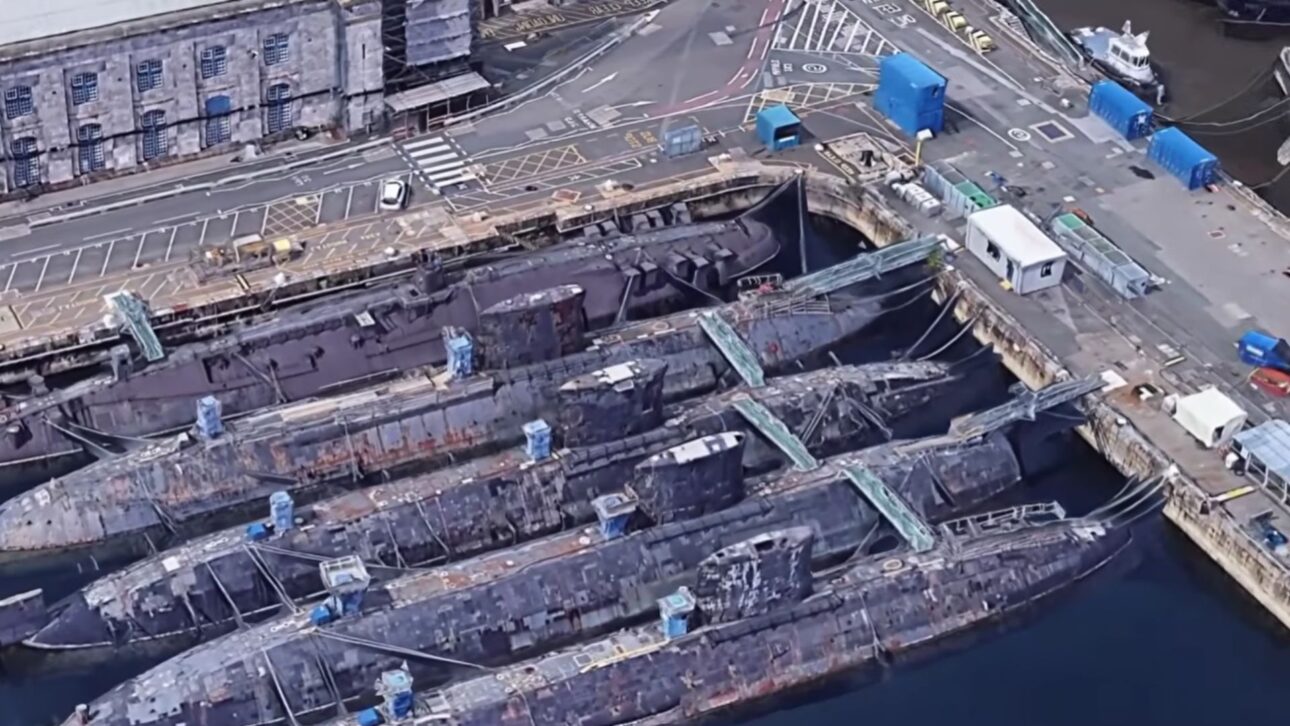
Unlike conventional diesel submarines, a nuclear submarine is powered by a reactor that allows it to operate for months submerged without refueling, and it is precisely this atomic heart that turns disposal into a huge engineering and radiological safety challenge, even long after the vessel is decommissioned.
-
European Country Achieves 100% Glass Recycling and 52% Municipal Waste Recovery, Highlighting Brazil’s Challenges Despite Selective Collection in 60.5% of Cities

-
Facing extreme heat, floods, and disappearing fertile soil, Pakistan launches a “10 Billion Tree Tsunami” in three years to combat desertification, protect rivers, create green jobs, and make reforestation a national survival priority.

-
Cape Verde’s World Cup Surprise: Betting on Electric Cars, a 5 MW Solar Plant, and an Ambitious Plan to Transform Energy for 600,000 Residents

-
Man Finds 1,469 Ancient Roman Silver Coins While Metal Detecting in Romania


The United States has built nearly 200 nuclear submarines since the pioneering USS Nautilus, launched in 1954 under the leadership of Admiral Hyman Rickover, remembered as the father of the American nuclear navy.
With the end of the Fira War, many of these vessels were gradually retired, creating an unprecedented problem: what to do with machines that were once powered by atomic energy and still contain hazardous materials in their structures.
Missile-launching submarines, like those of the Ohio class, carry dozens of long-range missiles, which gives an idea of the size of these vessels.
The first step: the dry dock and fuel removal
It all begins with removing the vessel from the water.
The submarine, which can be almost 170 meters long, is towed to a gigantic dry dock, a structure that is drained until the vessel is completely exposed, supported on steel blocks, while teams of nuclear engineers continuously monitor radiation levels and establish restricted access zones around it.
The most dangerous material on board is the irradiated uranium fuel from the reactor, consisting of about 100 to 120 assemblies.
Each assembly is approximately four meters long and weighs about 300 kilograms, and even with the reactor shut down for years, it can emit extremely high radiation levels at one meter distance, potentially fatal to anyone directly exposed.
Therefore, the removal is done by remotely controlled systems, and each assembly is stored in a thick-walled lead container, a process that usually takes three to four months.
The reactor that becomes a sealed block
Removing the fuel, however, does not eliminate all the danger.
During decades of operation, the reactor’s neutrons bombarded the surrounding steel, making the metal itself radioactive in a phenomenon known as activation, so even the structure surrounding the reactor is treated as hazardous waste, requiring a special solution.
Instead of dismantling the reactor piece by piece, which would be risky and could spread contamination, engineers opt to remove the entire compartment as a single structure.
It is cut with oxygen and acetylene torches, whose flame reaches about 3,200 degrees Celsius, capable of penetrating the thick steel hull.
The result is a giant cylinder, approximately 10 meters long, almost 9 meters in diameter, and about 100 tons, with all openings covered with steel plates and completely welded to prevent any leakage.
Buried for more than six centuries


The destination of this sealed block is the most impressive point of the operation.
The sealed reactor compartments are transported by barge and special vehicles to the Hanford site in eastern Washington, where they are deposited in a trench known as Trench 94, designed to maintain its integrity for over 600 years before any risk of leakage, according to assessments by the U.S. Navy.
It is important to correct a number that often circulates: although it is popularly said to be a few hundred years, the official program estimates indicate that the containers should remain safe for more than six centuries, and that a real leak would only be possible after thousands of years.
The first compartment arrived at Hanford in 1986, and since then more than 140 similar structures, from submarines and other nuclear ships, have been buried there, in one of the largest deposits of its kind in the world.
The decontamination of the rest of the vessel
Even without the reactor, the submarine is still not clean.
For decades, the coolant circulated through kilometers of pipes, leaving radioactive deposits on the metal surfaces, so that even the thin layer of oxide inside the pipes can continue to emit radiation for years, requiring a careful chemical cleaning process.
For this, technicians dressed in sealed protective suits inspect each section for contaminated spots.
Then, an acidic solution circulates through the system, dissolving the layer of radioactive oxide, which is then captured by special resins.
This material becomes radioactive waste, mixed with cement and sealed in special containers.
Components that cannot be decontaminated are separated or encased in concrete and sent to nuclear waste deposits. Only after thousands of inspections can the remaining metal be treated as common industrial scrap.
The war steel that becomes a bridge
It is in the final stage that the story gains a symbolic outline.
The hull of a nuclear submarine is made of a military-grade alloy, 8 to 10 centimeters thick, designed to withstand the pressure of hundreds of meters deep, and therefore needs to be cut with plasma cutters and oxygen lances that reach extremely high temperatures, in the thousands of degrees, capable of melting the steel in seconds.
Once certified as contamination-free, this high-strength steel, rich in nickel, chromium, and molybdenum, is melted in electric furnaces and transformed into new plates, which can become bridge beams and infrastructure components.
Copper, titanium, and aluminum are also recovered and reused.
Thus, the metal that once silently sailed under the oceans as part of a weapon of war gains a second life in civil works, in a curious paradox of modern technology.
A challenge that Brazil will also face
The topic is of growing relevance for the country.
Brazil is developing, within its submarine program, the Álvaro Alberto, which will be the first Brazilian nuclear submarine, meaning that, in the future, the country will also have to deal with the complex challenge of operating and, one day, safely disposing of this type of vessel and its radioactive materials.
Therefore, observing how powers like the United States resolve the dismantling of nuclear submarines helps to understand the technical, environmental, and financial dimensions that accompany joining a select group of countries with naval nuclear propulsion.
It’s not just about building and operating the vessel, but about committing to a very long-term nuclear safety responsibility that extends for centuries after the submarine’s useful life ends.
The dismantling of a nuclear submarine is one of those operations that show how much war technology carries responsibilities that last far beyond the battlefield.
From the careful removal of fuel to the burial of the reactor for over six hundred years, each step reveals the complexity of dealing with the legacy of the atomic age.
At the same time, the reuse of steel and other metals in civil works brings a powerful symbolic message: that even the machines created for destruction can, at the end of their journey, contribute to peaceful uses.
And you, were you aware of the complexity and risks involved in dismantling a nuclear submarine? What do you think about the fact that these reactors need to be isolated for centuries? Leave your comment, share your opinion, and help spread the article to those interested in technology, naval engineering, and nuclear energy.


