Portuguese
  Spanish


Cleanup operation in Rio’s mangroves brings together fishermen, collectors, and traditional communities in areas pressured by waste, with tons removed and records showing the extent of trash in coastal natural nurseries.
Fishermen and crab collectors removed more than 46 tons of waste from mangrove areas in the Guanabara and Sepetiba bays, in Rio de Janeiro, in an operation that combines environmental cleanup, temporary income generation, and support for the conservation of coastal ecosystems used as breeding and shelter areas by different species.
The action, called Operação LimpaOca, is part of the Project From Mangrove to Sea and is conducted by the NGO Guardiões do Mar, in partnership with Transpetro.
Between June 2024 and July 2025, the work reached 13 hectares of mangroves, with four in Guanabara Bay and nine in Sepetiba Bay, according to data released by the initiative and Agência Brasil.
-
Masked Man Claims to Have Traveled to 2118, Predicts World War Starting with North Korea and Reveals Secret CIA Technology

-
At 54, Brazilian Artisan Turns Textile Waste into a Successful Handbag Brand, Earning Over $6,000 Monthly

-
Brazilian Entrepreneur Sells $50,000 Monthly in Sustainable Luggage Made from Recycled Bottles, Eyes International Market
-
Chinese Man Transforms Home into 10-Story Pyramid Over 8 Years, Defying Authorities Before Demolition


Besides the weight collected, the quantity of discarded objects also draws attention.
According to a survey published about the operation, the task force removed more than 1 million items from these environments, including plastic packaging, tires, fabrics, glass, rubber, wood, fishing materials, and other waste found in mangrove areas.
Mangroves function as natural nurseries
Mangroves are described by researchers and environmental agencies as areas of reproduction, feeding, and shelter for fish, crustaceans, mollusks, and birds.
Therefore, these environments are often called natural nurseries, as they host the early stages of the life cycle of various species.
The structure formed by the roots helps retain sediments, protect shores, and create refuges for aquatic organisms.
In coastal areas, this type of vegetation also helps reduce erosion processes and maintain the natural dynamics between rivers, tides, and associated fauna.
When waste accumulates in these locations, water circulation can be hindered, and animals are exposed to sharp materials, plastic fragments, and objects that can cause entrapment.
Bags, bottles, and pieces of fabric, for example, can get caught in the roots and hinder vegetation development.
In this context, removing the trash has both environmental and social effects.
The operation reduces the presence of waste in the mangrove, decreases risks for those working in these areas, and improves the conditions for the movement of people and animals in areas used for artisanal fishing and crab gathering.
Guanabara Bay concentrates area called “Island of Trash”
In Guanabara Bay, one of the operation’s fronts takes place in the so-called “Island of Trash”, an area identified by the concentration of plastics, tires, sofas, and other discarded materials.
The point is about 20 kilometers from the mangroves of the Guapimirim Environmental Protection Area, in the Metropolitan Region of Rio.
In this region alone, 42,886 kilograms of waste were collected.
The work involved 84 fishermen and crab gatherers from surrounding communities, including Saracuruna, in Duque de Caxias, as well as Suruí and Guia de Pacobaíba, in Magé.
Sepetiba Bay also received actions from the LimpaOca Operation.
On Madeira Island, another point in the Metropolitan Region, workers collected 3,177 kilograms of waste, with the participation of 21 caiçaras.
The numbers indicate that most of the material removed by July 2025 was concentrated in Guanabara Bay.
The region is influenced by densely populated urban areas, rivers and channels that transport waste to the coastal environment, a factor pointed out by specialists as one of the challenges for the environmental management of the bay.


Plastic leads waste removed from mangroves
Among the materials identified in the operation, plastic was the most frequent in weight volume.
There were 38,347 kilograms of this type of waste, including packaging, bottles, bags, and fragments scattered throughout the mangrove.
Textile products totaled 3,277 kilograms.
Rubber, a category that includes tires and similar materials, reached 1,977 kilograms.
Glass accounted for 1,264 kilograms, while wood totaled 662 kilograms.
The operation also recorded 21 kilograms of fishing materials and 4 kilograms of metal.
Although they appear in smaller quantities when measured by weight, these items require attention due to the risk of injury and the possibility of becoming stuck to the vegetation or muddy soil of the mangrove.
The removal work depends on the knowledge of those who frequent these environments.
Fishermen and gatherers know the tide variations, the more difficult access points, the areas where the soil poses a risk, and the spots where waste tends to accumulate.
Cleaning generates income during the crab-uçá closed season
The operation also has an economic impact on traditional communities.
Participants receive a stipend funded by Transpetro, which provides a temporary source of income during periods when the capture of the crab-uçá is prohibited.
The crab-uçá closed season occurs between October and December, when the activity is suspended to protect the species’ reproductive cycle.
For families that depend on gathering and artisanal fishing, the interruption represents a direct change in monthly income.
By participating in the cleaning, fishermen and gatherers engage in an activity connected to their own work territory.
The initiative reduces the removal of the crustacean during the protection period and keeps some workers involved in mangrove conservation actions.
The operational manager of the From Mangrove to Sea Project, Rodrigo Gaião, stated that the removal of waste helps the environment perform its ecosystem services more efficiently.
According to him, the participation of fishermen and gatherers also strengthens the socio-biodiversity and economy of the involved communities.
Traditional knowledge aids in waste collection
The CleanOca Operation was conceived in 2001 by crab gatherer Adílio Campos, from Itaoca Island, and has been maintained as a continuous action by the NGO Guardians of the Sea.
For the organization’s president, Pedro Belga, the initiative is not limited to waste removal.
He states that the project also promotes good practices and knowledge exchange with workers who directly depend on the mangrove for their livelihood.
Commenting on the relationship between conservation and income, Belga summarized: “No mangrove, no fish.”
Safety appears as another practical effect of the cleaning.
The removal of iron, syringes, glass, and sharp objects reduces the exposure of fishermen, gatherers, and residents to materials that can cause accidents while moving through the mangrove.
Alaido Malafaia, from the Fluminense Mangrove Cooperative, reported the presence of species such as roseate spoonbills, dolphins, and otters in the region.
According to him, these animals depend on the conservation of the environment, as do the communities that rely on fishing and gathering.
Community Tourism and Environmental Education in the Mangrove
The cleaning of mangroves is also pointed out by local representatives as an important condition for environmental education activities and community-based tourism.
Rafael dos Santos, president of the Crab Gatherers Association of Magé, states that a mangrove with less waste better receives visitors interested in observing species such as the uçá crab.
According to him, the operation removes both large objects and smaller debris scattered in the inner areas of the mangrove.
This type of cleaning requires moving through difficult-to-access areas and attention to material mixed with the soil, roots, and vegetation.
The presence of fishermen and gatherers in the operation also allows for recording changes perceived in the daily life of the mangrove.
These workers monitor the tide variations, the presence of animals, the areas with the most waste accumulation, and the effects of pollution on fishing and gathering areas.
This local knowledge can complement technical conservation actions, especially in regions where continuous monitoring depends on community participation.
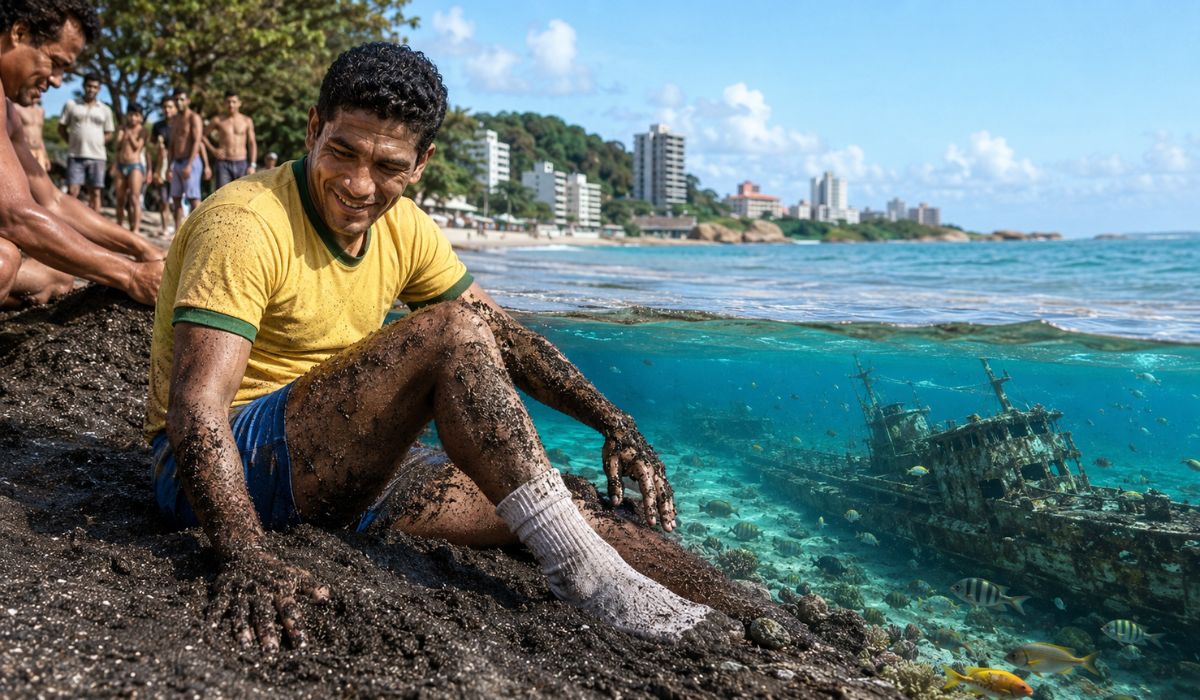
The operation, in this sense, brings together traditional work, environmental cleaning, and direct observation of the ecosystem.
The presence of waste in the mangroves affects not only the landscape.
It interferes with areas used by aquatic species, birds, and crustaceans, and also hinders the activities of workers who depend on these environments.
In a region where urban waste reaches natural nurseries through the tide, rivers, and irregular disposal, part of the recovery of the mangroves also depends on how cities manage their waste.