






 Portuguese
  Spanish


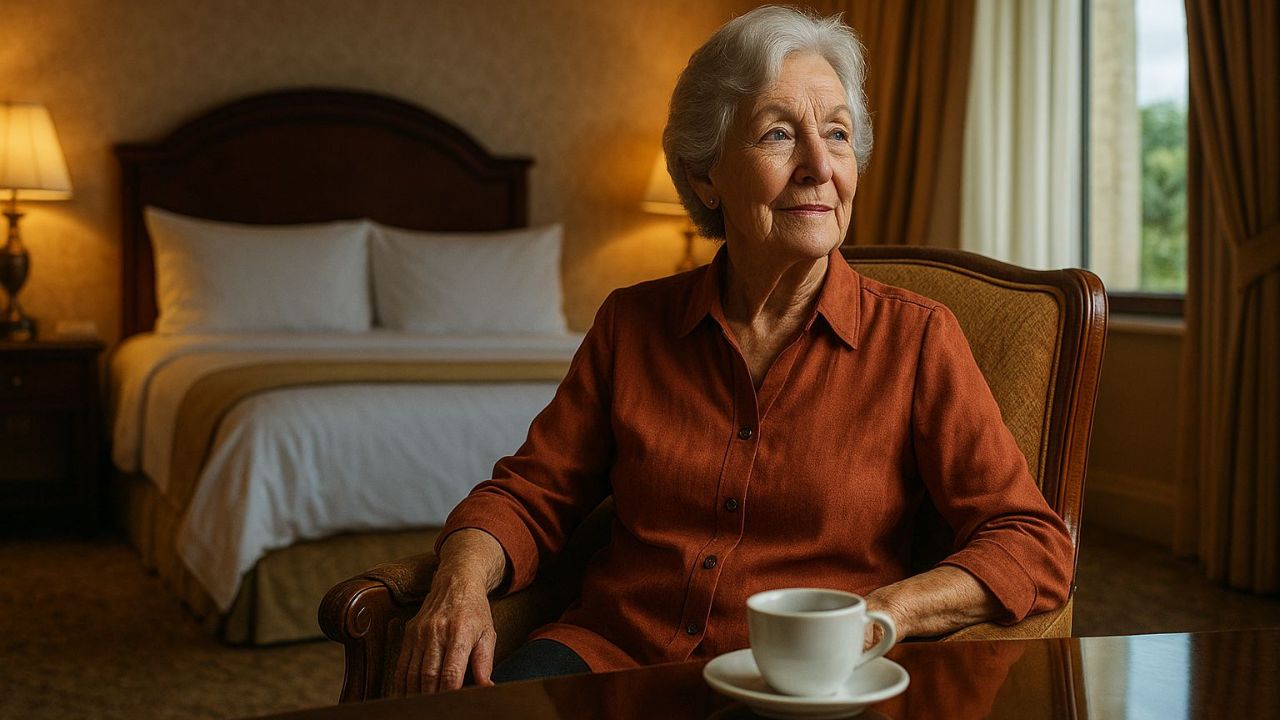


The Cost Of Living In A 5-Star Suite Is Higher Than The Value Of An Apartment, But The “Eternal Guest” Of The Luxury Hotel Traded Property For Extreme Convenience And 24-Hour Security.
The story of an elderly woman who has resided for 15 years in the same suite of a luxury hotel and pays an annual amount that exceeds the value of a comparable property raises a fascinating financial paradox. For this niche of high-net-worth individuals (HNWI), the choice of residence is no longer about asset accumulation, but rather the acquisition of a state of continuous service and total absence of domestic worries. This phenomenon, known as Long Stay ultra-luxury, reconfigures what it means to live at the pinnacle of convenience.
The elderly woman’s statement that she “has not washed a dish in years” serves as the central metaphor of this lifestyle strategy. The high annual cost is not seen as a traditional housing expense, but rather as the purchase of complete elimination of the “mental burden” associated with managing a high-end home. The article examines the economic feasibility, historical precedents, and contractual implications of this permanent residence market in 5-star hospitality.
The Phenomenon Of The “Eternal Guest”: Delegation And Historical Precedents
The decision to establish lifelong residency in a luxury hotel suite for 15 years is, in fact, a strategic and calculated choice, focused on operational delegation and extreme convenience. The high cost is justified by the elimination of the mental burden of managing a home, security, maintenance, and services. For this elderly woman and other high-income individuals, the value of fully outsourcing these responsibilities outweighs the financial benefit of owning the real estate asset.
-
Japanese Botanist Akira Miyawaki Plants 30,000 Trees on a Tennis Court-Sized Plot, Intentionally Sacrificing Many to Accelerate Forest Growth; Miyawaki Method Has Spread Over 40 Million Trees Across 15 Countries

-
Couple Converts Retired U.S. Navy Research Barge into Off-Grid Floating Home on Idaho Lake with DIY 3-Stage Water Filtration System Using UV Light
-
Brazilian Military Police Officer Turns Family Farm into Internationally Certified Guava Producer, Eyes Exports to UK, Portugal, and Canada After Cooperative Boosts Sales by 580%

-
Man Builds Entire Treehouse in 21 Days Without Spending a Cent, Using Free Wood Collected from the Forest, and Creates a Structure That Slowly Rotates Around Its Own Trunk




The practice of long-term residency in hotels is not a new phenomenon, being a well-established tradition by historical figures and celebrities seeking convenience, privacy, and productivity. The iconic designer Coco Chanel, for example, resided at the legendary Hotel Ritz in Paris for three decades, customizing her suite to her taste. The same model was adopted by football coach José Mourinho, who lived in a luxurious suite while managing Manchester United, confirming that the 5-star hotel is seen as a superior place for continuous living, as detailed by the source Historical Precedents And High-Profile Cases.
Long Stay 5-Stars: Contractual Advantages And Financial Predictability
Long Stay is operationally defined as a mode of accommodation that typically exceeds 30 days, potentially extending for years, with the aim of making the guest “feel at home” with maximum comfort and convenience. The main attraction is the luxury all-inclusive package. In this model, the price of accommodation generally includes operational costs that would be fluctuating and burdensome in a private residence: water, electricity, internet bills, and all corrective and preventive maintenance. This inclusion of costs ensures a predictable cost-benefit ratio for the long-term guest, according to The Long Stay Modality And Its Financial Advantages.
Stable long-term occupancy, like the 15 years of the elderly woman, is extremely valuable for the hotel chain, justifying the negotiation of substantial decreasing rates. In certain jurisdictions, this longevity may allow the guest to request permanent resident status. This change of status could lead to negotiating a discounted rent (decreasing rate), transforming the suite into a “subsidized apartment” within the infrastructure of the luxury hotel, maintaining all regular services, such as daily cleaning, room service, and access to facilities. The possibility of obtaining this legal and contractual status strengthens the stability of residence for the guest, as illustrated by the source Legal And Contractual Implications Of Long-Term Residency.
The Financial Paradox: Total Cost Of Ownership (TCO) Versus Subscription Service
To rationalize the “annual fortune” that exceeds the value of the property itself, it is crucial to understand that the elderly woman is exchanging real estate risk and property burdens for the security, convenience, and liquidity of subscription service. Although the hotel expense is nominally high, it is an Operational Expense (OPEX) that allows the capital that would be immobilized in the purchase of a property to remain liquid and to be invested in productive assets. The high cost of Long Stay luxury is justified by the elimination of a series of operational and managerial costs intrinsic to Ultra-Luxury Traditional Ownership.
The main added value lies in the total delegation of complexity and human resources. In a luxury home, the owner bears salaries, burdens, management, and replacement of a professional domestic staff (housekeeper, cook, gardener, personal security). The luxury hotel fully absorbs this responsibility, transferring this complex and administrative cost to a single predictable bill. The annual hotel cost is therefore the sum of the Total Cost Of Ownership (TCO) of an equivalent luxury property plus a premium for total management service and cost predictability.
Security, Health And The High-End Aging Market
In addition to the extreme convenience of “never washing a dish again,” the security factor is the most critical appeal for the High-Net-Worth Aging (HNWEs) segment. The risk of domestic accidents, such as falls, or the need for immediate medical assistance in a private residence are significant concerns. A luxury hotel or a Branded Residence offers a level of structured security 24/7 (with access control and monitoring) that is superior to the security of a private home.
The passive management of health and security is the ultimate premium embedded in the annual bill. The hotel infrastructure not only provides constant security but also includes integrated security mechanisms in the suites (SOS buttons, for example) and protocols to provide immediate medical assistance in case of emergency. This monitored environment allows the senior resident to maintain the privacy and status of a luxury hotel while benefiting from the peace of constant support. This combination of convenience, security, and responsiveness 24/7 is a product that private residential ownership cannot replicate without a prohibitive managerial burden.
The Investment In Peace Of Mind
The analysis of prolonged residency in ultra-luxury hotels reveals a profound economic and social rationality behind the apparent paradox of paying an “annual fortune.” The high annual cost is not a waste but a calculated investment in total risk outsourcing, in the elimination of managerial complexity, and in the purchase of passive security and time. The trend is that the luxury hospitality market will continue to formalize lifelong residency programs, making the figure of the eternal guest an increasingly strategic customer category for the ultra-luxury sector.
Do You Agree With This Change? Do You Think The High Cost Of Living In A Luxury Hotel Is Justifiable By The Absence Of Stress And The 24/7 Security? Share Your Opinion In The Comments, We Want To Hear From Those Who Experience This Firsthand.






Já vi história parecida, mas era um casal num navio de cruzeiro
A anos tenho essa ideia, só não sabia que poderia ser em um hotel de luxo.
Eu se fosse milionário também iria querer desfrutar desse luxo todo.