Portuguese
  Spanish


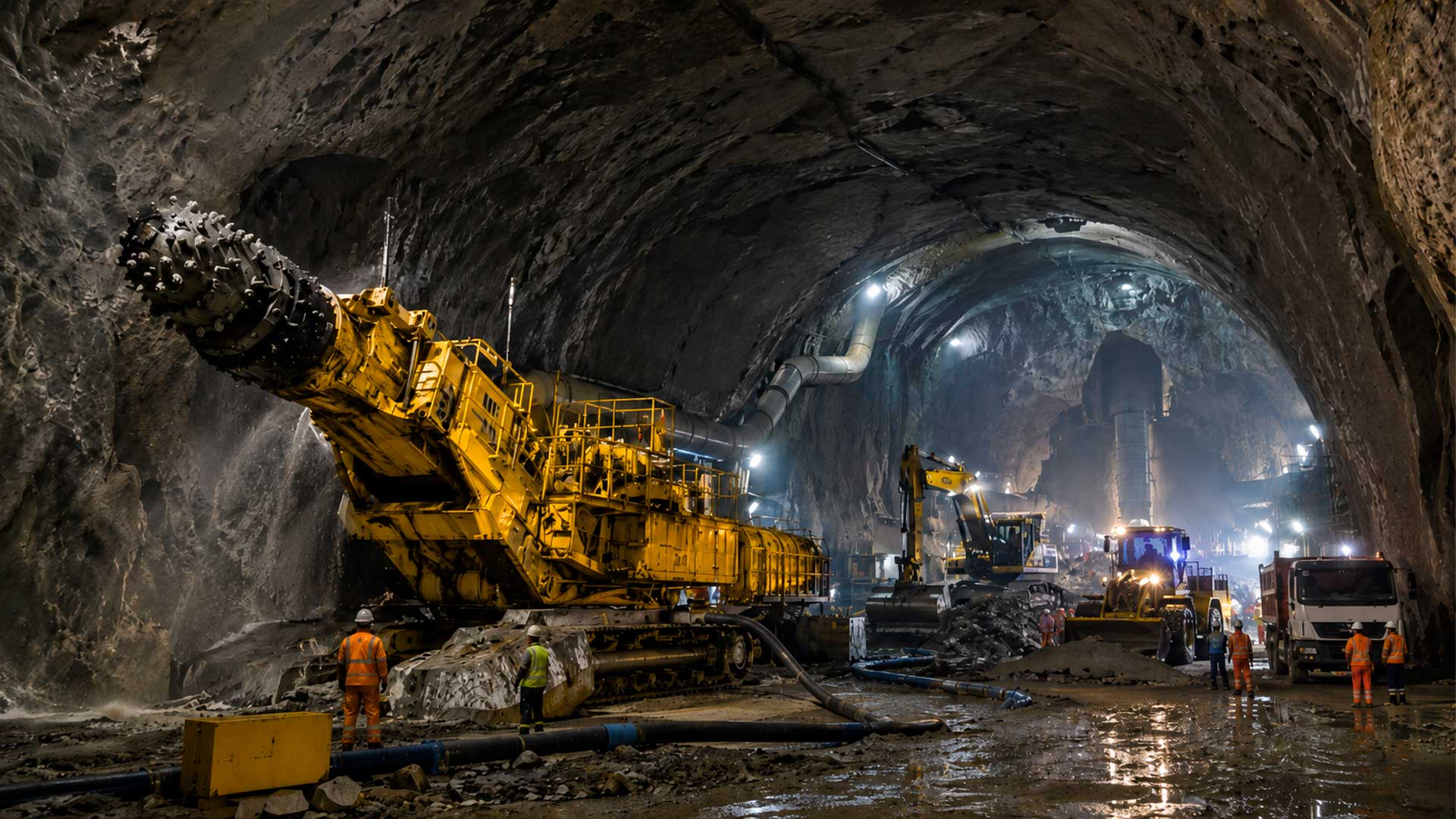

Excavated between Santos and São Vicente, the Santa Tereza-Voturuá Tunnel-Reservoir was opened inside a rock mass hundreds of millions of years old, operates by gravity, and became a strategic piece for the supply of the Baixada Santista.
The largest treated water reservoir in tunnel format in Latin America is located where many people pass without imagining: inside hills on the border between Santos and São Vicente, on the coast of São Paulo. The structure stores 110 million liters of water and was excavated in gneiss granite rock, a formation associated with a geological period of about 600 million years.
As reported by g1 on July 6, 2026, the Santa Tereza-Voturuá Tunnel-Reservoir serves Santos and São Vicente and also reinforces the supply of Guarujá and Praia Grande. The work is treated by Sabesp as a strategic structure for the water security of the Baixada Santista, a region that depends on reserve, distribution, and continuous operation to maintain supply during periods of high demand.
Construction began in 1979 and ended in 1981. The tunnel was executed simultaneously from the sides of Santos and São Vicente, in an uncommon solution: instead of building only conventional tanks on the surface, engineering took advantage of the rock mass itself to create a large underground “water tank.”
-
Japanese Fisherman Spends 18 Hours Alone at Sea in a Portable Floating Shelter, Launches Limited Edition Model via Crowdfunding

-
73-Year-Old Chemical Engineer Turns Luxury Shoe, Bag, and Jacket Restoration into Family Business in São Paulo, Showcasing the Timeless Value of Craftsmanship

-
Japanese Botanist’s Miyawaki Method Grows Native Forests in Small Spaces in Just Years, Not Decades

-
800-Year-Old Cliffside Temple in Greece Amazes with Secret Cave, Drawbridge, and Stunning Views



The fact that draws the most attention is not just the size. The reservoir was implemented 42 meters above sea level, allowing part of the supply to occur by gravity, which reduces the dependence on electric pumping compared to systems that need to push water all the time.
The underground “water tank” is more than one kilometer long and has two giant chambers inside the rock
The Santa Tereza-Voturuá Tunnel-Reservoir is over 1 km long and is divided into two chambers. Each measures about 13 meters high by 15 meters wide, dimensions similar to a low building excavated horizontally inside the hill.
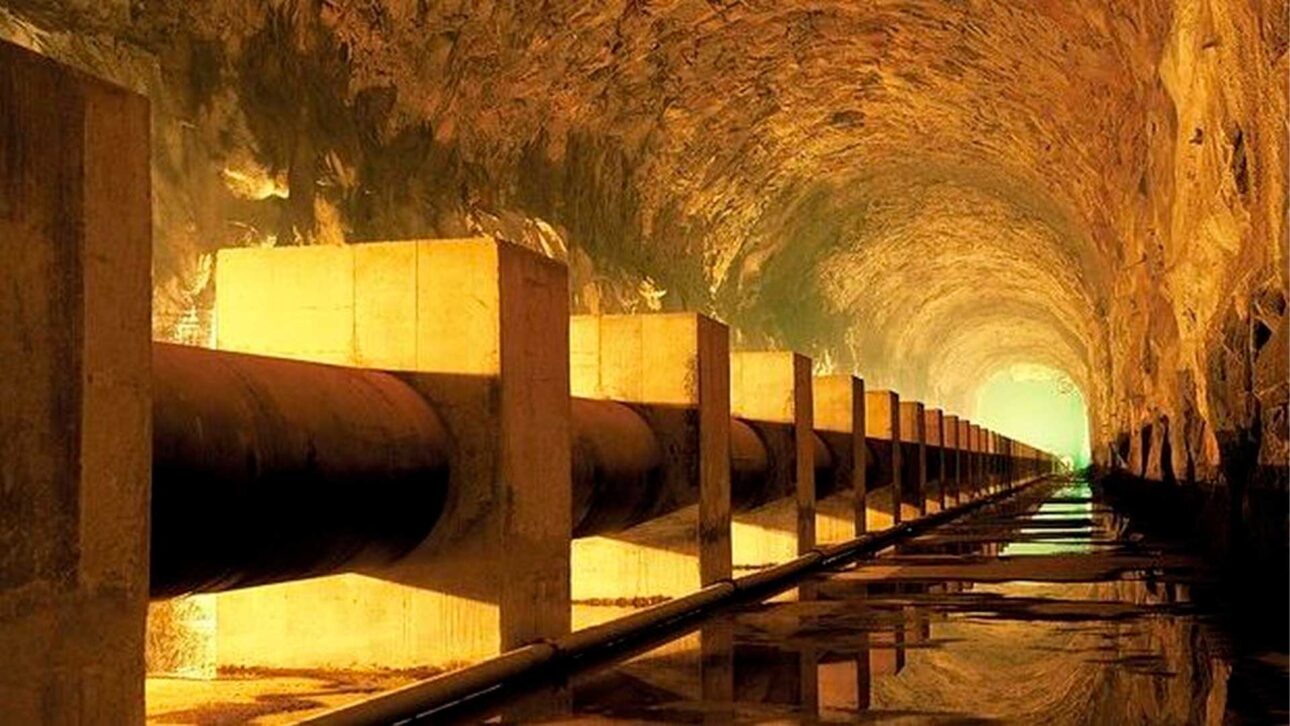
According to AESabesp, an association linked to Sabesp engineers, the structure receives 110 million liters of water and represents about one-third of the available storage in the region. The entity also notes that the reservoir was inaugurated on November 16, 1981, and is considered one of the most daring works ever undertaken by the company.
To visualize the volume, the 110 million liters are equivalent to 44 Olympic swimming pools or 220 million 500 ml bottles. It would also be enough water to fill 55,000 2,000-liter water trucks, a comparison that helps convey the scale of a structure that remains invisible to most of the population.
The technical access is located in the Voturuá Ecological Park region, in São Vicente. The site has been opened a few times for visitation during maintenance periods, but Sabesp reported that the interior of the tunnel is not available to the public on a daily basis, with entry restricted to teams during scheduled cleanings and inspections.
The 600-million-year-old rock is not a decorative detail, it explains why the tunnel could be used as a reservoir


The choice of location was not just geographical. The tunnel was excavated in a massif of gneiss granite, a resistant, ancient rock common in formations in southeastern Brazil. The Santos Archive and Memory Foundation points out that the material is approximately 600 million years old and allowed the use of the natural structure of the hills.
This comparison with Sugarloaf Mountain in Rio de Janeiro comes from the geological similarity. The Geological Service of Brazil describes the Sugarloaf and Urca Hill complex as an area formed by lithologies such as facoidal gneiss, biotite gneiss, diabase, and granite, with an age linked to the geological evolution of the Southeast.
In simple terms, the rock is not just the “ground” where the reservoir was opened. It functions as part of the engineering itself, reducing the need for large artificial containment structures in some sections and providing stability to the excavated space.
This condition also helps explain why the work remains relevant more than four decades after its inauguration. Conventional reservoirs require large free areas on the surface, while the Santa Tereza-Voturuá occupies an internal space in the hills, in an urban area where land is expensive, scarce, and contested.
The work began in the 1970s and even the removed stones found another destination in Santos
The construction of the reservoir began in 1979, a period when sanitation and infrastructure works were advancing in the Baixada Santista. The tunnel was excavated from both municipalities simultaneously, a strategy to speed up the opening and allow the meeting of work fronts within the massif.
According to the Costa Norte portal, the stones removed from the hills during the excavation were used in the formation of the Submarine Outfall, in José Menino, Santos. The same report records the inauguration of the reservoir in 1981 and emphasizes that the structure was conceived as a large-scale water reserve for the region.
Gravity operation is another central point. Sabesp recorded in an institutional publication that the work was done 42 meters above sea level precisely to allow distribution with lower electricity consumption, in addition to informing that about 300 people participated in the execution.
In practice, this means that the structure is not just large. It was designed to operate efficiently in a region with a high urban concentration, intense tourism during holidays and summers, and constant pressure on the supply system.
The old reservoir still weighs on the future of Baixada Santista
Even inaugurated in 1981, the Santa Tereza-Voturuá remains at the center of the discussion about water security on the São Paulo coast. The Baixada Santista has urban growth, seasonal population variation, and municipalities with a strong dependence on interconnected systems of production, storage, and distribution of water.
Sabesp reported that there is a set of investments underway to strengthen regional supply. The forecast is that the Baixada Santista will receive another 21 reservoirs by 2029, increasing storage capacity by more than 130 million liters, a volume greater than that of Santa Tereza-Voturuá itself.
This reinforcement does not diminish the importance of the old tunnel. On the contrary, it shows that storage remains one of the most sensitive pieces of sanitation: capturing and treating water is not enough if the system does not have a place to store enough volume to get through consumption peaks, maintenance, and operational fluctuations.
The reservoir hidden between Santos and São Vicente has become, at the same time, an engineering work, a technical heritage, and a practical piece of supply. Forty-five years after the start of construction, it still fulfills the function for which it was created: storing treated water on a large scale before it reaches the taps.
Did you already know the history of this reservoir excavated within the rock? In your opinion, should underground works like this be more publicized so that the population understands where the water that reaches their homes comes from?