Portuguese
  Spanish


In Carlópolis, in the Northern Pioneer region of Paraná, guava has ceased to be just a regional fruit and has started competing in markets outside Brazil. The turnaround came with Geographical Indication, international certification, and the organization of producers into a cooperative. In the midst of this movement is Juliano Bicudo, a military police officer who took over the family lands without any farming experience and today sees the farm as his main source of income.
The military police officer Juliano Azevedo de Oliveira Bicudo entered fruit farming without the traditional path of someone who grew up working in agriculture. In 2016, he began managing his father’s lands in Carlópolis, a municipality in the Northern Pioneer region of Paraná, and bet on guava as a way to transform a small rural area into a business.
The first harvest came in 2018. Today, the property has about 3 hectares and 1,600 guava trees, with production linked to a certification system that opened the door for more valued sales and exportation.
According to the Sebrae News Agency, the Carlópolis Agroindustrial Cooperative, Coac, saw guava exports grow by 580% between 2020 and 2023, increasing from 16,730 kg to 113,703 kg. The growth could have been greater, but the production was affected by frost in 2021 and hail in 2022.
-
Man Builds Entire Treehouse in 21 Days Without Spending a Cent, Using Free Wood Collected from the Forest, and Creates a Structure That Slowly Rotates Around Its Own Trunk

-
Latin America’s Largest Treated Water Reservoir Hidden Beneath São Paulo’s Coastal Hills Holds 110 Million Liters in Sugarloaf-like Rock Formation

-
Japanese Fisherman Spends 18 Hours Alone at Sea in a Portable Floating Shelter, Launches Limited Edition Model via Crowdfunding
-
73-Year-Old Chemical Engineer Turns Luxury Shoe, Bag, and Jacket Restoration into Family Business in São Paulo, Showcasing the Timeless Value of Craftsmanship





The bet started on his father’s land and turned into a certified guava production
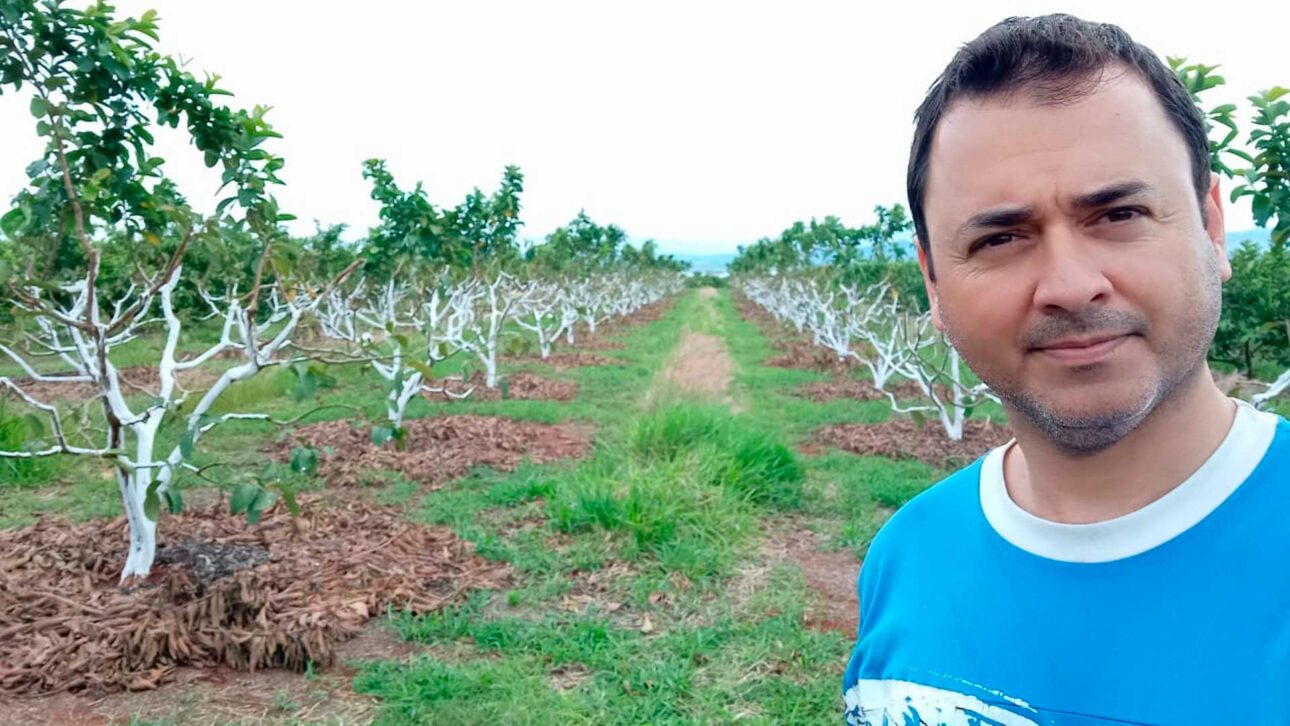
Juliano did not start as an agriculture specialist. The leap occurred when he approached Coac, began planting, and started to follow the standard required for a traceable fruit, with controlled management and a market outside Brazil.
The producer states that exportation brought predictability. According to his account to Sebrae, the price of exported guava is around R$ 5 per kilo throughout the year, while the domestic market usually fluctuates according to supply.
This point weighs on planning. In the first quarter, the period of greatest fruit supply, the national price tends to be more pressured. The solution found in Carlópolis was to combine staggered pruning, cooperative selection, and certification, which allows supplying buyers at different times.
Bicudo intends to direct 20% of production to the foreign market. He also planned to expand the area with 2,000 more guava trees in 2024, a sign that exportation is no longer a distant promise and has started to guide investment within the property.
The seal that changed the fruit’s price was not born within a single property
The strength of Carlópolis guava does not depend on just one producer. It comes from a local arrangement that brings together small farmers, a cooperative, technical assistance, and certifications recognized by buyers.
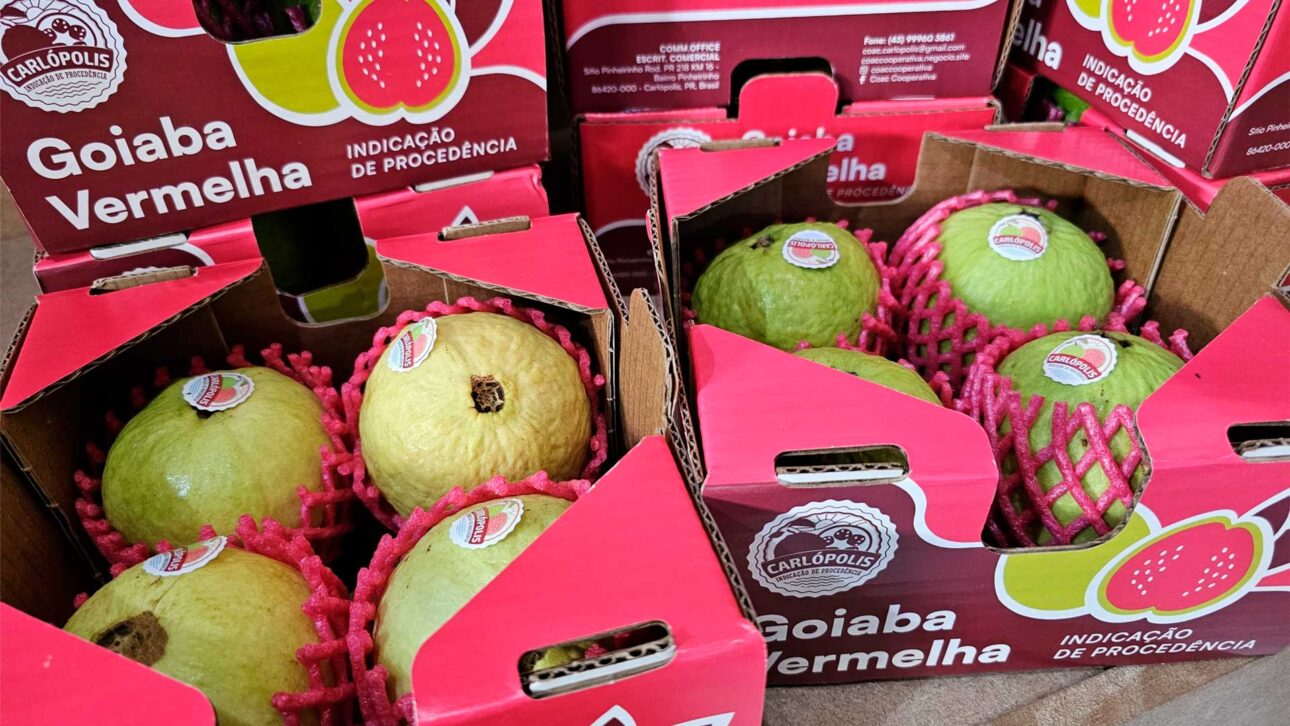
According to the technical sheet from the National Institute of Industrial Property, the Carlópolis Geographical Indication was granted on May 17, 2016 as a Designation of Origin, with a delimited area in the municipalities of Carlópolis and Ribeirão Claro, in Paraná. The document also describes the use of total staggered pruning, a technique that allows production throughout the year, and the bagging of fruits when they reach 2 cm or 3 cm in diameter.
This individual bagging helps protect the guava against pests and improves the visual standard. In practice, it reduces losses, facilitates selection, and meets a market that demands uniform, clean fruit with identified origin.
The Geographical Indication seal functions as a territorial identity. It does not guarantee a higher price on its own, but it helps to distinguish Carlópolis guava from a common fruit sold without highlighted origin.
International certification opened doors that previously seemed out of reach
The next step was international certification. As informed by the Government of Paraná, Carlópolis guava achieved the Good Agricultural Practices certification in 2019, linked to food safety, sustainability, and traceability requirements for agricultural products. At the time, the certification was granted to Coac and nine properties.
For the producer, the effect appeared in the price. Bicudo estimates that, after the certifications, he managed to add at least 50% value to the fruit. Even while maintaining his job as a public servant, he says that the greater income comes from the farm.
The GlobalG.A.P. certification is relevant because it aligns with the demands of international buyers. The organization itself states that the IFA standard for fruits and vegetables covers topics such as food safety, environment, worker health and safety, production processes, and traceability.
In practice, this means more control. The producer needs to record procedures, manage handling, organize the harvest, follow hygiene rules, and ensure that the fruit can be traced from the farm to the buyer.
The cooperative became the link between the farm and buyers in Europe, Canada, and Brazil
Coac brings together producers who send guava to the cooperative’s headquarters. There, the fruit is sorted by weight, standard, and destination. Some is sent to the domestic market; another part, when meeting the criteria, is directed for export.
According to Coac’s sales manager, Inês Yumiko Sato Sasaki, cited by Agência Sebrae, buyers include clients in England, Portugal, and Canada. In Brazil, the cooperative has also expanded its presence in states like Paraná, São Paulo, Minas Gerais, and Amazonas.
The bottleneck, however, is not just in the field. Sorting the fruit requires trained people, time, and care. Bicudo points out a lack of labor as a limit to increasing the exported volume.
This detail shows that certification opens markets but does not eliminate operational problems. To sell more, the cooperative needs to process more fruit, maintain standards, and avoid post-harvest losses that could affect results.
Carlópolis became the national capital of table guava after decades of cultivation
The municipality gained formal recognition in 2023. Agência Senado reported that Law 14.672, published on September 12 of that year, granted Carlópolis the title of National Capital of Table Guava. The legislative text associates the local culture with the introduction made by Japanese immigrants and the use of techniques that allow productivity throughout the year.
This title is not just symbolic for those who live off the fruit. It reinforces the image of origin, helps in fairs, commercial negotiations, and promotional actions for certified guava.
The region also benefits from the concentration of producers. When several farmers follow similar standards, the cooperative can form larger lots, negotiate better, and serve buyers who would not purchase small volumes from isolated properties.
In the case of Juliano Bicudo, the individual story helps explain the larger change. A military police officer who started without experience became a certified producer because he found an organized chain, with technical guidance and a market willing to pay for standards.
Juliano Bicudo’s story shows how certification, cooperatives, and management can change the fate of a small rural property. Do you think more Brazilian fruits should follow this path to gain market outside the country?