Portuguese
  Spanish


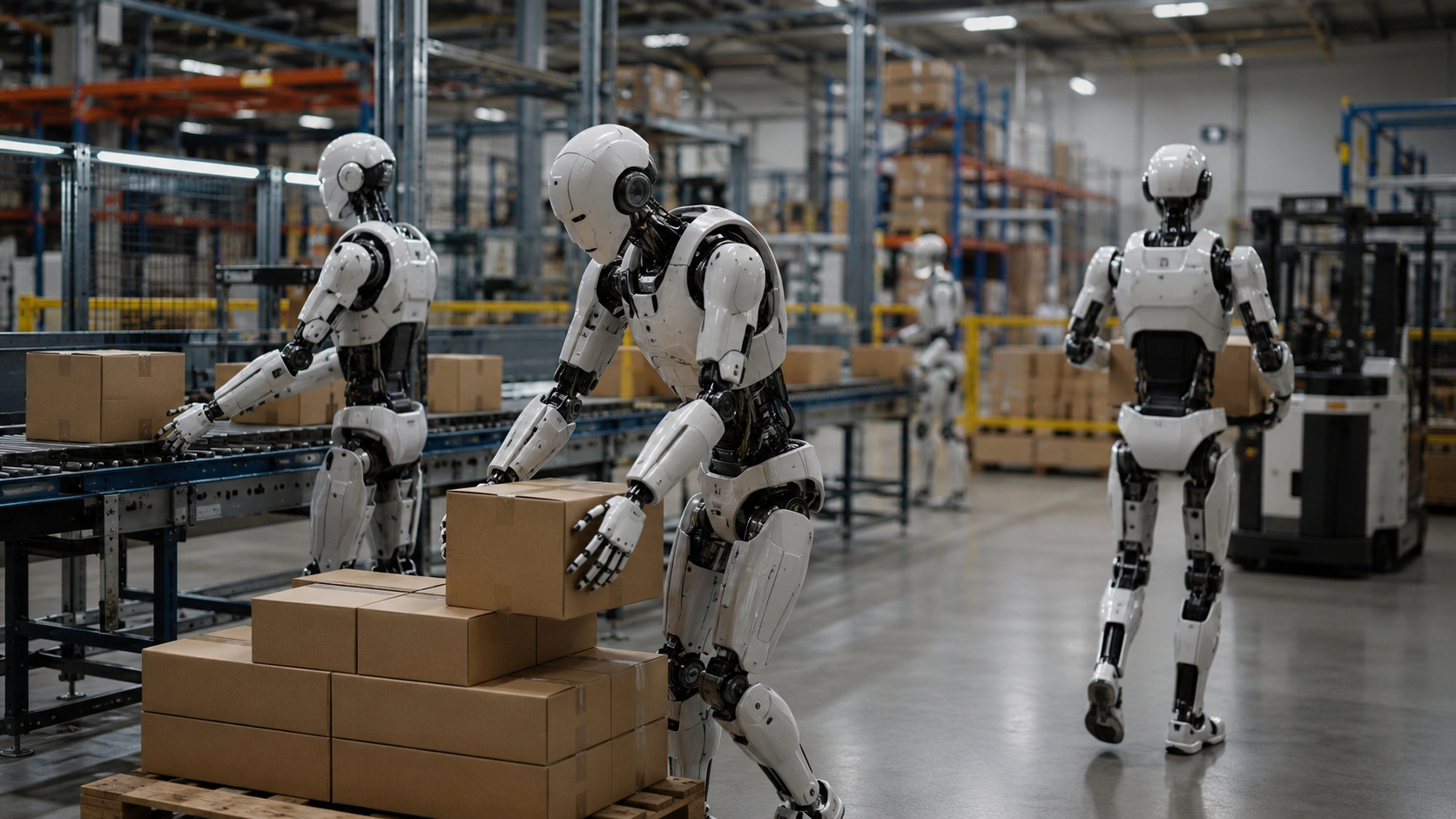

Humanoid robots begin to take on repetitive tasks in warehouses and factories, moving boxes and supplying production lines in pilot projects.
For many years, industrial automation was limited to robotic arms installed at fixed points in factories. Now, a new generation of humanoid robots is starting to perform tasks that previously relied exclusively on operators responsible for moving boxes, supplying production lines, and transporting materials between different sectors.
According to Reuters, robotics companies from the United States and China are expanding tests in real industrial environments, using robots capable of walking, carrying containers, stacking products, and performing repetitive activities for long periods. Although the technology is still in the early stages of adoption, manufacturers state that the current focus is on functions considered tiring, repetitive, or difficult to hire for, rather than the complete replacement of human labor.
The first robots are working in warehouses and production lines
One of the most advanced examples is Digit, developed by the American company Agility Robotics. According to the company, the robot is already being used in commercial operations by companies such as Toyota, Schaeffler, GXO Logistics, and Mercado Livre.
-
Humanoid Robots Begin Replacing Factory Workers in China, Working 64-Hour Shifts and Driving Industrial Automation Forward

-
Miniature Nuclear Reactor to Be Installed in South Wales, Powering 20,000 Homes and Reviving UK’s Nuclear Industry After Nearly 50 Years

-
San Andreas Fault Reaches “Highest Tension in 1,000 Years,” Raising Fears of the “Big One,” but New Study Identifies Key Zone Near Los Angeles Influencing Earthquake Impact

-
French Scientists Set Sail on Ice-Trapped Ship for 18-Month Arctic Climate Study


Its main function is to transport boxes and containers between different points in logistics centers, a repetitive activity that usually requires constant walking throughout the workday.


By using a human-like structure, Digit can navigate corridors, use doors, and operate in facilities originally designed for people, reducing the need to modify the entire existing infrastructure.
Chinese companies also accelerate the race for humanoid robots
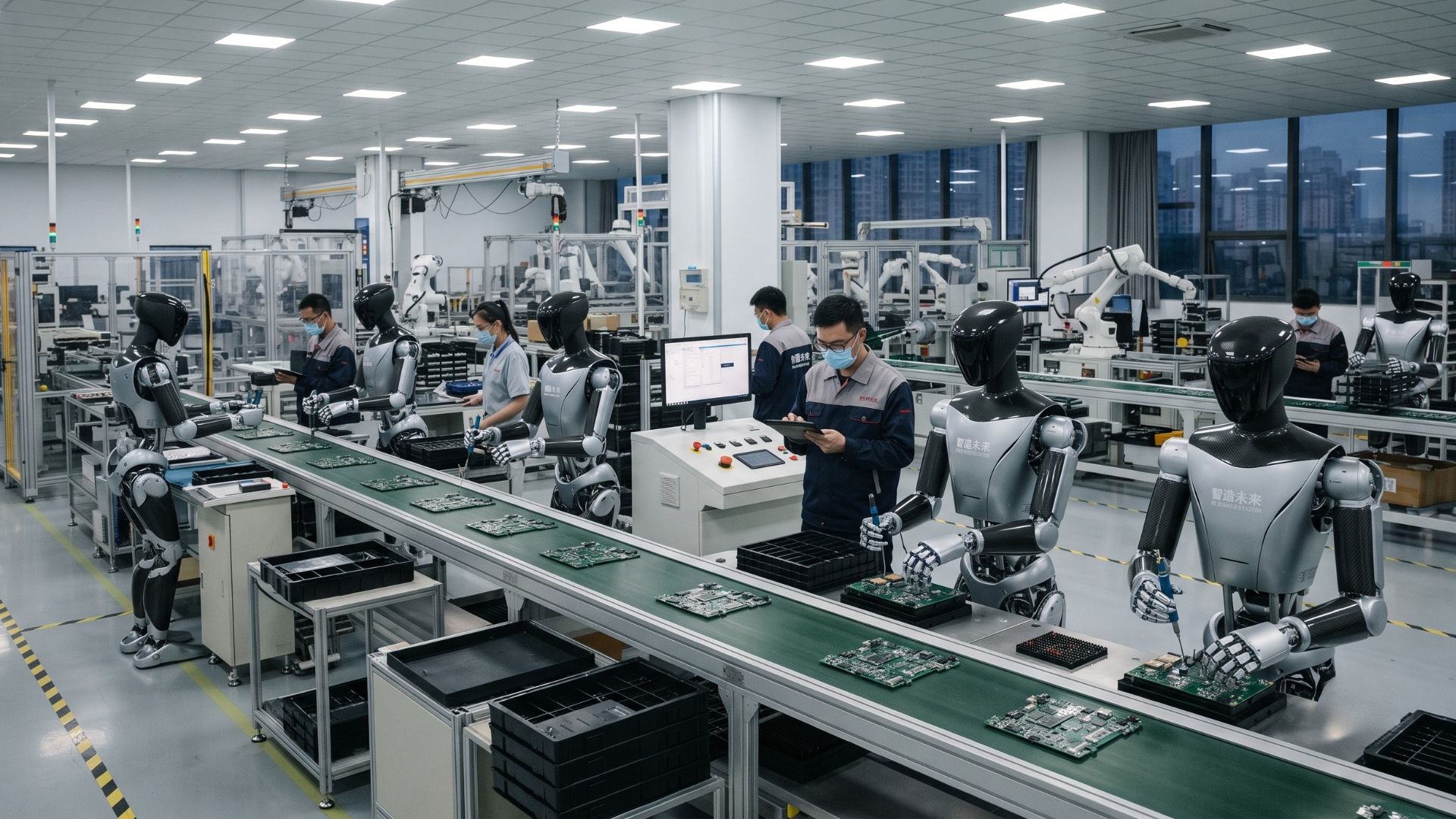
In China, manufacturers like AgiBot have started testing robots on electronics production lines. In June 2026, the company announced it had produced its 15,000th humanoid robot and stated that its equipment already performs industrial tasks in real environments, mainly in moving parts, feeding machines, and other repetitive manufacturing activities.
According to William Shi, president of AgiBot for Europe and the Americas, the company’s goal is to direct the robots initially towards “dangerous, repetitive, and undesirable” functions, especially in the industry.
The lack of workers drives automation
The adoption of these devices also responds to demographic changes. In the United States, for example, there were more than 400,000 open positions in manufacturing at the end of 2025, while approximately a quarter of the sector’s workers were 55 years or older.
According to Agility Robotics, this combination of labor shortage and an aging population has led companies to seek automated solutions to keep production running. In China, the government is also heavily investing in the development of humanoid robotics as a strategy to address the gradual reduction of the working-age population and increase industrial productivity.
Robots do not yet completely replace operators
Despite advances, experts warn that the technology still presents significant limitations. Reuters highlights that humanoid robots still work better in controlled environments and predictable tasks. Handling very varied objects, dealing with unexpected situations, and performing activities that require high dexterity remains a technological challenge.

Moreover, the number of robots effectively in operation is still small compared to the size of the global industrial workforce. In 2025, only about 12,000 humanoid robots were sold in China, many destined for research and pilot projects.
The trend is to automate specific tasks
Recent studies on industrial robotics indicate that the adoption of humanoids should occur gradually. Instead of eliminating entire professions, the trend currently observed is to replace specific activities, such as transporting boxes, supplying production lines, moving containers, and performing repetitive operations.
Meanwhile, human workers remain responsible for supervision, maintenance, programming, quality inspection, and tasks that require constant adaptation.
Industrial work begins to change profile
The arrival of humanoid robots represents another stage in the transformation of the industry. Just as robotic arms have automated part of the assembly lines in recent decades, the new equipment is beginning to take on activities that require mobility within factories and logistics centers.
Experts assess that this change should initially occur in the most repetitive and physically demanding jobs. The speed of this transition will depend on factors such as the cost of equipment, the evolution of artificial intelligence, operational safety, and economic return for companies.