





 Portuguese
  English
  Spanish
  5 min of reading
  0 comments


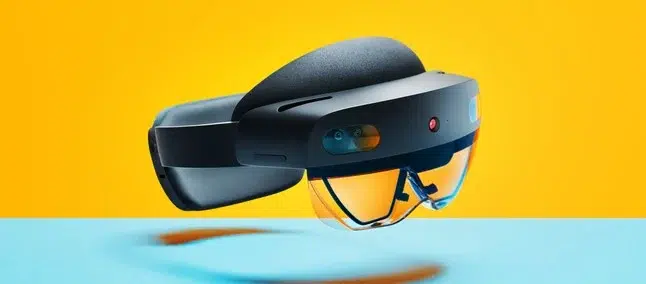
US$ 5 Billion Lost in a Failed Project! See How a Microsoft Invention, Which Had Everything to Be Revolutionary, Turned Into One of the Company’s Biggest Financial Disasters!
The trajectory of Microsoft with mixed reality and the HoloLens project, initially promising, is facing major challenges. Despite being one of the largest technology companies in the world, Microsoft lost billions of dollars in developing this technology and now faces an uncertain future for its military contract with the IVAS (Integrated Visual Augmentation System).
The recent decision to discontinue production of the HoloLens 2 and end support for the device has raised serious questions about the future of this segment for the company.
The reduction in the IVAS development team and the lack of major innovations in the project only further fuel rumors that Microsoft may be distancing itself from its military partnership with the United States Department of Defense.
-
Scientists mixed hydrocarbons with a gold leaf, subjected them to pressure greater than that of the Earth’s mantle and heat above 1,900 °C, and ended up accidentally discovering a new compound of gold and hydrogen.

-
Scientists discover a giant crocodile that lived millions of years ago, measuring over 8 meters, which reigned in the rivers of ancient Kenya and could hunt early humans near the water.
-
After four years under investigation by Cade, Apple indicates that it is willing to negotiate an agreement to enable contactless Pix payments without charges on iPhones, as revealed by Lauro Jardim’s column in the newspaper O Globo in this competition dispute.

-
Anvisa orders the recall of a popular magnesium supplement throughout Brazil and mandates immediate suspension after identifying a compound not authorized by sanitary legislation.





Business Insider reported that internal sources at Microsoft claim that the accumulated loss from the HoloLens exceeds the mark of 5 billion dollars, casting doubt on the viability of new investments.
For a company the size of Microsoft, this number is alarming, especially in a scenario where other technology companies are shifting their focus to new opportunities, such as artificial intelligence.
The Promising Start of HoloLens and the Decline
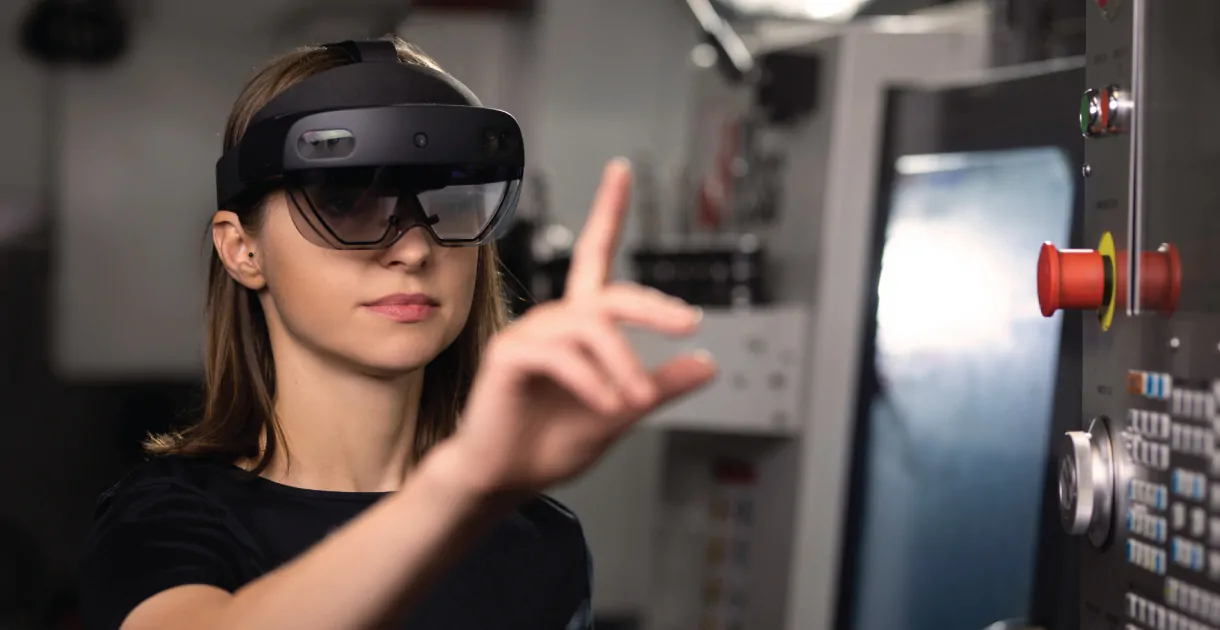
The HoloLens was launched in 2015 with great promises. Microsoft touted the product as a revolution in mixed reality, allowing digital information to be integrated into the physical environment in unprecedented ways. The idea was to make HoloLens an essential tool for large organizations and specific sectors, such as technical maintenance and training.
However, as the years went by, HoloLens faced the same difficulties as similar projects, such as Google Glass. Although Microsoft worked hard to ensure that the product was seen as a high-level tool for enterprises, the target audience did not embrace the technology as expected. The failure to turn HoloLens into a widely adopted product began to weigh on the company’s finances.
In 2022, the situation became even more complicated when Microsoft canceled the development of the third version of HoloLens. The company began to redirect its resources to more profitable and promising areas, such as artificial intelligence.
Challenges of the Military Contract with IVAS

The contract between Microsoft and the U.S. Army for the development of IVAS seemed to be a major asset for the company. Valued at up to 22 billion dollars over 10 years, the IVAS project aimed to use HoloLens technology to create mixed reality glasses for military use, assisting soldiers in missions on the battlefield.
However, the project soon faced a series of problems. Development delays and criticism regarding the quality and performance of the glasses raised concerns. A report from the Army, after tests conducted in 2022, highlighted that the lights emitted by the devices could reveal the soldiers’ location to enemies, putting their lives at risk.
With Microsoft failing to deliver a satisfactory solution, the military government began to fund only pinpoint improvements to the device. This move was seen by many experts as a sign that Microsoft’s involvement in the IVAS project may be coming to an end.
In September 2024, Microsoft invited Anduril, a defense startup, to collaborate on the IVAS contract. Anduril, known for its Lattice software, began integrating its technology into the existing IVAS platform, raising speculation about the possibility of the startup replacing Microsoft as the main supplier for the project.
Microsoft’s Shift of Focus to AI and New Opportunities
With HoloLens losing traction and the IVAS contract increasingly uncertain, Microsoft is redirecting its focus to other areas, especially artificial intelligence. Amid these changes, the company has reduced its hardware line, including the Surface line, and canceled the development of new headsets. Panos Panay, one of the key figures in the company’s hardware division, left Microsoft in 2023, further emphasizing the shift in priorities.
Now, Microsoft is heavily investing in generative artificial intelligence and related technologies. The company plans to invest around 100 billion dollars in GPUs and data centers by 2027, aiming to amass 1.8 million AI chips by the end of 2024. This focus on AI could provide Microsoft with new growth opportunities, distancing it from the challenges it faced in the field of mixed reality.
The Future of the Mixed Reality Market
While Microsoft seems to be drifting away from mixed reality, other tech giants, such as Meta and Apple, are heavily betting on this area. Meta, for example, has invested billions of dollars in its Reality Labs, which includes augmented and virtual reality glasses, despite posting an operational loss of 4.48 billion dollars in the last quarter.
Apple, on the other hand, continues to develop its Vision Pro headset, which could culminate in the launch of its own smart glasses in the near future. These companies still see potential in mixed reality, but the path to success in this market has proven to be challenging.
Conclusion
The trajectory of Microsoft with HoloLens and the IVAS military contract is a clear example of the challenges that large companies face when trying to innovate in emerging areas. The failure of HoloLens has cost the company billions of dollars, and the future of its partnership with the U.S. Department of Defense is at risk.
In light of these challenges, Microsoft has decided to redirect its efforts towards artificial intelligence, an area with significant growth potential in the coming years. The mixed reality market, although promising, still has a long way to go, and Microsoft’s decision to decrease its involvement may reflect the difficulties faced by this technology.
Microsoft’s transition from mixed reality to artificial intelligence highlights its ability to adapt to new opportunities, but also serves as a reminder that even the largest companies can encounter difficulties when trying to dominate emerging markets.





Be the first to react!