Portuguese
  Spanish




Historical Chinese Farm Impresses With Size, Military Tradition, and Importance in Preserving Rare Horse Breeds. Site Attracts International Attention, Tourists, and Scholars for Centuries.
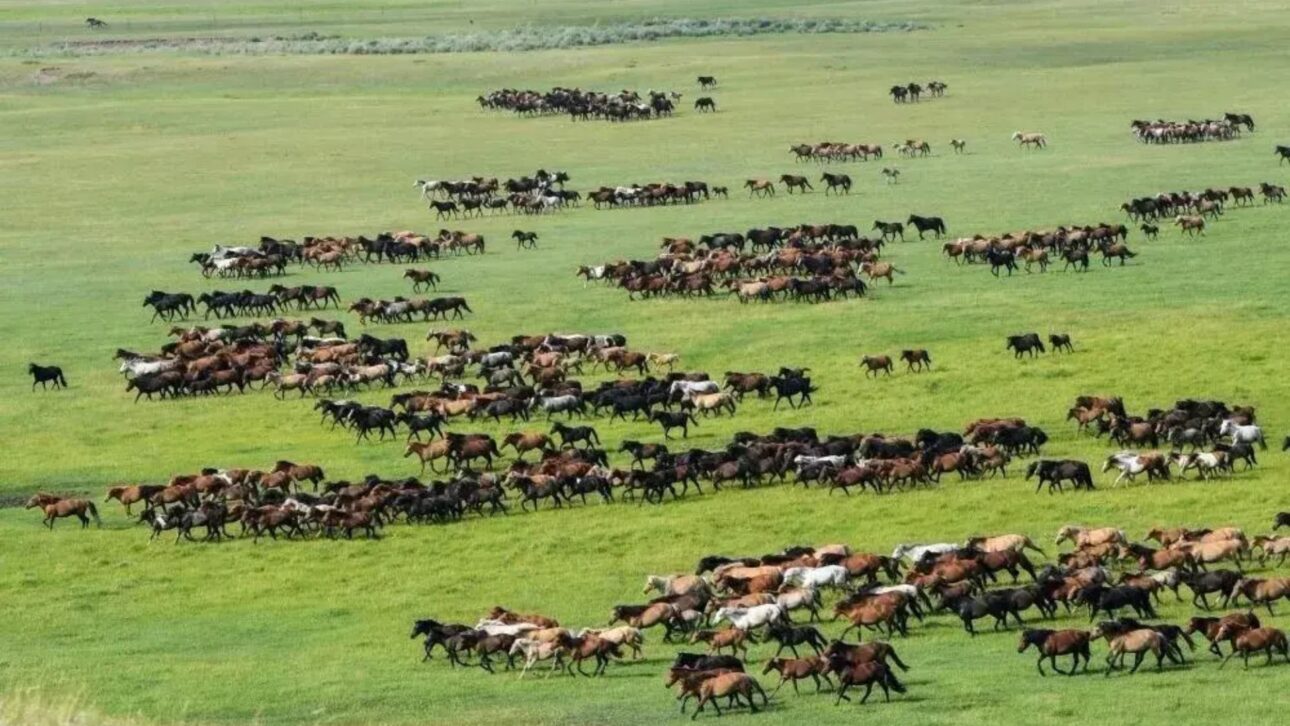
Located in Gansu Province in northwest China, the Shandan Farm is internationally recognized as the largest horse farm in the world on a single property.
With around 10,000 animals and over 2,100 years of history, the farm not only boasts impressive numbers but also remains under the control of the Chinese Army, preserving millennia-old practices in horse breeding.
The Largest Horse Farm in the World and International Context
The size of Shandan Farm is an outlier, even compared to countries with significant horse populations, such as the United States, Mexico, Brazil, and Mongolia.
-
Brazilian Honey Supplying U.S. Supermarkets Faces Price Hike and Job Threats Amid New Tariff Round

-
Drought in France Threatens Beet Crops, Raising Fears of Sugar Price Surge Across Europe
-
French village switches from oil to giant miscanthus for heating, cutting annual costs from €20,000 to €4,300

-
Brazilian Agribusiness Sets Record with $169 Billion in Exports in 2025


In Mongolia, for instance, the national herd exceeds 4.8 million horses, reflecting a culture historically associated with nomadic life.
However, no other location concentrates as many horses in one area as Shandan, which gathers a herd of 10,000 animals over approximately 2,200 square kilometers of natural pastures along the famous Hexi Corridor.
Ancient Origins and Military Role of Shandan Farm
The farm’s origins date back to the Western Han Dynasty (206 BC–24 AD), when it was founded as a military horse breeding station to supply the Chinese empire with war mounts.
This historical context gives Shandan Farm the title of the oldest continually operating horse farm on the planet, according to official government records and historical documents.
Its privileged location at the foot of the Qilian Mountains, with lush pastures in summer and abundant water, has always favored large-scale horse breeding.
Development of the Shandan Horse Breed
Throughout the centuries, Shandan Farm has survived the rise and fall of various dynasties and political regimes, maintaining its primary vocation: the selection, improvement, and multiplication of horses for military and civilian purposes.
According to official sources, the farm’s handlers crossed local Mongolian horses with breeds from Central Asia, such as Turkmen horses, to create a lineage adapted to the harsh climate and the demands of the army.
The result of this process was the development of the Shandan horse, recognized for its strength, physical endurance, speed, and dietary adaptability.
The Shandan horse has a robust build, balanced musculature, and a gentle temperament, essential traits for riding in historical military campaigns.
These animals, in addition to being suitable for riding, played a central role in the transport of cargo and plows, making them valuable for various functions within the empire.
“These horses were considered a crucial strategic resource for the success of military forces,” highlighted records from the People’s Liberation Army of China.
Horse Farm Under Military Administration and Tourism
Even with the advent of the modern era and the replacement of horses by motor vehicles in the 20th century, the farm has preserved its special status.
Today, Shandan Farm remains under military administration, and the animals still perform functions within the Armed Forces, such as patrolling mountainous areas and participating in official ceremonies.
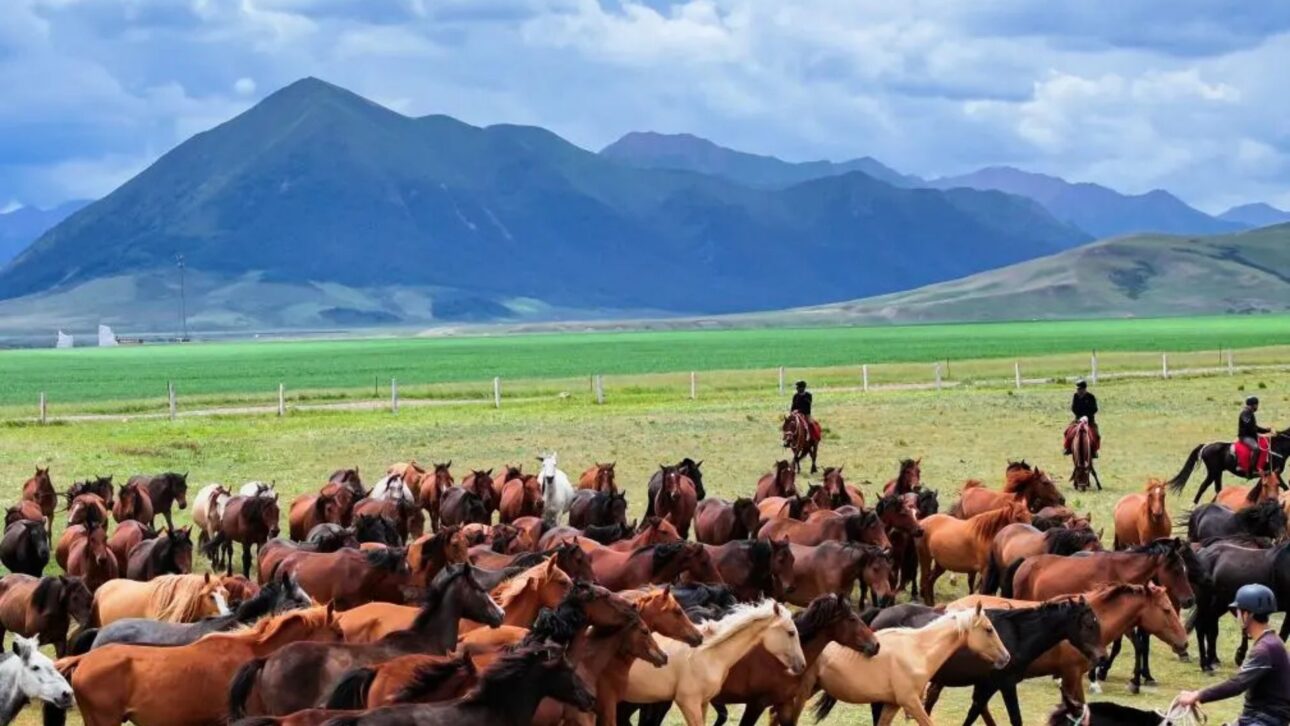
However, the majority of the herd is now dedicated to genetic preservation projects, rural tourism, and environmental education.
The opening of the gates for tourism has become a new vocation for the site.
During spring and summer, hundreds of visitors, photographers, and horse lovers roam the farm to witness the natural spectacles formed by herds of horses galloping freely across the steppes.
Shandan Farm has gained the status of cultural and environmental heritage in China, and its fame has crossed borders, becoming a backdrop for documentaries and films dedicated to the country’s equestrian tradition.
Shandan Horse and Chinese Urban Centers
Cities like Lanzhou, Xi’an, and Shanghai have received specimens of the Shandan horse in parks, equestrian centers, and exhibitions, allowing urban audiences direct contact with the breed and its history.
According to official data, the farm also maintains a continuous genetic improvement program, ensuring the preservation and quality of the lineage, as well as encouraging research on equine adaptation to different environments.
International Comparison and Herd Management
The international comparison reinforces the uniqueness of the site: while large Western studs house a few hundred animals, Shandan Farm stands out not only for its number of horses but also for the historical and cultural context associated with its existence.
The military oversight model maintains strict practices of management, health, and breeding, factors that have contributed to the herd’s longevity.
Historical Relevance and Strategic Role
The animals of Shandan Farm not only supplied the Chinese cavalry in historical conflicts but also helped shape military strategies at crucial moments in Asian history.
“The strategic importance of Shandan horses was decisive for imperial victories,” according to studies from Chinese universities specializing in military history.
Shandan Farm Today: Tradition, Research, and Challenges
The contemporary relevance of Shandan Farm extends beyond the equestrian world.
Today, the property symbolizes resilience and adaptation of Chinese traditions in the face of modernity.
The site hosts environmental education projects, rural tourism, scientific studies on animal genetics, and policies for preserving historical heritage.
For over two millennia, Shandan Farm has solidified its position as a global reference in horse breeding, whether for its size, tradition, or integration of past and present.
One must ask: how will this equestrian giant innovate to ensure relevance and sustainability in light of the new environmental and social challenges of the 21st century?