






 Portuguese
  Spanish


Giant Miscanthus heats buildings in a French village and reduces annual fuel expense from €20,000 to just €4,300.
A village of just 780 residents in northern France managed to reduce its heating expenses by about 16,000 euros per year after replacing fuel oil with a fast-growing Asian plant. Since February 2013, Hangest-sur-Somme has been using giant miscanthus to fuel the boiler responsible for heating its public buildings.
Before the change, the municipality consumed approximately 20,000 liters of oil per year and spent around 20,000 euros, equivalent to about R$120,000. With the adoption of plant-based fuel, the annual expense dropped to 4,300 euros, approximately R$25,900.
The savings amount to nearly 16,000 euros per year, a value close to R$96,000 in the conversions presented by the project. Besides reducing public spending, the initiative opened a new production possibility for local farmers.
-
Brazilian Agribusiness Sets Record with $169 Billion in Exports in 2025

-
Solar-powered irrigation transforms agriculture, boosts family income, and enhances food security in Uganda.

-
Brazil Supplies 70% of the World’s Orange Juice, Prices Double Due to Pest Outbreak

-
Brazilian Scientists Develop World’s First Tropical Wheat for Biscuit Production, Yielding Up to 150 Bags per Hectare and Highly Resistant to Common Crop Disease





Giant Miscanthus fuels 100 kW boiler
To keep the heating system running, Hangest-sur-Somme uses approximately 60 tons of the plant per year.
The dry material is burned in a boiler capable of generating 100 kW of thermal energy. This energy serves the buildings connected to the municipal system, replacing the fossil fuel previously used.
The old oil boiler was not eliminated. The equipment remains available as a backup and should only be activated if there is a problem with the main system.
A specialized company also monitors the quality of the material used. The verification is to confirm whether the plant-based fuel meets the necessary technical conditions for proper burning.
Plant grows rapidly and requires little care
Originating from East Asia, Miscanthus giganteus is a grass that can grow up to five centimeters per day.
The species had been used for many years in activities such as roof covering and traditional medicine practices. More recently, it has sparked the interest of French farmers due to its favorable cultivation characteristics.
The giant miscanthus requires little fertilizer and demands reduced care once established in the field. The combination of rapid growth and low maintenance requirements contributed to its adoption as an energy source.
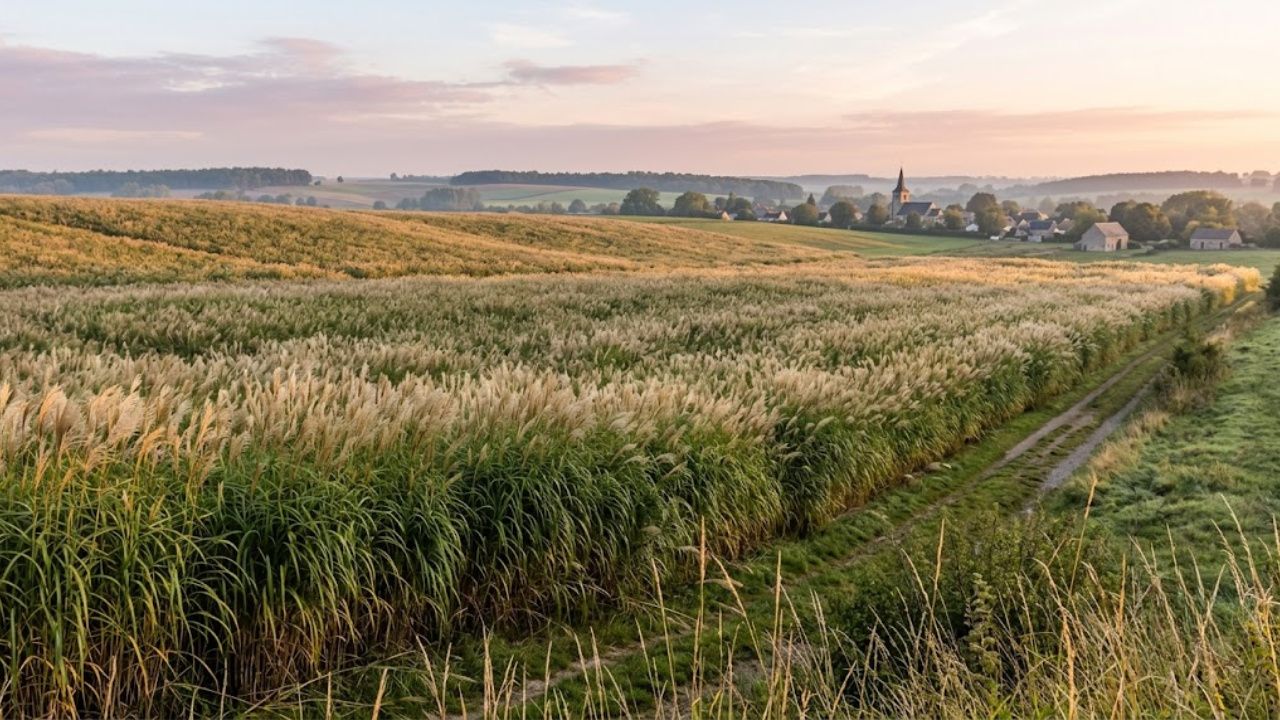
After the harvest, the production destined for Hangest-sur-Somme is stored in a five thousand square meter shed, built with beech wood, a tree found in the region.
Project with giant miscanthus began after visit to another facility
The replacement of oil did not arise directly in Hangest-sur-Somme. Representatives of the city hall previously learned about a similar system installed in the Omiécourt castle. The experience served as a reference for the municipal administration to assess the feasibility of producing its own plant-based fuel.
After the visit, the city acquired five hectares of land located approximately two kilometers from the boiler. The first three hectares were planted in 2012. The other two hectares began to be cultivated in 2014, expanding the area dedicated to biomass supply.
The short distance between the field and the equipment also facilitates the transportation of the production after the harvest.
Farmer found new economic activity
The farmer Philippe Collin participated in the implementation of the crop in the region. At the time, he was working with cattle breeding on the family property and took on a first planting of 25 hectares of giant miscanthus as a way to diversify rural production.
The initiative showed that the change in the heating source did not only bring consequences for the municipal budget. The project also created an income alternative for local producers interested in cultivating the grass.
By turning a plant into fuel for public buildings, the village started to drive a chain that involves planting, harvesting, storage, quality control, and thermal energy generation.
Cultivation helps remove carbon from the atmosphere
During its growth, miscanthus absorbs carbon dioxide present in the atmosphere. This process helps to offset part of the emissions released later during the burning of the material. Although combustion produces gases, the plant has already captured carbon while developing in the field.
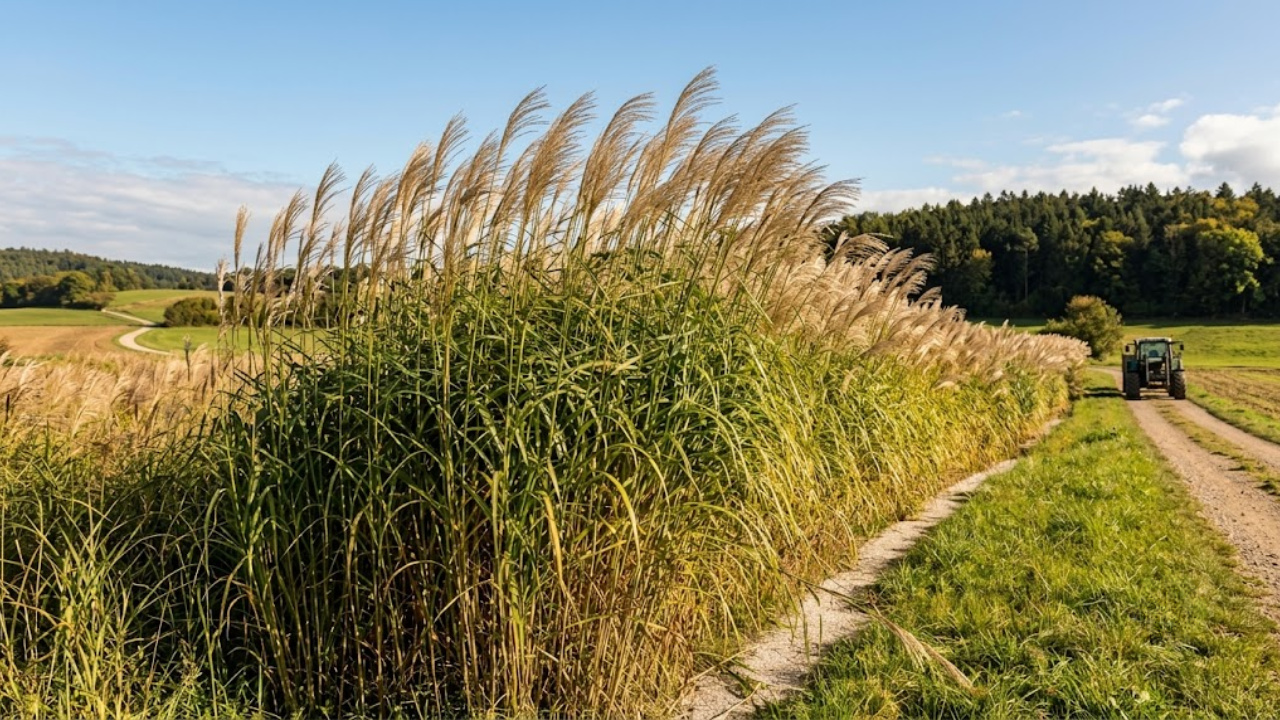
The cultivation also helps to reduce the amount of nitrate present in the soil. These characteristics reinforced the interest in using the species as an alternative to fuel oil, which previously needed to be consumed in large volumes to keep the buildings heated.
The proposal thus combines cost reduction, agricultural utilization, and decreased dependence on a fossil source.
Savings exceed 75% of previous expense
The difference in costs shows the impact’s magnitude for a community of less than a thousand inhabitants. By going from 20,000 euros to 4,300 euros per year, Hangest-sur-Somme reduced its heating expense by more than three-quarters.
The financial result allows resources previously allocated for oil purchase to be used for other municipal needs. The savings also reduce the village’s exposure to fluctuations in traditional fuel prices, as part of the raw material is now produced near the heating system itself.
Experience attracts visitors interested in the model
The adoption of giant miscanthus turned Hangest-sur-Somme into a point of interest for people considering implementing similar solutions. Visitors started to learn about the boiler, storage, and production model adopted by the French community.
The project is also used in environmental awareness actions among residents. By following the system’s operation, the population can observe how an agricultural crop can replace part of fossil fuel consumption.
More than a decade after the start of the operation, the experience shows how a small village managed to transform an Asian plant into a local source of heat, public savings, and opportunity for farmers.
With information from ig


