Portuguese
  Spanish


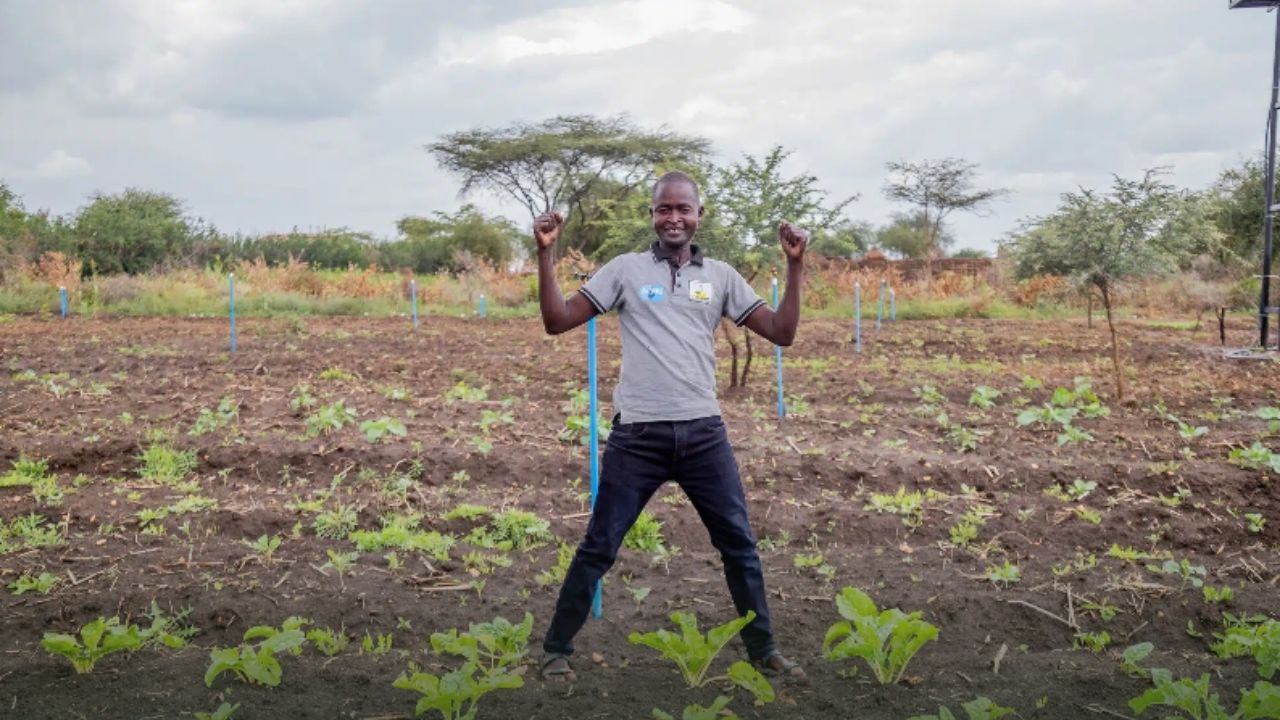

In Karamoja, Uganda, solar energy has begun to power micro-irrigation for families who previously faced long walks for water and dry sources. According to Farm Africa, the project supported by foundations and partners allows for year-round vegetable cultivation, improved nutrition, and increased household income in vulnerable local rural communities.
Solar energy is at the heart of a system of micro-irrigation that has changed the routine of farmers in Karamoja, a region of Uganda. Before the installation, families faced long walks to fetch water and dealt with dry sources, which made regular food production difficult.
The case was reported by Farm Africa in a video published on October 29, 2025. According to the organization, the solar-powered micro-irrigation system was funded by the Eurofins Foundation and the Evan Cornish Foundation, in partnership with Farm Africa itself and Care International.
Solar irrigation reduced dependence on dry sources
Before the new system, the families cited by Farm Africa had difficulty growing enough food due to the long distances to water and the depletion of local sources. This scenario limited planting and made production more vulnerable to climate variation.
-
Brazil Supplies 70% of the World’s Orange Juice, Prices Double Due to Pest Outbreak

-
Brazilian Scientists Develop World’s First Tropical Wheat for Biscuit Production, Yielding Up to 150 Bags per Hectare and Highly Resistant to Common Crop Disease

-
El Niño may boost corn and soybean harvests in Brazil and Argentina, offering potential relief for global food prices.

-
Japanese Wagyu Gains International Fame for Its Intense Marbling, Tender Cuts, and High Prices in Brazil


With the arrival of solar-powered micro-irrigation, water began to be used more efficiently in the fields. The technology allows for the irrigation of crops without relying solely on manual effort or the immediate availability of nearby natural sources.
The central point of the change is the predictability of water for food production. When irrigation no longer depends on long journeys, farmers can better plan planting, monitor crop growth, and maintain production for longer periods.
What the video highlights is the direct effect on the agricultural routine: families who previously struggled to produce food have started to grow vegetables throughout the year.
Simple technology increased food production
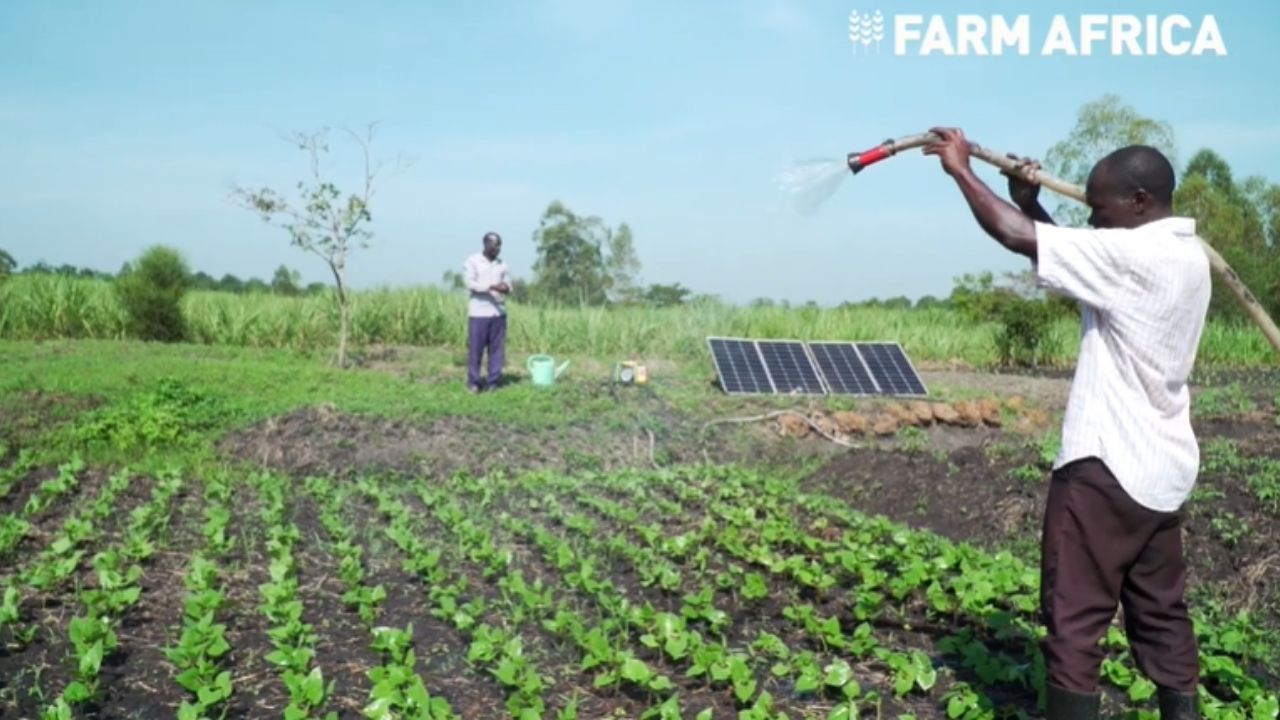
Solar-powered micro-irrigation functions as a field solution aimed at efficient water use. Instead of relying on large structures, the technology uses clean energy to support water distribution in small productive areas.
According to Farm Africa, the system has opened new opportunities to improve productivity. This means that solar irrigation not only acts as a technical resource but as a foundation for maintaining crops during periods when production could be limited by water scarcity.
The ability to plant year-round changes the logic of food security. When vegetables can be grown continuously, families have more regular access to fresh food, rather than relying solely on seasonal harvests or external purchases.
The source reports that year-round vegetable production also contributes to improved nutrition. This point is relevant because irrigation appears not only as a productive tool but as a technology associated with food and the quality of the family diet.
Family income also entered the equation
In addition to production for consumption, Farm Africa highlights that the system helped increase family income. The explanation is straightforward: when farmers can produce more and with greater regularity, the possibility of selling part of the cultivated food arises.
This effect is important in rural communities because agricultural income usually depends on production stability. If water fails, the harvest is uncertain. If irrigation works more consistently, the producer can better organize land use and the destination of the food.
In this case, solar energy does not appear as a distant technology, but as an economic tool in the field. It allows for the activation of irrigation without placing production under the exclusive dependence on fuels, unstable electrical grids, or long walks to fetch water.
The data should be treated qualitatively: the project expanded opportunities to increase household income, according to Farm Africa, without the publication providing specific financial numbers.
Women appear among the main focuses of the project


The Farm Africa page classifies the project among actions aimed at increasing productivity, empowering women, and enhancing food security and nutrition. This perspective helps to understand that the technology was not presented merely as an agricultural solution, but also as a social tool.
In many rural communities, women are directly involved in food production, meal preparation, and household organization. When the distance to water decreases and vegetable production becomes more consistent, the routine can change practically.
Solar irrigation reduces a barrier that previously consumed time, effort, and productive capacity. The gain is not only in the fields but also in the possibility of reorganizing tasks, expanding cultivation, and improving family nutrition.
Nevertheless, it is important to maintain precision: the source does not present names of female farmers assisted in this specific video from Karamoja nor individual income data. The emphasis is on the collective effect of the system, highlighting productivity, nutrition, and opportunities for women.
Partnerships supported the implementation in Uganda
The project mentioned by Farm Africa was funded by the Eurofins Foundation and the Evan Cornish Foundation, in partnership with Farm Africa and Care International. This network of organizations shows that the implementation of the technology depended on institutional cooperation.
Farm Africa works with farmers to improve production, income, and resilience in the field, seeking practices that also consider the environment. In the case of Karamoja, the solution presented was solar-powered irrigation, directly linked to water scarcity and food production.
Simple technology only reaches the field when there is a network capable of financing, installing, and monitoring the solution. Panels, pumps, irrigation, and training need to function as a system, not as isolated pieces.
The partnership also helps to explain why the agenda goes beyond a technical innovation. The stated goal involves productivity, food security, and nutrition, three elements that depend both on infrastructure and the families’ ability to use the solution continuously.
Experience connects to other agricultural projects in the country

The Farm Africa page itself links the Karamoja video to other experiences in Uganda. On June 3, 2026, the organization highlighted the case of Alex, a farmer from the Kamuli district, who uses solar irrigation, mulching, and organic pesticides with support from Farm Africa and AGRA.
This second example shows that solar-powered irrigation appears within a broader set of sustainable practices. In Alex’s case, the page states that these techniques helped increase resilience against climate extremes.
The link between the projects is the use of accessible technology to make agriculture more predictable. Whether in Karamoja or Kamuli, water appears as a decisive factor for producing more, protecting crops, and reducing losses.
The source does not allow for a direct comparison of the two projects in terms of scale, cost, or financial outcome. But the cases indicate that solar irrigation is being used by Farm Africa as a tool for agricultural adaptation in communities vulnerable to climate change.
What solar energy changes in family farming
The experience in Uganda shows that solar energy can have a direct impact when applied to a concrete need: bringing water to crops. In regions where sources dry up and fetching water requires long journeys, solar irrigation changes the basis of production.
The system presented in Karamoja does not rely on a futuristic promise. It addresses a basic task: allowing farmers to grow vegetables year-round, with effects on food, productivity, and family income, according to Farm Africa.
The main lesson is that technology in the field does not need to be complex to be transformative. When solar energy, micro-irrigation, and local organization combine, small farms can gain stability even in environments with greater climate pressure.
Do you think solar-powered irrigation systems should be a priority in rural areas suffering from drought and unstable water sources? Leave your opinion in the comments and share if a simple technology like this could change food production in other communities.