






 Portuguese
  Spanish


An Analysis Based on Naval Power Data in the Region Shows How the Brazilian Navy Stands Out for Fleet Tonnage and Strategic Assets Such as the NAM Atlântico and the Future Nuclear Submarine.
According to the 2024 Global Firepower (GFP) index, which ranks armed forces worldwide, Brazil occupies a prominent position on the global stage. In the naval domain, this strength translates into the position of the largest navy in Latin America. Although a simple count of vessels may generate different rankings, an in-depth analysis of fleet tonnage, power projection capability, and possession of strategic assets confirms Brazil’s leadership in the region in 2025.
The superiority of the Brazilian Navy is sustained by a combination of factors that no other South American nation currently possesses. This includes the largest warship on the continent, a robust conventional and nuclear submarine development program, and the largest and most capable marine corps, ensuring the country an unparalleled defense capability and influence in its waters and beyond.
The Sea Giant, the NAM Atlântico and Its Projection Capability
The cornerstone of the Brazilian Navy’s power projection capability is the Multipurpose Aircraft Carrier (NAM) “Atlântico”. Weighing 21,500 tons and 203.4 meters long, it is, without a doubt, the largest warship in operation in Latin America.
-
Workers renovating a playground in northern England uncover 176 World War II bombs buried underground; training artifacts still contained explosives.

-
Brazilian Architect Transforms Waste into Sustainable Homes with Solar Power and Rainwater Systems for 40 Years

-
Security Guard Becomes Doctor at Louisiana Hospital Where He Once Worked, Studied Chemistry Between Shifts

-
Woman Rescued from Luxury Complex in Brazil Worked Without Pay for 55 Years, May Be Entitled to Over $300,000




Originally the HMS Ocean of the British Royal Navy, the ship was commissioned into the Brazilian fleet on June 29, 2018. Its capacity is substantial: it can carry up to 18 helicopters, 40 military vehicles, and a contingent of up to 830 marines. This versatility was prominently demonstrated in May 2024 during Operation “Taquari 2,” when the vessel was dispatched on a humanitarian mission to Rio Grande do Sul, transporting 154 tons of donations and two mobile water treatment stations.
The Álvaro Alberto Submarine and the PROSUB Program
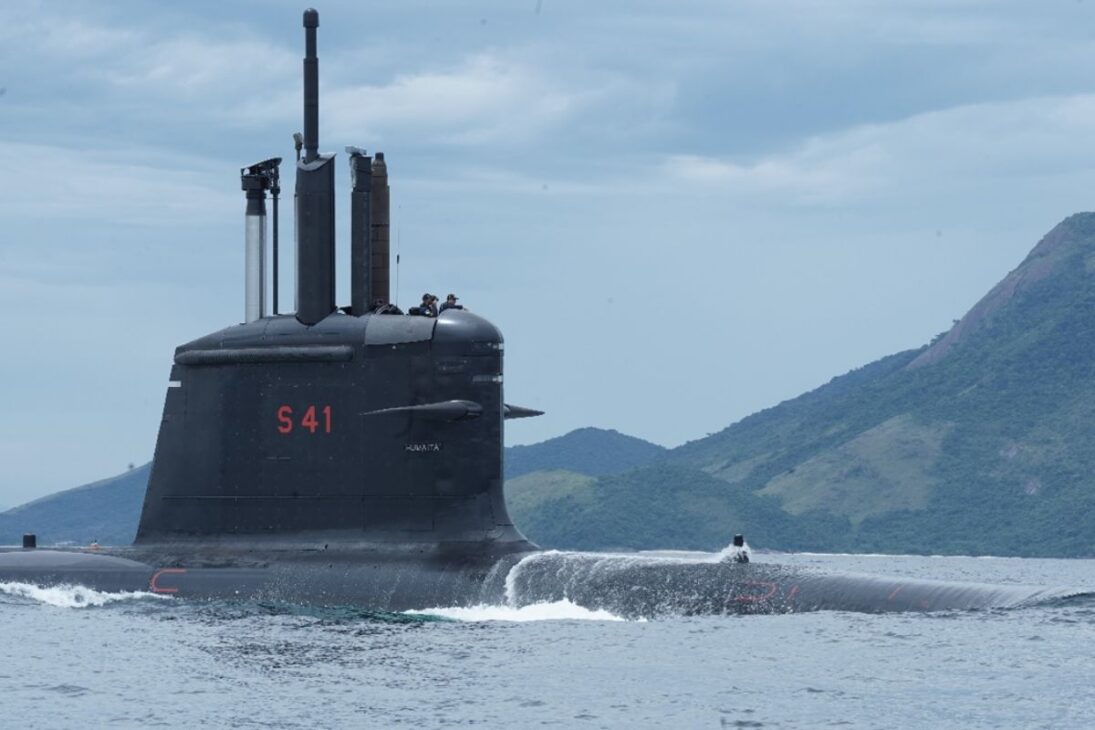
The region’s most ambitious defense project is Brazil’s Submarine Development Program (PROSUB). Launched in 2008 in partnership with France, the program not only modernizes the conventional submarine force but also aims to give the country nuclear propulsion capability.
The program has already delivered the Riachuelo-class submarines, such as the S-41 Humaitá, which entered service on January 12, 2024, and the S-42 Tonelero, launched on March 27, 2024. The pinnacle of PROSUB, however, is the construction of Brazil’s first nuclear-powered submarine, the SN-BR “Álvaro Alberto”. With the construction of the hull expected to begin in 2025, this submarine will grant Brazil strategic deterrence and autonomy unmatched on the continent.
The Power of the Marine Corps

The Brazilian Navy also boasts the largest and best-equipped marine corps in Latin America. With a strength of approximately 16,000 military personnel, the Marine Corps (CFN) is an elite rapid deployment force, with doctrine and training focused on large-scale amphibious operations.
Unlike other marine forces in the region, which may focus more on coastal security or river warfare, the Brazilian CFN is an expeditionary force. Its ability to be transported by the NAM Atlântico and perform landings in hostile territory gives Brazil a powerful tool for projecting force on land, completing the triad of Brazilian naval power.
How Does Brazil Compare to Other Naval Powers in the Region?
The leadership of the largest navy in Latin America is not absolute in all domains. The Chilean Navy, for example, has a fleet of eight frigates that, ship for ship, is considered more modern and homogeneous than the Brazilian one. The navies of Colombia and Peru have also embarked on ambitious naval construction programs in partnership with European and South Korean shipyards, promising to enhance their capabilities in the coming decades.
In contrast, the decline of the Argentine Navy, which historically served as a counterbalance to Brazil in the South Atlantic, has created a power vacuum in the region. This scenario, combined with the chronic underinvestment faced by the Argentines, has cemented Brazilian naval hegemony in its main area of strategic interest.
Leadership in 2025, the Verdict on the Largest Navy in Latin America
By 2025, the Brazilian Navy consolidates itself as the most powerful naval force in Latin America. This position is not based solely on numbers, but on possessing strategic capabilities that its neighbors do not have.
The combination of a large aircraft carrier, a submarine program moving towards nuclear propulsion, and the largest expeditionary marine corps in the region gives Brazil a unique ability to influence events, project force, and defend its interests in the vast area of the “Blue Amazon.” While competition in fleet modernization is fierce, scale and strategic ambition keep Brazil at the forefront of South American naval power.


