Portuguese
  Spanish


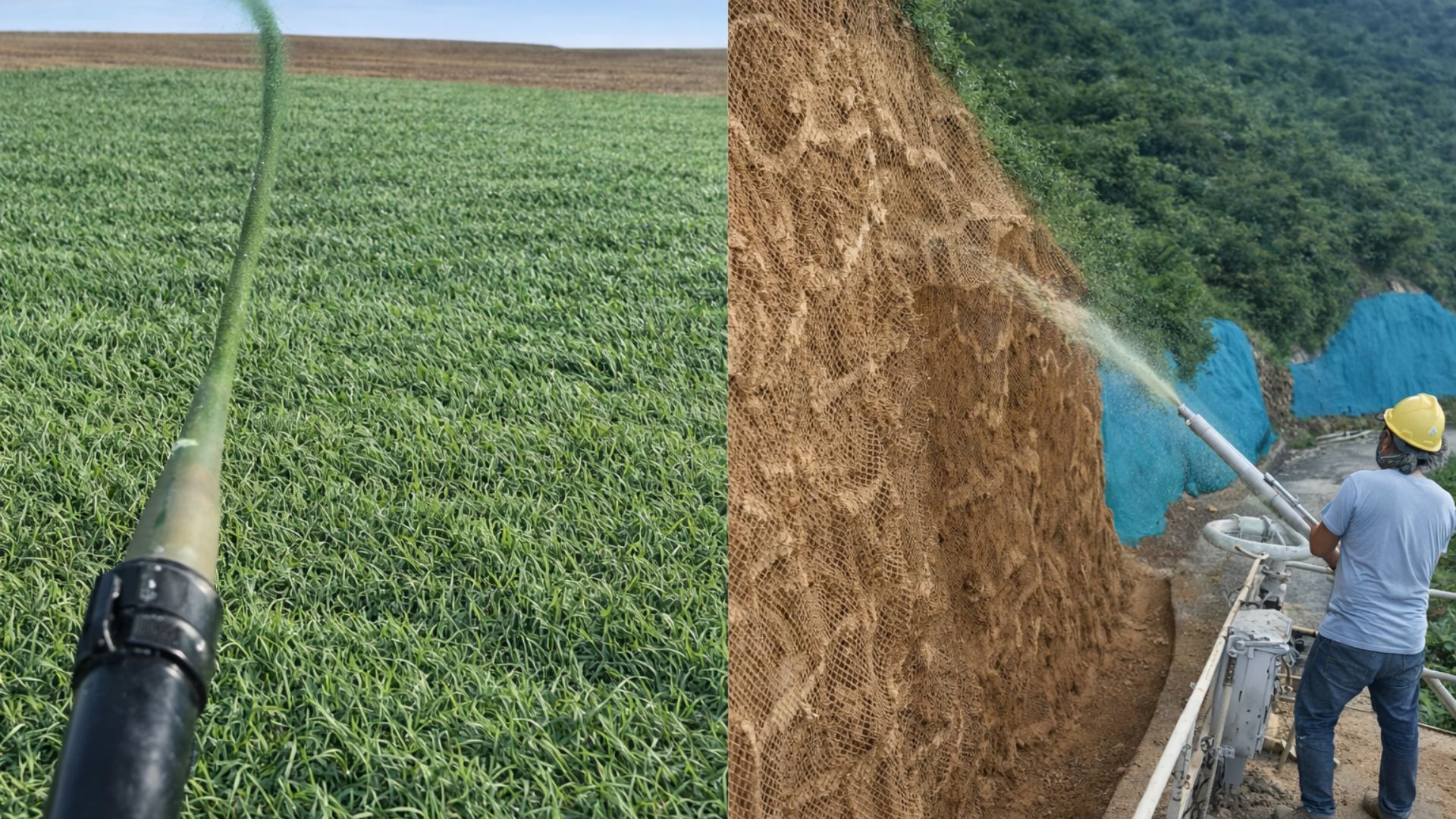

Hydroseeding Technique Transforms Arid Slopes into Green Areas in Few Days, Using Pressurized Mixture of Seeds, Fibers, and Nutrients That Sticks to the Soil and Accelerates Initial Germination Even in Steep and Degraded Lands.
A high-pressure application of a mixture of water, seeds, and plant fibers, known as hydroseeding, has become a recurring solution for covering degraded slopes and embankments with vegetation in a short time, even where there is almost no visible soil.
In suitable temperature and humidity conditions, germination usually occurs between 7 and 14 days, creating a continuous strip of green that helps reduce erosion and stabilize the surface.
What Looks Like Mud Is Practically a Planting Carpet
From a distance, the scene resembles someone throwing mud uphill with a hose, because the material comes out thick and dark, spreading in layers over rocks, exposed soil, and steep sections, where manual planting would be slow and unsafe.
-
13-Year-Old Raises Funds to Build Well, Transforming Lives in Cambodian Community Lacking Clean Water

-
Man with Metal Detector Finds Medieval Silver Seal in England, Uncovers 2,000-Year-Old Roman Gem with ‘Richard’s Secret’

-
Thailand Converts 8 Tons of PET Bottles into 3,500 School Backpacks, Showcasing Circular Economy with Over 40 Factories Involved

-
Mysterious Bats Spotted in Paris’s Père Lachaise Cemetery, Drawing Tourists to the “Vampire Cemetery”




However, the misleading appearance is part of the method: the slurry is formulated to stick to the terrain, retain moisture near the seed, and prevent rainwater from washing everything down the slope right after application.

The mixture is prepared in a tank with constant agitation, where water, chosen seeds for the location, wood or cellulose fiber mulch, and fertilizers are added, along with additives that increase adherence, such as industry-known “tackifiers.”
As the content circulates and homogenizes, a pump pressurizes the slurry and pushes it through the hose, allowing the operator to reach distant points and distribute the material with even coverage, even on difficult surfaces.
How the Mixture Adheres to the Soil and Prevents Erosion
The main difference from common mud lies in the presence of fibers, which function as an initial mat and form a protective film over the terrain, decreasing the direct impact of raindrops and reducing surface drag.
Moreover, the tackifiers help to “stick” the layer to the substrate, which is essential in steep locations, because gravity and runoff tend to concentrate seeds below and leave the top uncovered.
By holding water and nutrients close to the point where the seed fell, the slurry creates a more stable microenvironment in the early days, a critical stage for germination, when a lack of moisture can interrupt the process.
In some projects, the mixture receives green dye just for the applicator to see flaws and overlaps during spraying, having no direct relationship with growth but impacting the quality of distribution.
Germination in Up to Two Weeks Does Not Mean Ready Grass

When the coverage begins to appear, the impression is usually one of instant transformation, as many sprouts emerge together and the coloring spreads quickly, giving the idea that the slope “sprouted completely” at once.
This appearance, however, often represents the beginning of establishment since root consolidation and resilience against trampling or water stress take more time, especially in areas exposed to wind and strong sun.
The 7 to 14 days timeframe to see the first signs depends on the type of seed, the weather, and the maintenance, as different grasses respond unevenly to variations in temperature and moisture in the soil.
Even so, the technique is valued for accelerating the initial phase and for reducing losses due to runoff, something common in traditional planting on slopes when seeds are unprotected and end up being washed away by the flood.
Applications in Construction and Environmental Recovery
Hydroseeding frequently appears in highway, railway, and housing development projects, as well as in the recovery of degraded areas, precisely because it covers large areas quickly and reduces the risk of erosion before the vegetation is fully established.
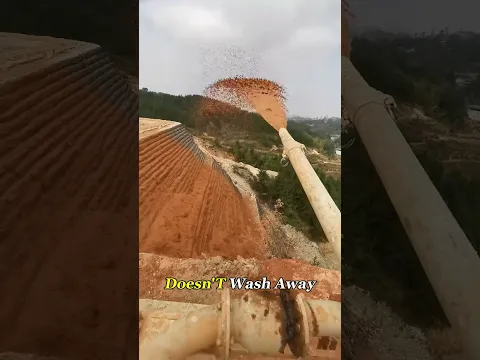

On slopes with very shallow soil, the applied layer can be the first step towards surface stabilization, but performance varies according to land preparation and compatibility between the chosen species and local conditions.
It is also essential to separate the objective of “greening” from the aim of restoring an ecosystem because a grass cover can control erosion but does not equate to restoring biodiversity, nor does it replace broader revegetation planning.
Therefore, many projects treat hydroseeding as a protective step and the beginning of coverage, while complementary measures may include planting native species and ongoing management to ensure the area does not become degraded again.
In practice, what makes the technique seem so fast is the combination of three factors: the adhesion of the fibrous mat, the uniform contact of the seed with a moist medium, and the scalability of the equipment, which applies in a few hours what would take days manually.
With this logic, the sprayed “mud” stops being clay and turns into an initial package of protection and germination, capable of giving the appearance of rebirth on difficult slopes, but still dependent on climate and monitoring to maintain.
If hydroseeding can cover areas with almost no soil in a short time, how to balance this urgency for visual results with the need for durable and environmentally appropriate solutions for each type of slope?