






 Portuguese
  Spanish


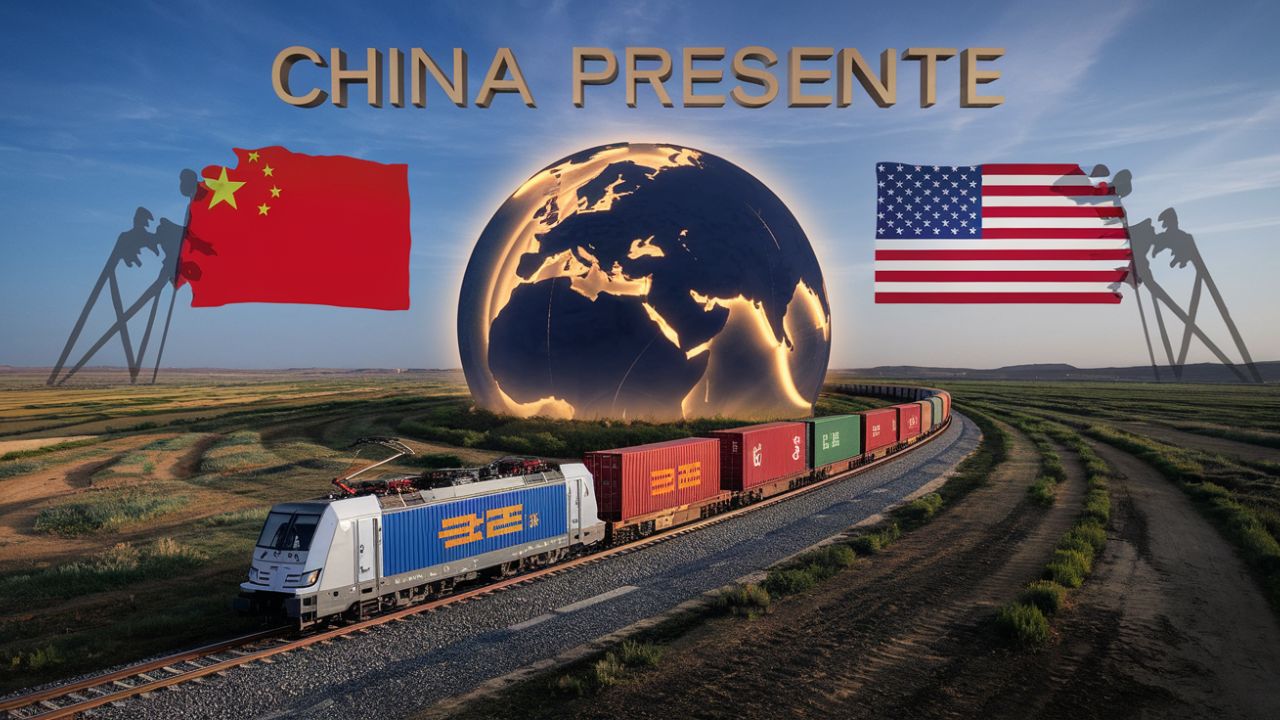


Trillions in Investments, Revolutionary Railways, and Global Connections: How China Is Leading a New Economic Era with the New Silk Road, Impacting Over 150 Countries and Challenging U.S. Supremacy.
The New Silk Road, or Belt and Road Initiative (BRI), is the most ambitious geopolitical and economic initiative of the 21st century. Inspired by the historic trade route connecting China to the rest of the world, the Chinese plan aims to reconfigure the global economy through infrastructure, trade, and innovation. But what does this have to do with railways? Everything. Railways are the backbone of this project, connecting continents, reducing costs, and redefining economic borders.
But how does China intend to lead the world through rails and trade? And where does Brazil fit into this story?
The Renaissance of the Silk Road in the 21st Century

The original Silk Road emerged over 2,000 years ago during the Han Dynasty, connecting China to Europe, India, and the Middle East. It was not just a trade route, but a cultural bridge that brought spices, silk, and ideas to various corners of the world. Explorer Marco Polo documented this historic journey, and for centuries, the route was a pillar of the global economy.
-
It’s official: Petrobras takes 75% of block 3 in São Tomé and Príncipe and debuts as an offshore operator outside South America.

-
US$ 1.5 billion dam project on the Rio Indio promises water for the Panama Canal for 50 years, but it could flood rural areas and displace 2,000 residents from 38 farming communities.

-
At 14 years old, she worked in a factory in Hong Kong, studied economics abroad, and then entered the Chinese real estate market, which helped change the landscape of Beijing.

-
While NATO secured more than $10 billion in missiles and space surveillance at a single forum, Brazil still spends 1.1% of its GDP on defense and is stalling its own anti-aircraft system.



Fast forward to the 21st century, China has revived this concept. Launched in 2013, the BRI is a network of railways, roads, ports, and energy lines connecting over 150 countries. The investments are trillions, and the goal is clear: to solidify China’s position as a global leader in infrastructure and trade.
China’s Transcontinental Railway
One of the greatest achievements of the BRI is the railway that connects China to Europe, reducing the transportation of goods from 45 to 18 days. This line passes through countries such as Russia, Poland, and Germany, proving that rail transport is faster and more sustainable than maritime transport on certain routes.
In Latin America, China is investing in railways to link the Atlantic to the Pacific. An example is the Transoceanic Railway, which will connect Brazil to Peru, creating a strategic route for commodity exports. This promises to reduce the transport time by up to 10 days, making Brazilian products more competitive in the Asian market.
Geopolitics and China’s Strategies with the New Silk Road
The New Silk Road is not just about trade; it is a geopolitical strategy to expand China’s influence. In Latin America, over 21 countries have joined the BRI, benefiting from investments in infrastructure. However, there is resistance, especially from the United States, which views the project as a threat to its hegemony.
Afghanistan also plays a strategic role, with its vast lithium and copper reserves, essential for the production of batteries and electronics. Meanwhile, China maintains a careful policy to avoid conflicts in the region.
The economic benefits of the BRI are clear: more trade, better connections, and economic growth for participating countries. However, the environmental and social impacts are also significant. Projects like the Transoceanic Railway face criticism for crossing sensitive areas, such as the Amazon Rainforest and the Andes, raising concerns about deforestation and displacing local communities.
Brazil in the New Silk Road: Opportunities and Dilemmas
Brazil is one of the largest beneficiaries of the New Silk Road in Latin America, especially as a supplier of commodities such as soy. However, the Brazilian government takes a cautious stance, seeking to balance national interests with Chinese investments.
Projects like the Transoceanic Railway and the modernization of the Port of Santos are promising, but they face financial and environmental challenges. Integration with the BRI could be an opportunity for Brazil to enhance its global competitiveness, but without compromising its economic sovereignty.
The New Silk Road is a vision for the future that could redefine the global economy. China is making significant investments in railways, ports, and strategic connections, while Brazil and other countries assess how to benefit without losing autonomy.
In the end, the success of this project will depend on how it balances economic development, sustainability, and international cooperation. And what do you think, should Brazil engage more in the New Silk Road or maintain a strategic distance?





Deve se engajar com urgência extrema e esquecer de dar satisfação aos USA.
A Ferrovia Inter oceânicas Atlantico-pacifico ou A Ferrovia Transcontinental Sul Americana !