






 Portuguese
  Spanish


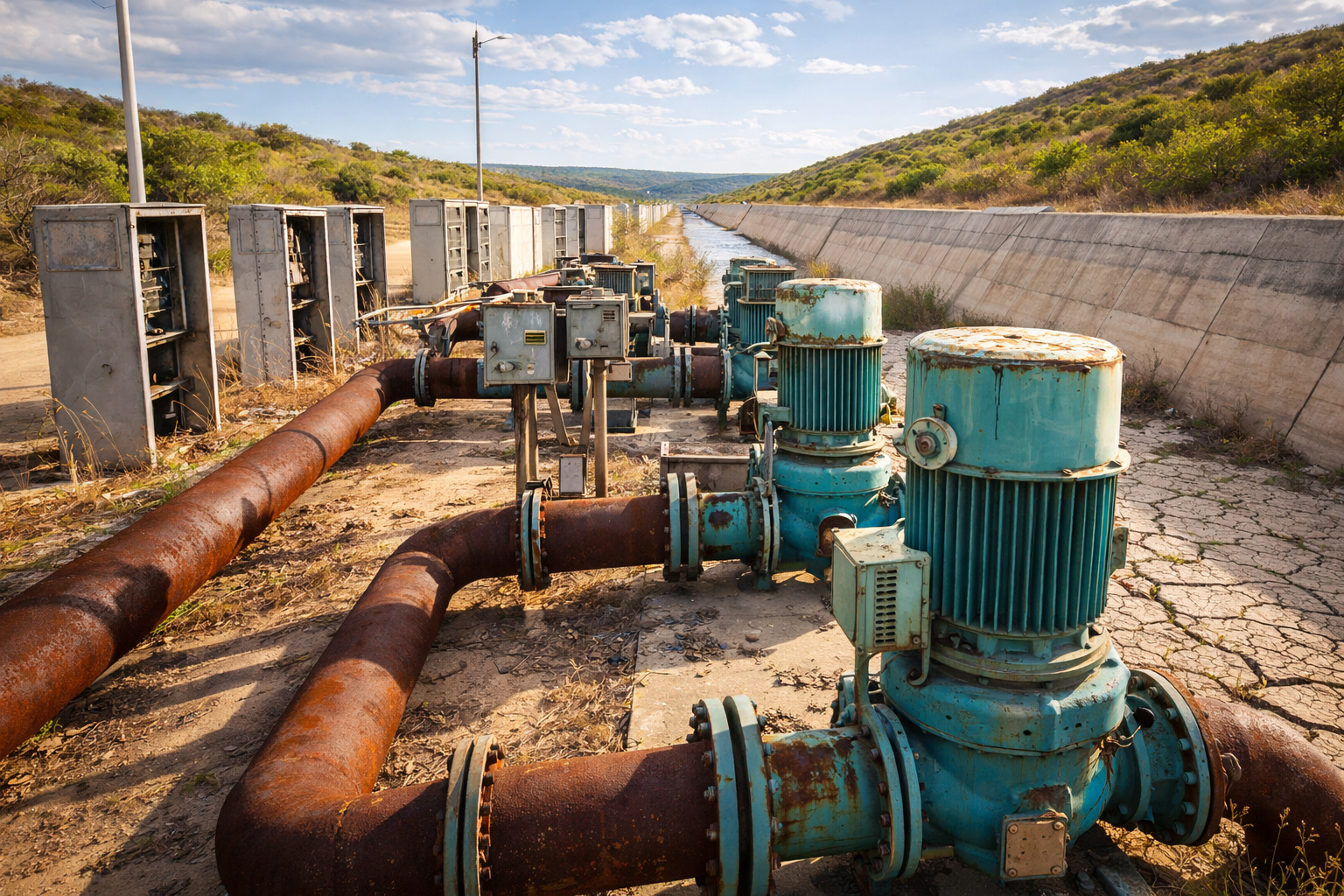


Transposition of the São Francisco River Cost More Than R$ 12 Billion. Historic Project to Combat Drought in the Northeast Continues with Inoperable Sections, High Maintenance Costs, and Results Below Expectations
The Transposition of the São Francisco River was announced as one of the largest structural solutions to the drought problem in Brazil’s Northeast. Designed to bring water to regions historically affected by water scarcity, the project has become one of the most expensive in national infrastructure. Nearly 20 years after the construction began, the assessment raises an uncomfortable question: why does a project that has already cost more than R$ 12 billion still not fully function?
A Billion-Dollar Promise to End Drought
The project plans to capture water from the São Francisco River and distribute it through two major axes — North and East — crossing hundreds of kilometers through Pernambuco, Ceará, Paraíba, and Rio Grande do Norte.
In theory, the transposition would guarantee:
-
Instead of sending families far from the city, a project in Chile intentionally created incomplete houses on expensive urban land and left technical space for each to grow.

-
EPS duplex house is ready in up to 5 days without conventional pillars and beams: fair in Espírito Santo showcases sand made from mining waste, a 250 m² modular house assembled in 15 days, and technologies that can change the time, cost, and waste on construction sites.

-
Dubai will invest US$ 22 billion in sewage tunnels up to 90 meters deep, replacing pumps with gravity and replacing more than 100 old stations, in an attempt to save a city of skyscrapers, artificial islands, and rapid growth from an underground problem that has already overflowed into the streets.

-
The history of the Hercílio Luz Bridge involves controversies, love, and renewal: From its iconic construction to its reopening, it is a symbol of Santa Catarina.


- continuous human supply;
- water security for millions of people;
- reduction of dependence on water trucks;
- support for agriculture and regional industry.
In practice, various sections remain inoperable or operate below capacity, even after years of official inaugurations.

Sections Ready, but Without Water
Technical reports and audits point out recurring problems:
- cracked and deteriorating channels;
- pumping stations halted due to lack of energy or maintenance;
- completed structures that have never been fully operational;
- high costs to maintain systems that do not operate continuously.
In some areas, water simply does not reach the final destination, frustrating communities that have been waiting for decades for the promised supply.
The Cost That Continues to Rise
Initially budgeted at around R$ 4.5 billion, the transposition has undergone successive contractual amendments, scope revisions, and delays. The result was a cost explosion.
Today, the total cost already exceeds R$ 12 billion, considering:
- construction of channels;
- pumping stations;
- electrical systems;
- structural corrections;
- ongoing operational and maintenance expenses.
Experts warn that, even when completed, the project requires high electricity consumption, making its operation expensive and dependent on public subsidies.

High Maintenance Costs and Fragmented Management
Another structural problem is the management of the transposition. After sections are delivered, responsibility passes to states and local companies, often without sufficient technical or financial resources to keep the system functioning.
This results in:
- frequent stoppages;
- premature deterioration of structures;
- need for new federal funding.
Despite Its Grandeur, the Transposition Did Not Eliminate Dependence on Emergency Solutions in Many Semiarid Regions. In Several Municipalities, the Population Still Faces:
- water rationing;
- irregular supply;
- continued use of water trucks.
The contrast between the amount invested and the results delivered has turned the project into a symbol of inefficiency and poor management of large public projects in Brazil.
A Symbol of the Legacy of Large Public Works
The Transposition of the São Francisco River exposes a recurring issue in the country: billion-dollar projects announced as definitive solutions, but delivered incompletely, expensively, and difficult to maintain.
Meanwhile, the São Francisco River continues to suffer from siltation, reduced flow, and environmental pressure, raising debates about the long-term sustainability of the project.



Por le menes algume coise tá saide ,fico parade por 6 anos governo passado.
O governo passado , Jair Messias Bolsonaro inaugurou aluns trexos , essa obra quem a começou foi o PT , não terminou por motivo de corrupcão mesmo
Essa de que não entregou o que prometeu depende do ponto de vista, muitos já se beneficiam dela em boa parte do nordeste, e podem dizer que vale cada centavo gasto, mas aonde não chegou, por estar inconclusa, sempre poderão dizer o que se disse no titulo. Rsrsrs.