Portuguese
  Spanish


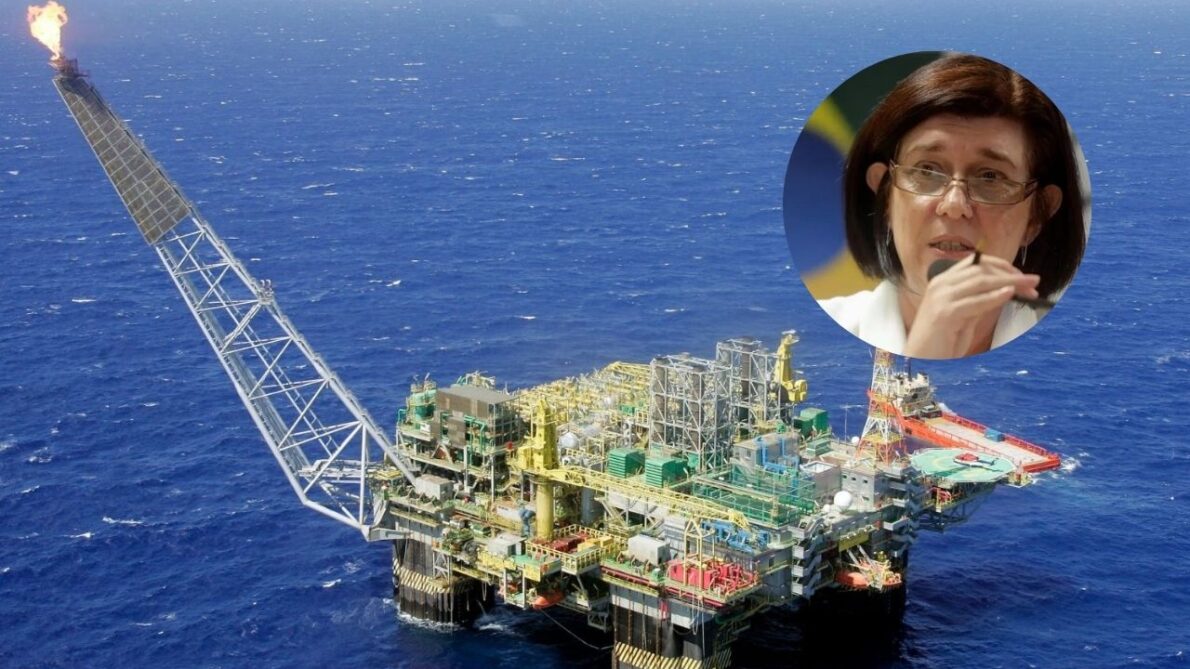

Petrobras President Guarantees That Reductions Will Be Made When Feasible, But Rejects Abrupt Changes in the Energy Scenario.
The president of Petrobras, Magda Chambriard, stated that the company will lower fuel prices “whenever possible,” generating high expectations in the market and among consumers. During a press conference last week, Chambriard announced the drop in aviation kerosene prices and assured that diesel and gasoline have also shown significant reductions since the end of last year. According to her, the two fuels have seen a decrease of around 30% compared to December 2022 prices.
According to the executive, Petrobras is committed to keeping a constant watch on fuel prices, stating that every opportunity to reduce prices will be taken. “We are constantly looking at fuel prices; it’s a permanent job. Whenever we understand that it is possible to reduce prices, we will do so,” assured Chambriard. This statement came after questions about the company’s plans for diesel and gasoline, highlighting that although the market has undergone changes, the state-owned company remains committed to Brazilian society.
Petrobras Has Been Facing Challenges in the Market
Chambriard also mentioned that Petrobras has been facing challenges in the market, with a slight loss of market share in the first half of 2023. “If we were slightly losing market share, how could we increase fuel prices?”, she emphasized. The statement highlights the caution of the state-owned company in making pricing decisions, always evaluating the impact on consumers and the market itself.
-
Drivers are falling for these scams without realizing: operation reveals closed gas stations, adulterated fuel, and hidden losses when refueling.

-
New Fiat EV, priced at R$ 77,000, will bring a reinterpretation of the 147 and a consumption equivalent to 70 km/l.

-
Petrobras surprises the market by cutting diesel by R$ 0.35 per liter, and the decision may ease the tax impact for drivers and transport companies.
-
Gasoline at R$ 4.99 makes drivers wait more than an hour at Havan gas stations in Santa Catarina, during a “zero tax” promotion with a limit of 15 liters per car and 25,000 liters available across five units of the network.





New Well in the Roncador Field, in the Campos Basin
In addition to discussing fuel prices, the president of Petrobras highlighted plans to increase the supply of natural gas. A new well in the Roncador field, in the Campos Basin, is expected to come online next year, with an estimated production of 1.7 million cubic meters of gas per day. According to Chambriard, this initiative is part of a broader strategy to seek short-term energy alternatives.
The executive took the opportunity to reaffirm the state-owned company’s commitment to decarbonization, a topic that has generated global debates. Despite international pressures to accelerate the energy transition, Chambriard stated that there is no conflict between advancing decarbonization and oil exploration in Brazil. “I want to emphasize that there is no conflict between advancing decarbonization and oil exploration,” she stated, reiterating that Brazil is among the world leaders in energy issues.
Regarding future plans, Chambriard informed that Petrobras’ next strategic plan for the period from 2025 to 2029 will be announced in November. However, there are still no definitions regarding new investments.
So, do you think these fuel price reductions will really reach consumers’ pockets, or is it just the same old promise? What do you think could improve?