






 Portuguese
  Spanish
  4 min of reading
  1 comment


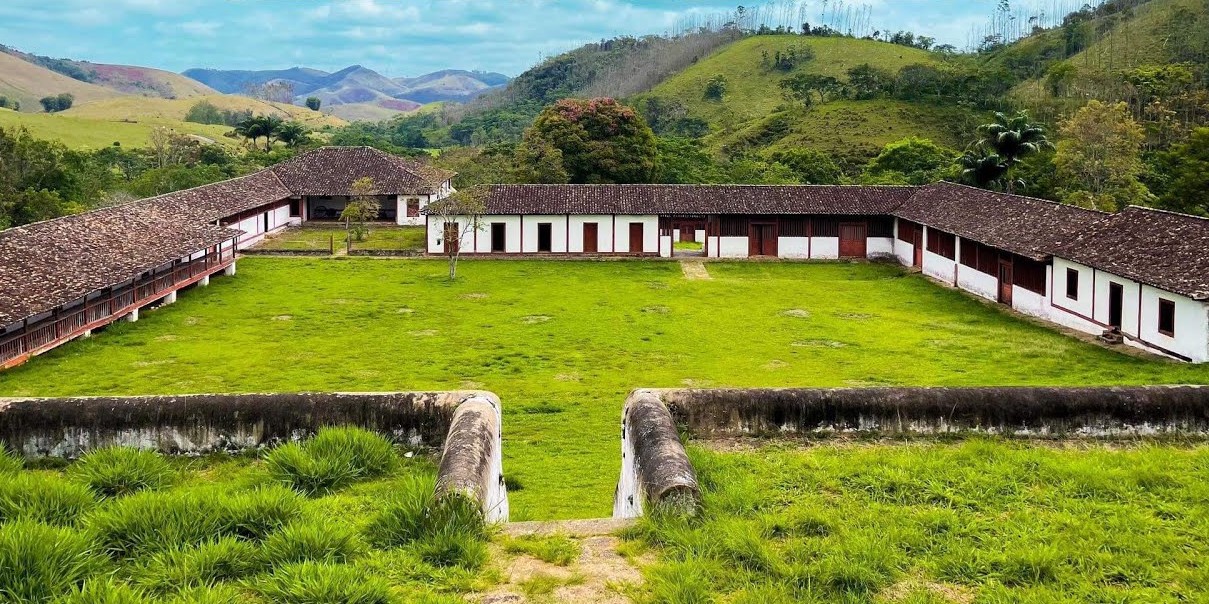


In The Heart Of The Paraíba Valley, Fazenda Pau D’Alho, Built Before 1800, Preserves Dom Pedro’s Passage And The Beginning Of The Coffee Cycle That Transformed Brazil’s Economic And Political History.
A few kilometers from the place where Dom Pedro proclaimed Brazil’s Independence, a historic farm in the Paraíba Valley holds memories of his passage. Built during the transition from the 18th to the 19th century, Fazenda Pau D’Alho in São José do Barreiro became a symbol of the meeting between the country’s economic formation and the birth of the independent nation.
Built by João Ferreira and located at km 262 of SP-068, the old property is preserved and open to visitation, representing a rare testimony of the living history of 1822.
A Refuge For Dom Pedro Before Independence
It was during the journey that began on August 14, 1822, that Dom Pedro made a stop in the region before heading to the historic September 7.
-
Survivor of 1966 SS Daniel J. Morrell Shipwreck in Lake Huron Recounts 38-Hour Ordeal in Extreme Cold

-
The Greatest Hoax in World Cup History? The Film That Denied Brazil’s 1958 Victory and Exposed How Fake Evidence Can Seem Convincing on TV
-
Fake South Korean Online Stores Offer Shopping Thrill Without Spending Money or Receiving Products
-
The War of Jenkins’ Ear: How a Severed Ear Sparked One of the 18th Century’s Most Unusual Conflicts


Popular tradition says that the prince arrived at the farm in a rush, asked for shelter, and was received like a common soldier, having lunch on the kitchen floor. According to local imagination, he even heard the phrase: “Hurry up, Dom Pedro is about to arrive.”
Although there are no official records of this visit, it is known that Fazenda Pau D’Alho was an imposing fortification, surrounded by coffee plantations.
Historian Diego Amaro from the Paraíba Valley points out that even at that time, the meeting of a prince required great preparation. “It was a moment that demanded logistics and investment, even for a simple man and someone easy to relate to,” he states.
The farm reflected the transition from a colonial Brazil to the beginning of a new era. In addition to being the setting for the royal entourage’s passage, São José do Barreiro symbolized the end of the gold cycle and the beginning of the coffee economy.
The Economic Cradle Of An Independent Brazil
The importance of Fazenda Pau D’Alho went beyond its agricultural function. In the context of Independence, it became a reference for travelers and royal entourages at a time when coffee, sugar, and tobacco supported the local economy. “Barreiro was a great possibility for economic power,” explains historian Diego Amaro.
During the First and Second Empires, the region provided essential economic support to the new country. Dom Pedro frequently traveled to the Paraíba Valley to consolidate political alliances and contain separatist movements.
According to Amaro, these visits reinforced the state’s presence and demonstrated the prince’s commitment to local farmers and landowners. “The city had the necessary strength for the beginning of Brazil’s new moment in 1822,” he notes.
With the advancement of coffee cultivation, Barreiro transformed into a hub of prosperity that would sustain the Empire and profoundly mark national history.
Memory Preserved In Time
Today, Fazenda Pau D’Alho is one of the most important destinations for historical tourism in the country. Its structures allow for an understanding of the different cycles of Brazil—from Independence to the peak of the coffee barons. “It is a must-see point to understand the formation of the country and the role of the Paraíba Valley,” emphasizes the historian.
The property symbolizes generations of workers and the strength of a decisive period. “The farm is the memory of Brazil’s organization as a nation. It represents the beginning of a new era, sustained by the region’s resources,” adds Amaro.
Tourism And Education At Fazenda Pau D’Alho
Currently, the manor house attracts hundreds of visitors every month. The space is primarily aimed at educational tourism but also receives families and business groups. Guided tours reveal the history of the 2,600 square meters of construction, from the main residence to the former slave quarters—which, in the years leading up to abolition, already exhibited modified structures to hinder the confinement of enslaved individuals.
The Secretary of Tourism of São José do Barreiro, Ana Paula Almeida, highlights the educational role of the farm. “Barreiro is a historic city that preserves important moments in the country, from the imperial period to the Revolution of 1932.
Educational tourism is a growing segment, as many seek to learn about the coffee cycle, which is still very present in historical farms,” she affirms.
Open for visitation from Thursday to Sunday, from 9 AM to 4 PM, Fazenda Pau D’Alho receives about 300 people a month. Since 2017, thanks to the partnership between the city hall and Iphan, admission is free. Guided by monitor Alexandre Henrique do Prado, visitors delve into the daily life of the past, rediscovering the history of a Brazil that began to take shape there—amidst the aroma of coffee and the walls that witnessed Dom Pedro’s passage towards Independence.





Não conheci esta fazenda e nem sabia de sua existência, apesar de ter passado perto dela nas minhas idas à região e ao Rio de Janeiro. Mas me impressionou.